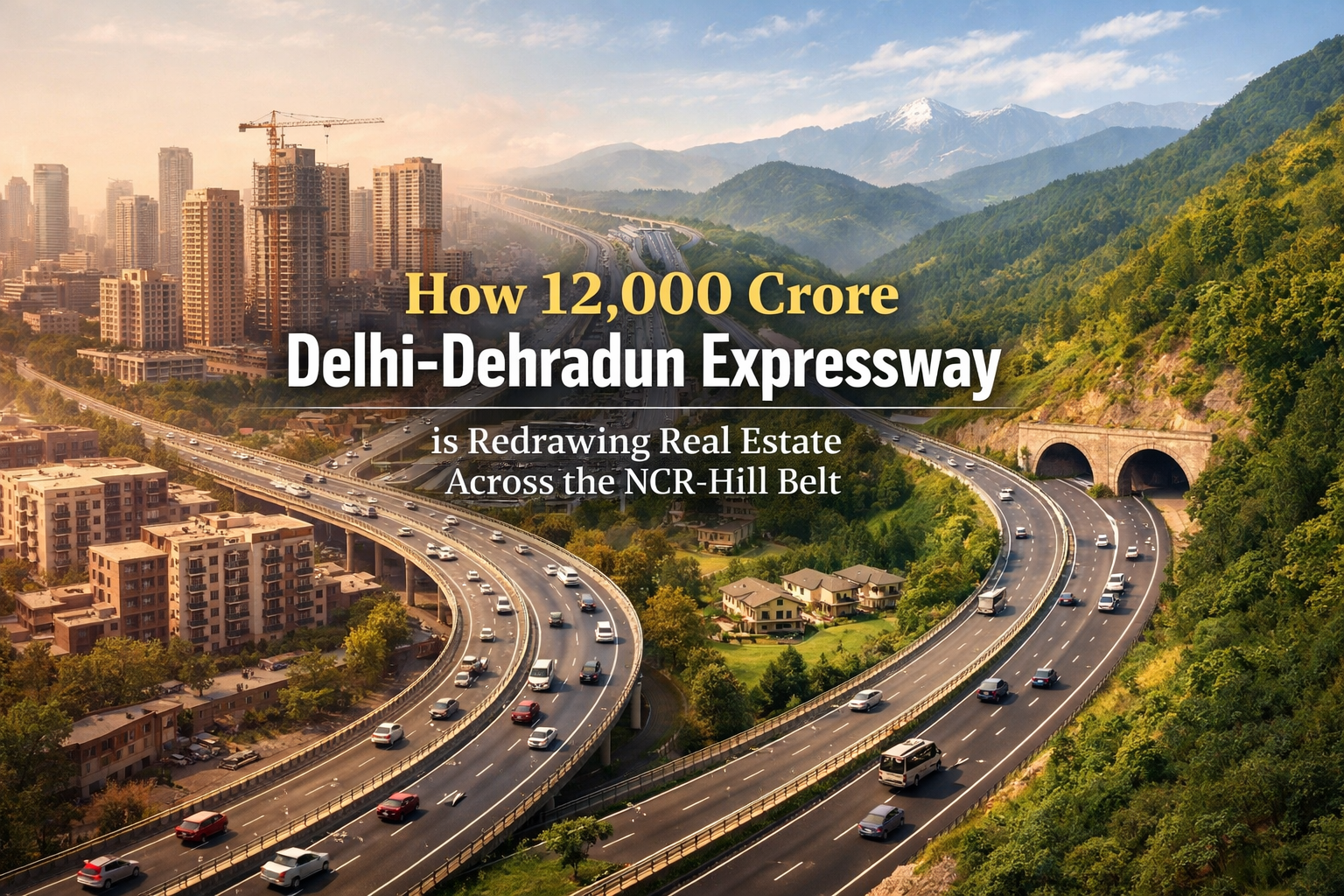
How ₹12,000 Crore Delhi-Dehradun Expressway is Redrawing Real Estate Across the NCR-Hill Belt
The fully operational 213-km Delhi-Dehradun Expressway has slashed travel times to just 2.5 hours, igniting a massive real estate boom across Western UP and Uttarakhand. With property values projected to jump by 15-30%, locations from Baghpat to the outskirts of Dehradun are rapidly emerging as high-yield hotspots for commercial plots, weekend villas, and logistics hubs.

Why India's Real Estate Market Defies Global Economic Turbulence
Despite current global economic uncertainties and supply chain disruptions causing short-term caution, India's real estate market maintains strong long-term resilience driven by rapid urbanization, infrastructure expansion, and a sustained cultural demand for homeownership.

Decoding Delhi’s Revised TOD Rules 2026: How 207 Sq Km Along Metro Corridors Will Reshape Urban Housing
The central government’s newly notified Transit-Oriented Development (TOD) 2026 rules unlock 207 sq km of land along Delhi's metro and regional transit corridors for high-density, mixed-use housing. By drastically reducing the minimum plot size to 2,000 sqm, permitting a Floor Area Ratio (FAR) of up to 500, and enforcing a single-window clearance system, the policy aims to flood the market with affordable, transit-linked homes while reducing urban congestion.

Haryana's Paperless Registry System Goes Live in 23 Districts: The Complete Guide to Digital Property Registration
Haryana has successfully rolled out a fully paperless property registry system across 23 districts, permanently replacing physical paperwork, manual drafting, and cash fees with an encrypted, end-to-end digital ecosystem. By integrating instant online verification, secure digital payments, and real-time auto-mutation, the state has dramatically enhanced transparency and eliminated long-standing administrative delays in real estate transactions.