Published On:
July 5, 2026
Updated On:
July 5, 2026
The Yamuna Expressway Industrial Development Authority is developing a massive 14,480-hectare, Noida-style mega city near Agra, blending pollution-free IT hubs, premium housing, and world-class tourism. Backed by the Master Plan 2041 and connected by the upcoming Jewar Airport and RRTS rail, this greenfield township is set to redefine real estate investment and urban living in Uttar Pradesh.
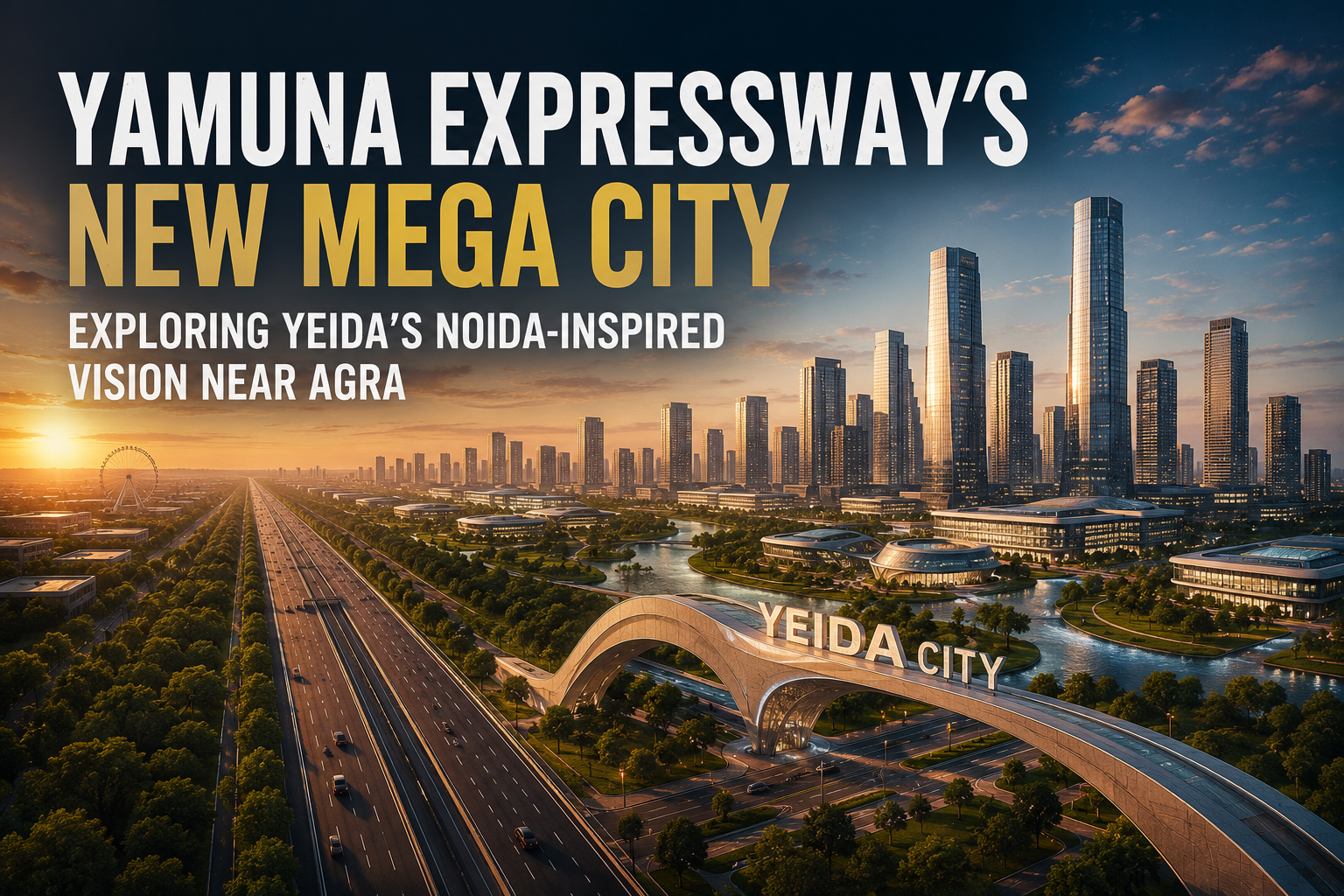
For decades, the mention of Agra has instantly brought to mind its rich historical heritage, the iconic Taj Mahal, and a thriving tourism sector. However, the narrative surrounding this historic city is undergoing a monumental shift. The region is no longer being viewed solely through the lens of tourism and heritage conservation. Thanks to aggressive infrastructure pushes and visionary urban planning, the rural and semi-urban belts surrounding Agra are on the verge of a historic transformation.
The Yamuna Expressway Industrial Development Authority has officially cleared a bold and ambitious blueprint to construct a sprawling, ultra-modern mega city directly inspired by the structured success of Noida. Positioned strategically along the Yamuna Expressway, this massive urban centre is designed to completely reshape the economic and residential landscape of western Uttar Pradesh. The development aims to ease the mounting population and infrastructure pressures on the old city of Agra while unlocking unprecedented commercial potential along the expressway corridor.
This is not just another standard township project; it is a holistic urban ecosystem being built from the ground up. By meticulously blending structured industrial zones with premium residential developments, expansive green spaces, and cutting-edge transit networks, the state government is laying the foundation for a futuristic city capable of sustaining over a million residents. For real estate investors, homebuyers, and urban planners, this development signals the opening of a massive new frontier.
To understand the sheer magnitude of this upcoming city, one must look at the expansive territorial boundary finalised under the YEIDA Master Plan 2041. The proposed greenfield township will stretch across approximately 14,480 hectares of land. To put that into perspective, this new urban centre will be roughly half the physical size of the original Noida city.
Creating a city of this scale requires substantial land acquisition and integration. The master plan targets the rural belt stretching between Greater Noida and Agra, officially bringing 44 distinct villages within the Agra district into the urban fold. Transforming these rural pockets into a cohesive, high-functioning city involves a massive logistical undertaking, but it also presents a rare blank canvas for city planners to avoid the congestion and haphazard growth seen in older metropolitan areas.
The demographic targets for this Noida-inspired city are equally staggering. Planners expect the completed urban zone to easily accommodate a population of around 1.5 million people, housing them across diverse residential sectors. Furthermore, the economic framework of the city is engineered to generate employment for nearly one million people. This dual focus on massive residential capacity and robust job creation is what sets this project apart from simple housing expansions, ensuring it becomes a self-sustaining economic powerhouse rather than just a commuter suburb.
One of the defining features of successful modern cities is strict, logical zoning, and YEIDA is implementing a highly structured land-use distribution model for this new development. The entire urban layout is being divided into distinct zones to completely separate commercial manufacturing hubs from quiet, pollution-free residential pockets.
A significant 25 percent of the total land area has been strictly allocated for industrial zones. However, unlike traditional manufacturing hubs, this area will be completely devoid of heavy, polluting industries. Following close behind is the residential allocation, which takes up 20 percent of the total space. This sector will not be limited to a single demographic; it is designed to feature everything from towering luxury high-rises and premium group housing societies to dedicated sectors for middle-income and economically weaker sections, ensuring a balanced and inclusive community.
Recognising the global appeal of the region, 16 percent of the land is dedicated specifically to tourism and heritage projects. This ambitious allocation will see the rise of massive international theme parks, sprawling entertainment sectors, luxury hotel chains, and wellness retreats. The remaining land is thoughtfully divided among essential civic functions, with 15 percent reserved for greenery, eco-parks, and seasonal forests, 13 percent for broad avenues and rapid transit infrastructure, and 11 percent dedicated to mixed-use commercial spaces like retail markets and corporate office complexes.
Building a mega city so close to one of the world's most famous monuments comes with a unique set of environmental challenges and strict legal regulations. The new township borders the highly sensitive Taj Trapezium Zone, an eco-sensitive area established to protect the Taj Mahal from industrial pollution and acid rain. Because of these stringent environmental guidelines, heavy manufacturing, chemical processing, and other polluting industries are strictly and permanently banned from the new city's industrial sectors.
Rather than viewing this as a limitation, planners have used the environmental restrictions as a catalyst to build a truly modern, green economy. The 25 percent industrial allocation will be exclusively reserved for soft, pollution-free sectors. The authority is actively inviting information technology giants, massive data centres, clean energy firms, and advanced texturing mills to set up base. There are also advanced plans for integrating a massive 256 MW solar park directly into the city's power grid, ensuring that the heavy energy demands of the commercial sectors are met through renewable sources.
This heavy pivot towards a clean, service-based, and tech-driven economy ensures that the city will boast excellent air quality, making it an incredibly attractive destination for white-collar professionals and families seeking a healthier living environment. The integration of modern sewage treatment plants, advanced water supply planning, and extensive biodiversity parks further cements the city's status as a sustainable urban model for the future.
A master-planned city is only as successful as its underlying infrastructure and connectivity. In this regard, the new Noida-inspired city is positioned to become one of the most well-connected urban hubs in the country. The anchor point for this connectivity is the upcoming Noida International Airport in Jewar, located approximately 120 kilometres away from the new township.
To bridge this distance and ensure seamless travel for international tourists and corporate executives, a high-speed NaMo Bharat Rapid Rail Transit System corridor has been proposed. This RRTS network will link the new Agra urban centre directly to the Jewar airport and the broader Delhi-NCR region, drastically cutting down commute times and making daily travel effortless.
In addition to the rail network, YEIDA is rapidly expanding the road infrastructure around the Yamuna Expressway to prevent the kind of traffic bottlenecks that plague older cities. A massive 120-meter wide VIP highway is already under construction, designed to offer a direct, congestion-free route to the airport for the various sectors situated along the expressway. The internal road network of the new city itself is being planned with extreme foresight, featuring massive 45 to 60-meter wide main arterial roads and spacious 9 to 12-meter wide internal sector roads. This expansive road network, combined with the proposed Metro Neo systems and dedicated cycle tracks, guarantees that the city will remain easily navigable even when fully populated.
For the real estate sector, an infrastructure announcement of this magnitude is the equivalent of striking gold. The formalization of the Master Plan 2041 and the clear demarcation of land use across 44 villages have already triggered a massive wave of interest from top-tier private developers, institutional investors, and independent property buyers.
Whenever a master plan locks in specific land-use categories, property prices in the designated zones naturally begin to appreciate long before the first brick is laid. The sleepy, semi-rural stretch along the Agra-expressway is rapidly transforming into a highly competitive and premium housing market. Investors who understand the long-term wealth creation potential of greenfield cities are already making aggressive moves to purchase residential and commercial plots in the targeted villages and surrounding areas like Etmadpur.
The impact on residential real estate will be profound and diverse. Families looking for structured, secure community living with high-end amenities are closely monitoring the upcoming group housing setups planned in the New Agra zones. Simultaneously, working professionals aiming to secure early advantages are exploring premium flats in inner Agra suburbs and areas like Dayal Bagh, driven by their close proximity to the newly proposed non-polluting IT and tech parks.
Because the master plan mandates a balanced layout with inclusive housing—ensuring that High-Income Group, Middle-Income Group, and Lower-Income Group housing coexist within the same urban zones rather than being pushed to the extreme outskirts—the real estate market here will be incredibly robust. This balanced approach guarantees steady rental yields for investors and consistent capital appreciation across all property categories. The assurance of uninterrupted underground power cabling, clean water supply, and world-class civic amenities makes these future properties highly desirable for end-users seeking an upgraded lifestyle away from the chaotic density of older NCR regions.
The development of this 14,480-hectare mega city is far more than just a geographical expansion; it represents a fundamental shift in how urban growth is managed in India. By learning from the successes and the growing pains of cities like Noida and Gurugram, the Yamuna Expressway Industrial Development Authority is meticulously crafting a city that prioritises sustainability, seamless connectivity, and high quality of life from day one.
The combination of massive infrastructure investments, the strategic proximity to a major international airport, and the strict adherence to pollution-free industrial growth creates a perfect storm for economic prosperity. As the land acquisition process advances and the blueprints of Master Plan 2041 begin to materialize on the ground, this vast greenfield pocket will rapidly transition from agricultural land into a vital, beating heart of business, leisure, and upscale housing.
For those keeping a close watch on the trajectory of real estate and urban development in Uttar Pradesh, the message is clear. The Yamuna Expressway is no longer just a high-speed transit route between two historical cities; it is the central artery of India's next great urban success story. The Noida-inspired city near Agra is poised to become a benchmark for future smart cities, offering unparalleled opportunities for those ready to be part of its foundational journey.
