Published On:
November 2, 2025
Updated On:
November 2, 2025
Uttar Pradesh will no longer approve township maps that include illegally occupied or unverified village land. The move enforces stricter verification under Township Policy 2022 to protect buyers and community property from encroachment.
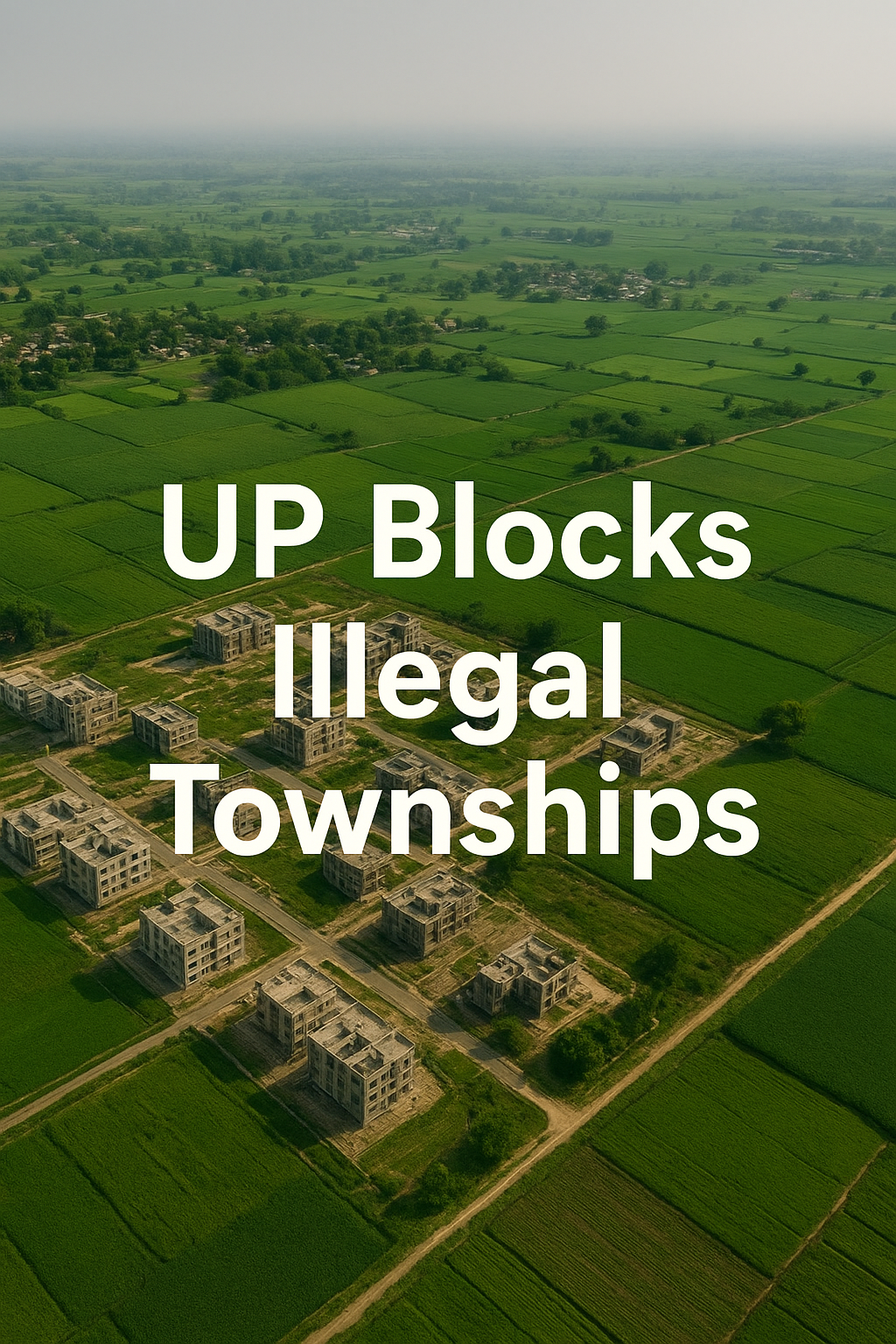
The Uttar Pradesh government has overhauled township map approval procedures to curb illegal land use. As per the latest directive (October 2025), any township plan that includes illegally occupied or unverified gram sabha (village community) land will be rejected outright.
This reform strengthens the Uttar Pradesh Township Policy 2022, following recurring issues where developers included village or local-body land without formal transfer or adjustment. The directive mandates land verification directly through the Revenue Department, requiring alignment between project maps and official khasra records.
Uttar Pradesh’s real estate expansion, especially around Noida, Greater Noida, Lucknow, and Ayodhya, has seen rising instances of encroachment on community lands. The state has recovered over 64,000 acres from land mafia since 2017, exposing how large tracts of gram sabha land were merged into township layouts without legal process.
Encroachment not only fuels litigation but also leaves thousands of homebuyers stranded in stalled or cancelled projects. The new rule aims to fix accountability before map approval, ensuring every township has verified land ownership and proper certification.
Failure in any of these stages results in automatic disqualification of the application.
Developers face tighter scrutiny and longer approval timelines. They must ensure zero overlap with village or government land, updated records, and clear title documents. This will likely increase due diligence costs and extend project preparation time but will protect against future legal risks.
For buyers, the directive is a safeguard against fraudulent projects built on disputed land. Townships with verified ownership provide greater security, improving buyer confidence and financing prospects.
For rural communities, the policy curbs the quiet absorption of community assets into private developments. It also restores local governance integrity by forcing developers to settle adjustments before construction.
The directive’s success depends on accurate digital land records, coordination between development authorities and revenue departments, and strong local enforcement. Delays in map verification or outdated revenue data could still cause bottlenecks.
The UP government’s revised township map policy marks a decisive step toward transparent, verified, and community-respecting development. If enforced rigorously, it will deter land mafia activity, minimize litigation, and encourage sustainable real estate growth — especially across high-demand corridors near Jewar Airport, Ayodhya, and Lucknow-Kanpur.