Published On:
January 29, 2026
Updated On:
January 30, 2026
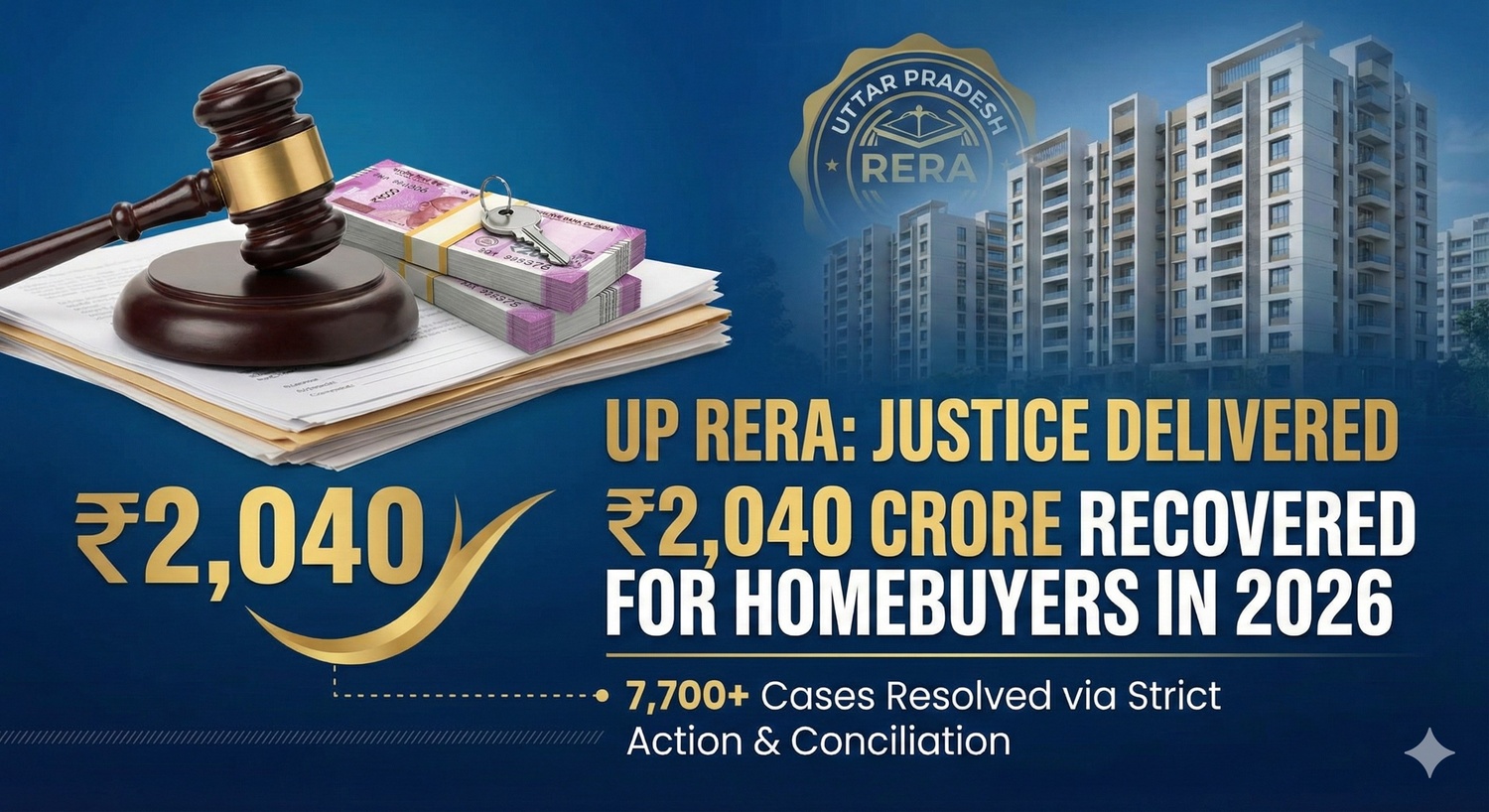
UP RERA has set a new benchmark in consumer protection by recovering ₹2,040 crore for homebuyers in 2026. Through a combination of strict recovery certificates and mutual conciliation, the authority has resolved over 7,700 cases, proving to be a robust shield for real estate investors.
For years, the narrative of the Indian real estate sector, particularly in the NCR belt of Noida and Greater Noida, has been marred by stories of stalled projects, elusive builders, and stuck life savings. Homebuyers often felt powerless against the might of large developers. However, the winds of change are not just blowing; they are storming through the corridors of power. The Uttar Pradesh Real Estate Regulatory Authority (UP RERA) has released its performance report for the calendar year 2025, and the numbers are nothing short of revolutionary.
In a landmark achievement that is reshaping market sentiment, UP RERA has facilitated a staggering ₹2,040 crore relief for aggrieved homebuyers. This isn't just a paper figure; it represents actual money flowing back into the bank accounts of citizens and disputes being permanently closed. This comprehensive blog delves into how this massive feat was achieved, the mechanisms used, and what this means for the future of real estate investment in Uttar Pradesh.
To understand the magnitude of this achievement, one must look beyond the headline number. The relief provided by UP RERA is not monolithic; it is the result of a multi-pronged strategy designed to tackle different types of promoter defaults. By resolving over 11,300 cases in a single year, the authority has cleared a massive backlog of pain and uncertainty.
The relief amount is primarily categorized into two powerful streams:
This dual approach—wielding the stick while keeping the door open for dialogue—has proven to be the game-changer that the sector desperately needed.
For a long time, the biggest criticism of RERA bodies across India was that they were "toothless tigers"—able to pass orders but unable to enforce them. UP RERA has dismantled this notion in 2025. The Recovery Certificate (RC) has emerged as the most potent weapon in a homebuyer's arsenal.
When a builder fails to refund a buyer or pay the interest for delayed possession despite a court order, UP RERA issues an RC. This document is sent to the District Administration (the District Magistrate's office) of the area where the project or the builder's assets are located.
In 2025, the coordination between UP RERA and district administrations reached new heights. District Magistrates acted swiftly to:
The result? ₹1,505 crore was extracted from defaulters and transferred directly to the allottees' bank accounts. This direct transfer mechanism ensures transparency and eliminates any "middleman" corruption, restoring faith in the system.
While the recovery of funds is headline-grabbing, UP RERA’s success in 2025 is also a story of successful mediation. The authority’s Conciliation Forum has become a vital alternative to long-drawn litigation.
Litigation is expensive and time-consuming for both parties. Recognizing this, UP RERA created a structured environment where homebuyers and promoters could meet in the presence of a neutral RERA-appointed conciliator. This forum facilitates honest dialogue, often leading to creative solutions like swapping units, restructuring payment plans, or agreeing on a fixed refund schedule.
The data speaks for itself:
This proves that when a regulator is strong, the market tends to self-correct. Builders are now more willing to settle because they know the alternative—coercive recovery—is far worse.
The message from UP RERA Chairman Sanjay Bhoosreddy and his team is unequivocal: non-compliance is no longer an option. The authority has moved beyond just issuing notices. In 2025, we saw strict actions taken against some of the biggest names in the industry who attempted to game the system.
Promoters who tried to delay refunds, misled the authority with false affidavits, or failed to adhere to the model Builder-Buyer Agreement found themselves facing severe penalties. The authority has made it clear that "financial distress" cannot be a perpetual excuse for denying homebuyers their rights. By linking project registration extensions and new launches to the clearance of pending dues, UP RERA is effectively choking the cash flow of non-compliant builders until they pay up.
The ripple effects of this regulatory cleanup are most visible in the Noida, Greater Noida, and Yamuna Expressway belts. These markets, once infamous for the highest number of stalled projects in India, are witnessing a renaissance.
If you are a homebuyer stuck in a stalled project or awaiting a refund, the 2025 report card is your call to action. Here is how you can leverage the strengthened UP RERA:
The recovery of ₹2,040 crore in a single year is not just a statistic; it is a declaration of intent. It signals that the era of the "wild west" in Uttar Pradesh real estate is over. UP RERA has evolved from a regulator into a guardian, proving that with political will and administrative efficiency, even the most complex disputes can be resolved.
For the homebuyers of Uttar Pradesh, 2026 dawns with a new promise: the law is on your side, and it finally has the teeth to bite. As the sector moves towards greater transparency, the ultimate winner is the Indian dream of owning a home—safe, secure, and stress-free.
