Published On:
February 16, 2026
Updated On:
February 16, 2026
A growing wave of India’s wealthy millennials and high-income professionals are ditching the traditional home-ownership dream for the flexibility of luxury renting. By paying ₹1 lakh in rent instead of ₹3.5 lakh in EMIs, they are unlocking a lifestyle of "asset-light" freedom and smarter wealth creation.
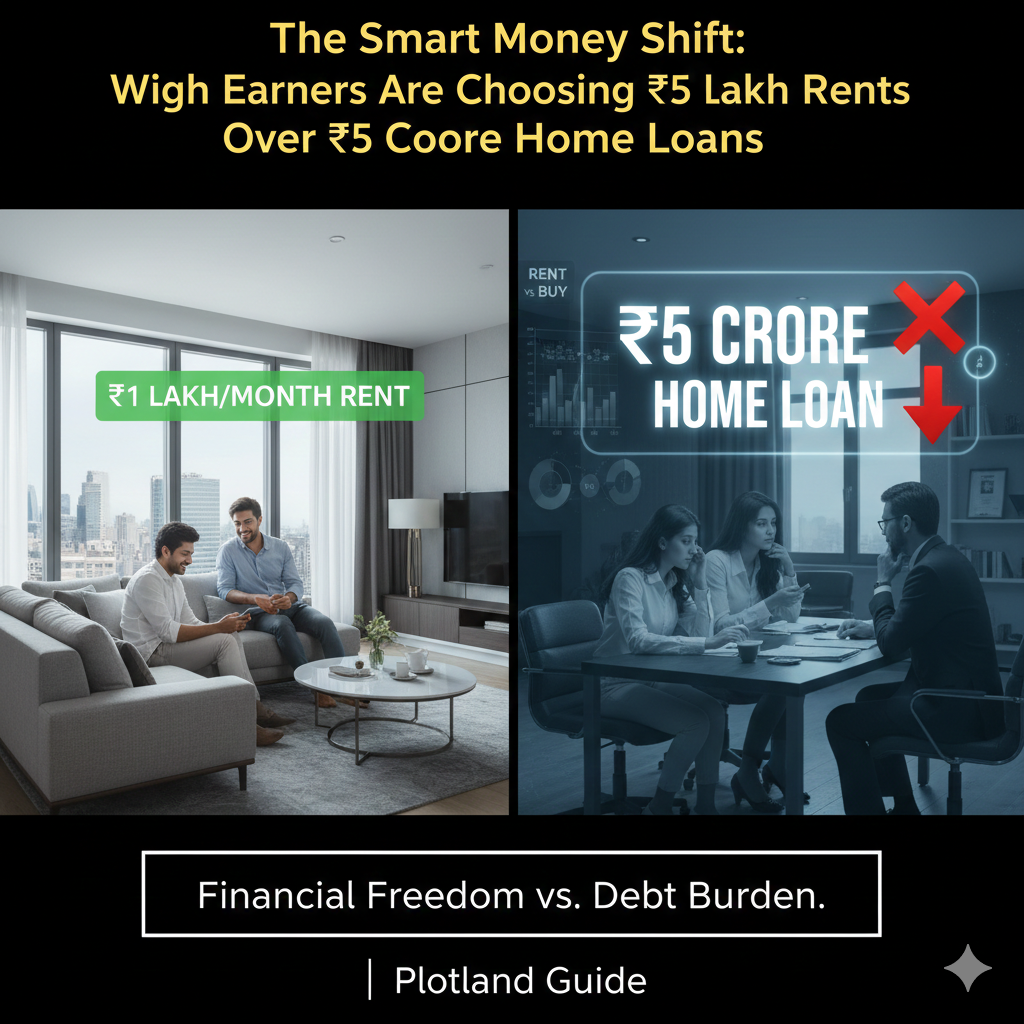
For decades, the ultimate Indian dream was cemented in concrete: buy a house, settle down, and secure your future. It was the financial gospel passed down from grandparents to parents. But in the boardrooms of Mumbai, the tech parks of Bengaluru, and the high-rises of Gurugram, a quiet revolution is brewing. The country's top earners—corporate executives, startup founders, and high-net-worth professionals—are rewriting the rules of wealth. They are turning their backs on property ownership in favor of renting.
It sounds counter-intuitive at first. Why would someone earning ₹50 lakh or ₹1 crore a year "throw money away" on rent? The answer lies in a simple, cold calculation of modern finance: flexibility is the new currency.
Let’s strip away the emotion and look at the numbers. In India’s top metros, the real estate market is currently witnessing a massive disparity between capital values (the cost to buy) and rental values (the cost to lease).
Consider a luxury 4-BHK apartment in a premium society in Gurugram or South Mumbai. The market price for such a property often hovers between ₹4 crore to ₹5 crore.If you were to buy this home with a standard home loan (assuming a 20% down payment and an 8.5% interest rate over 20 years), your monthly EMI would roughly range between ₹3.2 lakh to ₹3.5 lakh. And this doesn't even include the ₹80 lakh-₹1 crore down payment, registration costs, and annual maintenance.
Now, look at the rental market for that exact same apartment.In many of these premium pockets, the same property is available for rent between ₹90,000 to ₹1.2 lakh per month.
The gap is staggering. By renting, a high earner effectively saves over ₹2 lakh per month in cash flow. Instead of locking this liquidity into a depreciating concrete asset (or one that appreciates slower than inflation in some cycles), they invest this surplus into high-growth instruments like mutual funds, stocks, or their own businesses. For the modern financial pragmatist, paying 2% rental yield to a landlord is far smarter than paying 8.5% interest to a bank.
Beyond the spreadsheet, there is a profound lifestyle shift driving this trend. The post-pandemic world has made "mobility" a non-negotiable asset. Today's high-flying professionals are not looking to plant roots in one locality for 30 years. They are chasing opportunities—a promotion in Singapore, a startup launch in Bengaluru, or a sabbatical in Goa.
Owning a ₹5 crore home is an anchor. It ties you down. Selling a luxury property in India is notoriously difficult; it is an illiquid asset that can take months, sometimes years, to offload at the right price. Renting, on the other hand, offers the ultimate agility.
Renting allows you to live in neighborhoods you might not be able to afford to buy into yet. You can enjoy the swimming pool, the concierge service, and the golf course view of a ₹10 crore DLF Camellias or a Worli sea-face apartment for a fraction of the ownership cost. Bored of the view? Lease ends in 11 months. Move to a villa next.
When you own a luxury home, you also own its problems. Seepage in the walls, society politics, property tax disputes—these become your weekends. For the high-net-worth renter, these are the landlord's headaches. If the plumbing breaks, you make a call. You don't manage the repair; you just enjoy the service. This "subscription model" of living aligns perfectly with a generation that prefers Uber over owning a car and Airbnb over owning a vacation home.
The most sophisticated argument against buying comes from the investment community. When you buy a ₹5 crore house, you are essentially parking a massive chunk of your net worth in a single asset class—real estate. This lack of diversification is risky.
If you take the ₹1 crore down payment required for that home and invest it in a diversified portfolio delivering a conservative 12% return, your wealth compounds significantly faster than real estate, which in many Indian metros has stagnated at 3-5% annual appreciation over the last decade.
Financial planners call this "Opportunity Cost." The money trapped in the walls of your house isn't working for you. By renting, you keep your capital liquid. You can deploy it into your business, buy stocks during a market dip, or invest in emerging asset classes. You remain cash-rich, not asset-rich and cash-poor.
Does this mean nobody should buy a house? Absolutely not. Real estate remains a great hedge against inflation and offers emotional security that a rental agreement cannot match. For those planning to retire or settle in one city for decades, buying makes immense sense.
However, the "rent vs. buy" debate has shifted from a question of affordability to a question of capital efficiency. The new generation of wealthy Indians isn't renting because they can't buy. They are renting because they have done the math, and they realize that in 2024, freedom is the ultimate luxury. They would rather live in a palace on rent than be the king of a castle burdened by debt.
As the Indian real estate market matures, we are likely to see this trend solidify. The stigma around renting is fading, replaced by a badge of financial savvy. After all, if you can live the lifestyle of a billionaire for the price of a monthly subscription, why would you choose to pay the mortgage?
