Published On:
February 1, 2026
Updated On:
February 1, 2026
The release of Land for Development (LFD) parcels along the Yamuna Expressway marks a pivotal shift from mere transit infrastructure to active urban living, bringing planned housing societies and commercial hubs to the region. This move unlocks massive real estate potential near the upcoming Jewar Airport, offering homebuyers authorized, structured investment opportunities in what is poised to be NCR's next major growth corridor.
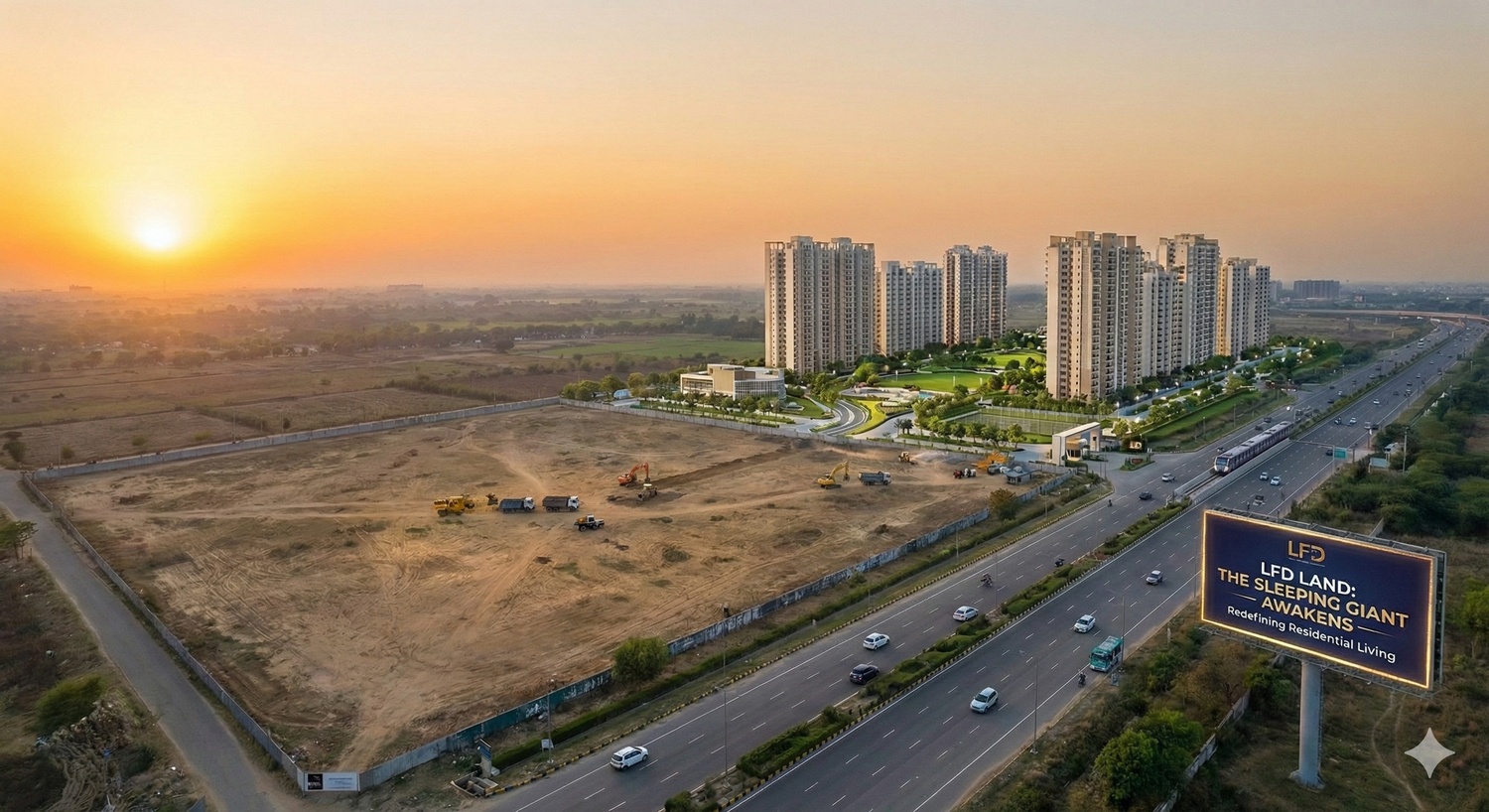
For the better part of a decade, the Yamuna Expressway has been a paradox. It is a world-class engineering marvel connecting Delhi to Agra, yet for miles, it remained a lonely stretch of asphalt cutting through vast, empty fields. Drivers would zoom past, seeing signboards for future cities but witnessing little on the ground. The promise of urbanization felt like a mirage—always on the horizon, never quite arriving.
That narrative is now changing rapidly. The activation of Land for Development (LFD) parcels has signaled the start of a new chapter for this corridor. It is no longer just a highway for travelers; it is transforming into a destination for dwellers. With the unlocking of these specific land parcels, a fresh wave of housing societies, commercial complexes, and institutional zones is set to rise, fundamentally altering the real estate dynamics of the National Capital Region (NCR).
To understand the magnitude of this shift, one must first understand what LFD actually means. In the context of the Yamuna Expressway, Land for Development refers to specific parcels of land that were contractually earmarked for urbanization as part of the original expressway concession agreement. Unlike random agricultural tracts where land use might be ambiguous, LFD parcels come with a pre-approved destiny: they are meant to be cities.
For years, legal and financial hurdles kept these parcels dormant. They were "frozen assets"—valuable on paper but lifeless on the ground. The recent thaw in these issues has effectively opened the floodgates. This isn't just about selling land; it is about activating a master plan. When a developer builds on LFD land, they aren't just constructing a standalone building; they are developing within a framework that accounts for drainage, electricity, roads, and community spaces. This distinction is crucial for buyers who have been wary of "unauthorized colonies" or fly-by-night schemes in emerging areas.
The psychological barrier to living on the Yamuna Expressway has always been the sense of isolation. "It's too far" was the common refrain. However, the operationalization of LFD land tackles this by creating clusters of habitation rather than isolated towers.
The new societies coming up on LFD land are likely to be large-scale townships rather than small, single-tower projects. Developers understand that to lure people away from the comforts of Noida or Greater Noida, they must offer a self-sustaining ecosystem. We can expect to see:
Real estate markets rely heavily on sentiment, and right now, the sentiment around the Yamuna Expressway is being driven by a singular, massive engine: the Noida International Airport at Jewar.
The timing of the LFD land release is serendipitous. It coincides with the airport nearing its operational phase. This creates a "double engine" of growth. The airport brings the jobs—logistics, aviation, hospitality, and corporate offices—while the LFD parcels provide the housing for this new workforce.
For homebuyers, this represents a classic "early mover" window. Property prices in established sectors of Noida are hitting saturation points. The Yamuna Expressway, by contrast, offers an entry point that is still relatively affordable, yet backed by tangible infrastructure milestones. The release of this land effectively increases the supply of quality, approved inventory, preventing an artificial price bubble while giving buyers genuine options.
Historically, the Yamuna Expressway was a playground for investors. People bought plots with no intention of building, simply hoping to flip them for a profit five years later. This left the area looking like a ghost town.
The development of LFD land marks a pivot toward the end-user. When developers launch group housing societies or commercial centers, they are targeting people who intend to move in or run businesses. The tangible nature of construction—cranes in the sky, foundations being dug—creates a "network effect." One family moving in encourages three others. A grocery store opening encourages a pharmacy. This organic growth is what turns a "project" into a "neighborhood."
We are likely to see a demographic shift. Young professionals working in the upcoming tech parks near the airport, retirees looking for pollution-free open spaces, and second-home buyers seeking a weekend retreat are the prime audiences for these new developments.
While the optimism is justified, a prudent approach is necessary. The opening of LFD land is a green light, not a magic wand. Infrastructure takes time to mature.
The activation of the Yamuna Expressway LFD land is more than just a real estate update; it is the breaking of a deadlock that held the region back for years. It signifies the transition from "planning" to "execution."
For the prospective buyer, the message is clear: the waiting game is ending. The infrastructure is visible, the airport is imminent, and now, the land for homes is finally available. The Yamuna Expressway is no longer just a path to the Taj Mahal; it is slowly, steadily becoming a place to call home. As these new societies rise from the dust, they will not just alter the skyline, but also the economic destiny of the entire region.
