Published On:
June 29, 2026
Updated On:
June 29, 2026
The arduous process of transferring water, electricity, and property tax connections is finally being streamlined through digital integration and policy amendments, saving homebuyers time and effort. This transformation promises a shift from bureaucratic hurdles to a seamless, single-window experience, starting with automated electricity connection transfers upon property registration.
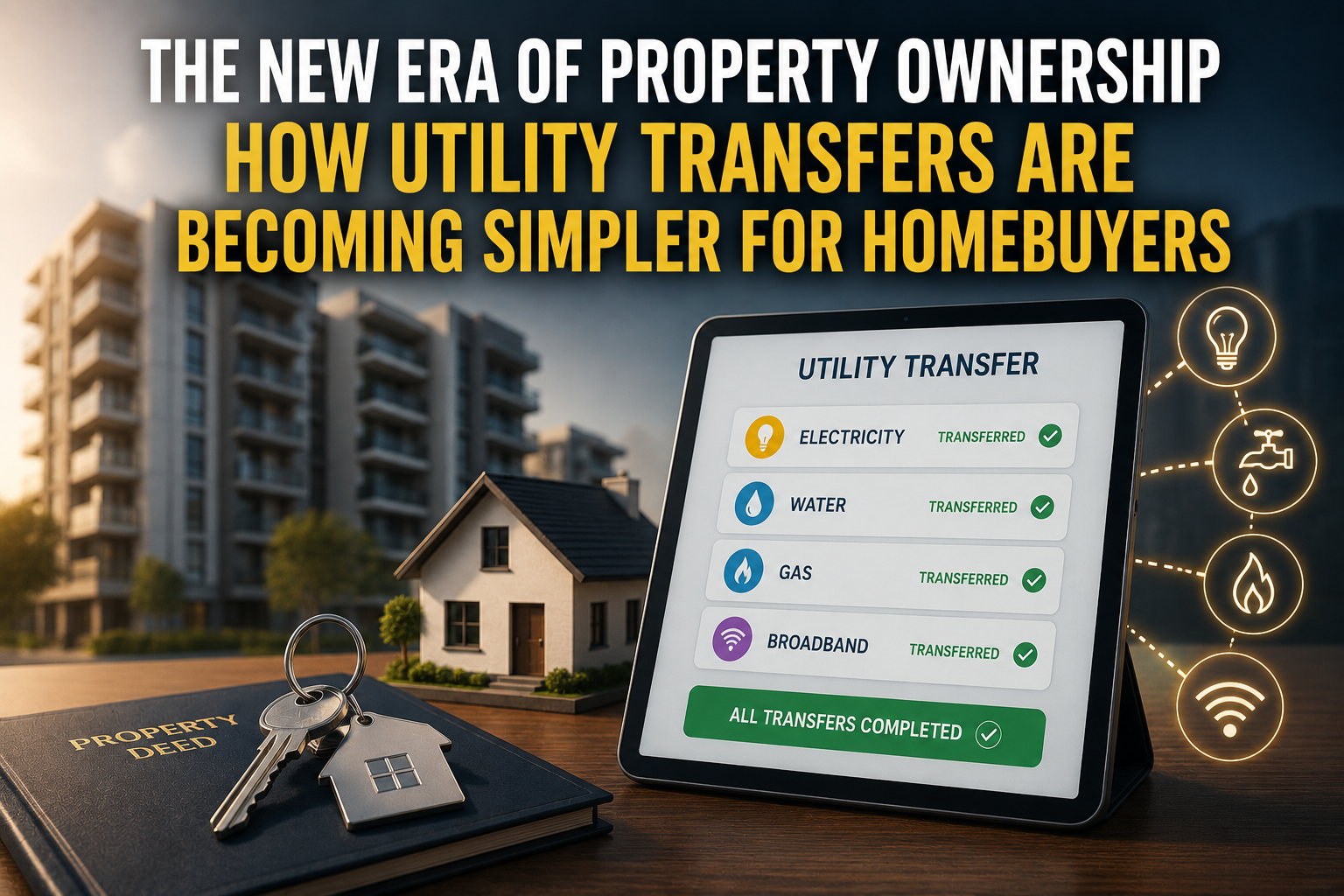
For most people, buying a home is the culmination of years of hard work, financial planning, and emotional investment. After the keys are finally in your hand and the registration process is complete, you naturally expect to settle into your new sanctuary with ease. Yet, for thousands of homebuyers, the excitement of moving in has historically been dampened by a tedious, often frustrating aftermath: the "utility transfer marathon."
Moving into a new home in a major urban center frequently meant navigating a labyrinth of government offices to update water, electricity, and property tax records. It was a cycle of endless forms, multiple physical visits, and dependence on intermediaries to ensure that the bills were no longer coming in the previous owner's name. However, as of mid-2026, a significant shift is underway in Delhi and other metropolitan regions. Policymakers are finally recognizing that the "Ease of Doing Business" must extend to the "Ease of Living" for the average citizen. With new regulatory amendments and a vision for unified land management, the process of transferring utility connections is transforming from a administrative nightmare into a seamless, digital-first experience.
To appreciate the significance of current reforms, it is essential to understand the sheer inefficiency of the old system. For years, the transfer of utility connections—specifically electricity and water—was a fragmented process that operated in silos.
When you purchased a property, the act of registration at the sub-registrar office was only the beginning. The registration department, the power distribution companies (discoms), the water board, and the municipal corporations often functioned as independent islands with little to no data linkage. A homebuyer had to visit each of these offices separately.
The process typically involved:
For the modern professional or a busy family, these bureaucratic hurdles were not just inconvenient—they were a drain on productivity and a major source of stress during the most critical time of a home move.
A major milestone in this transition has been the recent regulatory shift regarding electricity connections. In a bid to bridge the gap between property registration and utility services, the Delhi Electricity Regulatory Commission (DERC) has introduced landmark amendments.
Under the new regulations, the process for name transfers on electricity connections has been fundamentally redefined. The core of this change lies in the institutional linkage between the sub-registrar offices and the electricity distribution companies. Now, when a property is registered, the essential ownership data is shared with the discoms, effectively triggering a name transfer process without the buyer needing to file a separate, exhaustive application.
This change does more than just save time; it provides a systemic safeguard against the inheritance of old liabilities. By institutionalizing the flow of data, the system ensures that electricity accounts are updated within a stipulated timeframe—typically within two billing cycles. This creates a transparent, accountable framework where the service provider is obligated to update records, and the buyer is protected from the administrative backlog that previously plagued the system.
While electricity transfers are the first major win, the long-term vision is far more comprehensive. The government is currently exploring the creation of a "Single-Window System" for land-related information and services. The intent is to move away from the current model where land records are fragmented across multiple agencies and toward a centralized, digital "source of truth."
This proposed system is expected to leverage advanced technology, including blockchain, to create secure, tamper-proof digital records of property ownership. In this future model:
For the homebuyer, this means that the "utility transfer" might soon become a non-event. It will transition from a task you do to a status that is.
The drive toward digitizing utility transfers and land records isn't just about saving trips to the municipal office; it is fundamentally about enhancing the safety of the real estate market.
Fragmented land records have historically been the biggest breeding ground for real estate fraud. When records are maintained manually or across disparate digital systems, it becomes difficult for a buyer to verify if a property has an undisputed title, if there are pending taxes, or if there are illegal liens on the asset.
By integrating utility services with property registration, the government creates a unified ecosystem. If a property is registered, it enters a "clean" record system. The automatic transfer of utilities ensures that the utility department is always aware of who the current legal owner is. This reduces the scope for manipulation, helps in accurate taxation, and, most importantly, protects the buyer. It eliminates the "he-said-she-said" dynamic between a seller and a buyer regarding who is responsible for which bill.
While the regulatory environment is shifting toward a seamless experience, we are currently in a transition period. Systems are being upgraded, and institutional linkages are being forged. For those planning to buy property in the near future, it is vital to remain informed.
The simplification of utility transfers is a small but powerful part of a much larger narrative: the digital transformation of India’s urban landscape. As cities grow, the complexity of managing municipal services, electricity, and water supplies grows exponentially. The only way to manage this growth effectively is through the intelligent use of technology—the "Smart City" approach.
As we look ahead, we can expect this integration to expand. We are likely moving toward a time where property tax, water, electricity, waste collection, and even society maintenance fees are accessible through a single, unified digital identity for your property.
This, in turn, will boost investor confidence. A transparent, automated, and hassle-free real estate market is inherently more attractive. When buyers and tenants know that their administrative and utility burdens will be minimal, the overall liquidity and health of the real estate market improve.
The transition toward automated and simplified utility transfers marks a pivotal moment for homebuyers. It signifies a move away from a system that burdened the citizen with administrative work toward a system that serves the citizen by automating that work.
While the "pillar-to-post" running days are not yet completely in the past, the regulatory and technological foundations are being laid to make them history. For the homebuyer, this means that the focus can finally shift back to where it belongs: turning a house into a home. As the government continues to bridge the gap between administrative databases and the needs of the resident, the dream of seamless property ownership is fast becoming a reality. The path is clearer, the process is getting faster, and the era of the smart, connected homebuyer has truly begun.
