Published On:
September 27, 2026
Updated On:
September 27, 2026
Exploring the bizarre and often arbitrary reasons property owners give for raising the rent, this comprehensive guide dives into the realities of the modern rental market, tenant negotiation strategies, and the genuine economic factors driving housing costs.
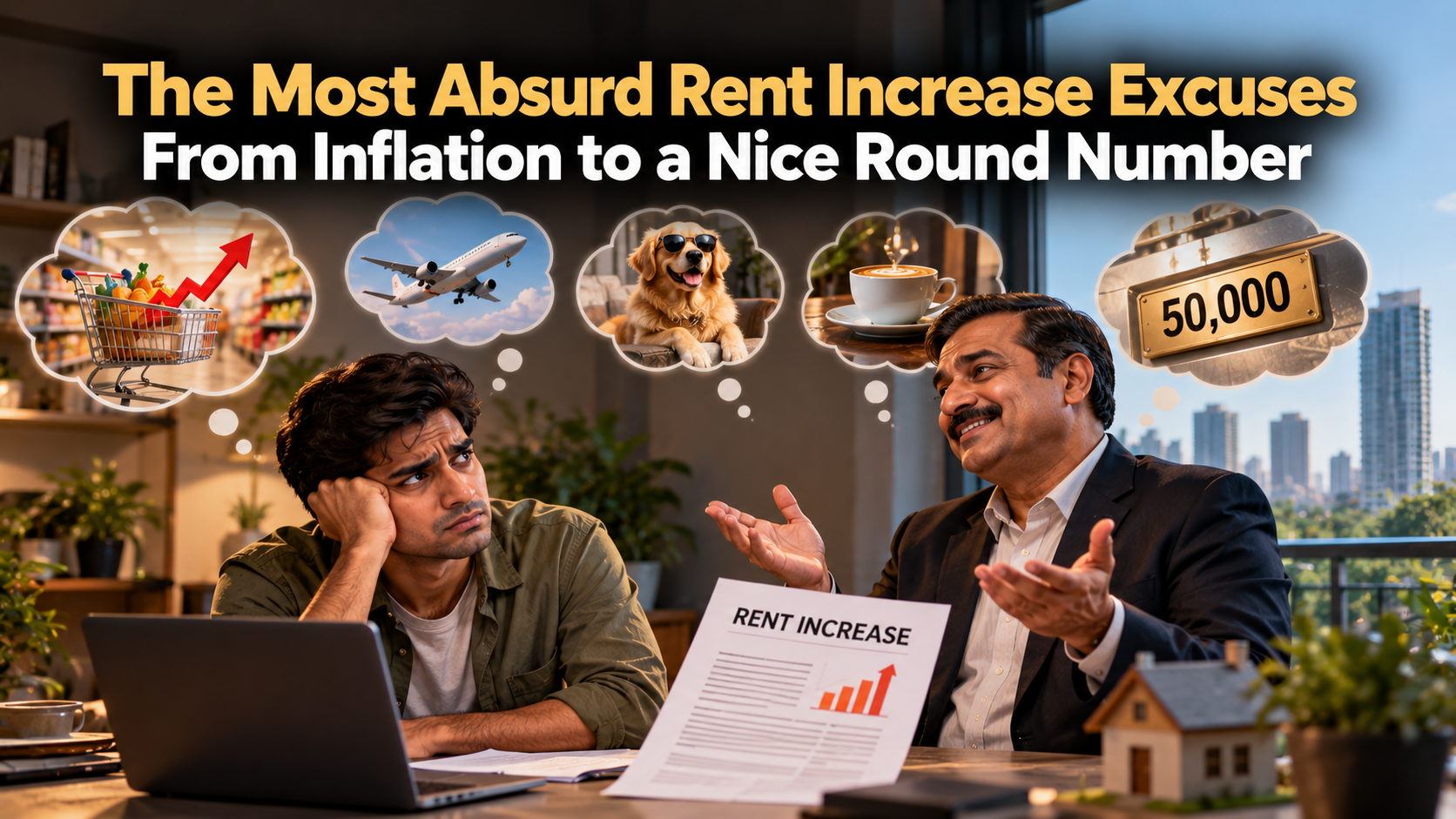
Renting a home is an experience filled with its own unique set of challenges, and nothing brings more anxiety to a tenant than the approaching date of a lease renewal. For many, a rented house is a sanctuary, a place of comfort and stability. However, the financial reality of living in someone else's property becomes glaringly apparent when the time comes to discuss the rent for the upcoming year. While an annual increase is a standard expectation in most rental markets, the reasons provided by property owners for these hikes can range from completely logical to downright absurd.
Across various online forums and community discussions, tenants frequently share their bewilderment over the explanations they receive when their monthly housing expenses suddenly shoot up. The conversation often highlights a stark contrast between genuine market shifts and arbitrary demands, shedding light on the complex dynamic between those who own property and those who pay to live in it.
When it comes to lease renewals, the expectation is usually a straightforward calculation based on a mutually agreed-upon percentage or the prevailing inflation rate. However, the reality of these negotiations can sometimes defy basic mathematics. One common narrative shared among frustrated tenants involves property owners rounding up the final figure simply for the sake of aesthetics.
Imagine a scenario where a tenant and a property owner agree on a standard five percent increase. For a moderately priced apartment, this might translate to a hike of around fifteen hundred rupees. Yet, when the final renewal notice arrives, the amount has been increased to two thousand rupees. The justification provided is often nothing more than a preference for a nice, round number. A five percent increase suddenly inflates to a seven or eight percent hike, not because of property taxes, market demand, or maintenance costs, but because the new figure looks cleaner on a bank transfer statement.
This type of arbitrary reasoning is exactly what frustrates renters the most. It transforms a professional business transaction into a whimsical decision that directly impacts the tenant's monthly budget. When property owners prioritize aesthetic numbers over agreed-upon percentages, it creates an environment of unpredictability, leaving tenants feeling as though their financial stability is entirely at the mercy of their landlord's mood.
Interestingly, the arbitrary nature of rent negotiations can occasionally work in the tenant's favor. Just as some property owners might increase the rent for baseless reasons, others might offer a discount based on personal observations.
A fascinating aspect of the rental market is the immense value placed on property maintenance. For individuals who own real estate, dealing with destructive or careless occupants is a constant source of stress and financial drain. Therefore, discovering that a tenant has treated the property with the utmost respect can lead to surprising financial benefits. There are numerous instances where property owners have visited their flats for a routine inspection, fully intending to enforce a ten percent annual hike, only to be taken aback by the impeccable cleanliness of the space.
Seeing their asset well-maintained, freshly cleaned, and cared for as if it were the tenant's own home often prompts a change of heart. In such cases, the planned double-digit increase might be slashed in half. This highlights a crucial, often overlooked element of the rental ecosystem: peace of mind has a tangible financial value. A tenant who pays on time, refrains from causing structural damage, and maintains a clean environment saves the owner significant money in long-term repair and turnover costs.
To fully understand the dynamics of rent increases, it is necessary to view the situation from the other side of the table. For many property owners, real estate is not merely a passive source of income; it is a substantial financial investment accompanied by significant risks and liabilities.
Purchasing a home requires a massive capital outlay, often involving decades of mortgage payments subjected to fluctuating interest rates. Furthermore, owning a property involves continuous expenses, including society maintenance charges, sinking funds for major structural repairs, plumbing fixes, and periodic repainting. From this viewpoint, setting the rent is a delicate balancing act of maximizing return on investment while ensuring the property remains occupied.
Many property owners firmly believe that they have the absolute right to set the rent at whatever price they deem fit. They carry the financial burden of the asset, and they feel entitled to adjust the pricing to reflect their personal financial goals or the perceived value of their investment. If a tenant finds the new pricing unreasonable, the prevailing sentiment among these owners is that the tenant is entirely free to vacate the premises and seek cheaper accommodation elsewhere.
While bizarre excuses like rounding up numbers capture attention, the most significant driver of steep rent hikes is the simple, undeniable law of supply and demand. The real estate market is hyper-local, meaning that the rules governing rental prices can change drastically from one neighborhood to the next.
In prime neighborhoods located in bustling metropolitan areas, the demand for housing consistently outstrips the available supply. Proximity to major business districts, technology parks, reputable educational institutions, and robust public transit networks makes these areas highly desirable. Consequently, property owners in these locations wield significant negotiating power.
It is not uncommon for flats in these high-demand zones to see year-on-year rent increases of fifteen to twenty percent. The logic here is brutally straightforward: the property might be small, and the amenities might be basic, but the location is premium. Property owners are acutely aware that if the current tenant refuses to pay the increased rate, there is a long line of prospective renters ready to sign the lease at the higher price point. In these hyper-competitive markets, location single-handedly dictates the financial terms of the lease.
Navigating a lease renewal requires the ability to distinguish between a justified increase and an opportunistic cash grab. While arbitrary hikes are frustrating, there are several legitimate reasons why a property owner must raise the rent.
Local municipalities frequently revise their property tax structures, and when the tax burden on a home increases, that cost is inevitably passed down to the tenant. Similarly, if the owner has undertaken substantial renovations—such as upgrading the plumbing system, installing modern electrical fixtures, or remodeling the kitchen—the living standard of the property is elevated, thereby justifying a higher monthly rate.
Genuine market shifts also play a vital role. If a new metro station opens within walking distance of the property, or a major commercial hub begins operations nearby, the inherent value of the neighborhood increases. In these scenarios, the rent hike is not a reflection of the owner's whim, but an adjustment to align with the new economic reality of the location.
Inflation is the silent engine driving up costs across every sector of the economy, and the real estate rental market is heavily impacted by it. When the general cost of living rises, the purchasing power of the property owner's rental income effectively decreases. The money they collect from their tenant does not stretch as far as it did the previous year.
Simultaneously, inflation drives up the cost of everything required to maintain a property. The price of cement, paint, plumbing hardware, and electrical components surges. The cost of skilled labor—electricians, plumbers, and carpenters—also increases. To offset these rising operational expenses and maintain their own standard of living, property owners are often forced to increase the rent. Understanding this macroeconomic factor can help tenants contextualize why their housing costs are climbing, even if the property itself has not seen any visible upgrades.
The most effective shield against unpredictable and absurd rent increases is a meticulously drafted lease agreement. The terms dictated in this legal document govern the entire relationship between the occupant and the owner.
A standard lease should always include a clearly defined clause regarding rent revisions. This clause typically outlines the exact percentage by which the rent can be increased at the end of the tenure, usually hovering between five and ten percent. By legally binding both parties to a specific mathematical formula, the tenant is protected against arbitrary demands for nice round numbers or sudden, massive jumps based on perceived market values.
If a lease agreement lacks this specific provision, the tenant is placed in a vulnerable position, forced to negotiate from scratch at the end of every term. It is crucial for anyone entering the rental market to thoroughly read and understand these clauses before signing, ensuring that their financial future is protected by legal boundaries rather than the goodwill of the property owner.
When presented with a rent increase that feels unreasonable or entirely arbitrary, tenants do not have to accept the new terms passively. Effective negotiation is a critical skill in the rental market, and it requires preparation, emotional intelligence, and a clear understanding of one's own leverage.
The first step in any negotiation is conducting thorough market research. A tenant should analyze the current rental rates for similar properties within the exact same building or the immediate neighborhood. If the property owner is demanding a rate that is significantly higher than the local average, presenting this concrete data is a powerful way to bring the numbers back to reality.
Another effective strategy involves leveraging a strong track record. Property owners deeply fear the financial void of an empty flat and the stressful process of finding a new, reliable occupant. A tenant who can highlight a history of paying rent on time, maintaining the property immaculately, and causing zero disturbances possesses significant negotiating power. Reminding the owner of this reliability can often persuade them to accept a smaller increase rather than risk losing a perfect occupant.
Furthermore, offering a longer-term commitment can be an excellent bargaining chip. By proposing a two-year lease extension instead of the standard eleven-month renewal, the tenant provides the owner with long-term financial security and eliminates the hassle of annual tenant turnover. In exchange for this stability, the owner is often willing to lock in a lower rental rate.
The sheer unpredictability of the rental market, characterized by bizarre excuses and sudden financial demands, is triggering a significant behavioral shift among younger demographics. The traditional mindset of renting indefinitely to maintain geographical flexibility is being rapidly replaced by a strong desire for stability and asset creation.
Professionals are increasingly recognizing that the substantial amounts paid in monthly rent are effectively building someone else's equity. When faced with the prospect of paying a premium just because a flat happens to be in a high-demand area, or dealing with an owner who rounds up the rent on a whim, the appeal of a housing loan becomes much stronger. The transition from a tenant to a homeowner is heavily driven by the need to escape the volatile cycle of lease renewals, allowing individuals to lock in their housing costs and invest their money into an asset they actually own.
Navigating the real estate rental market requires a blend of patience, market awareness, and strong communication skills. While the reasons for a rent hike might sometimes border on the absurd, understanding the broader economic factors, the pressures faced by property owners, and the legal protections available allows tenants to handle lease renewals with confidence and clarity.
