Published On:
May 29, 2026
Updated On:
May 29, 2026
Uncover the truth behind luxury high-rise living by weighing the aesthetic appeal of sweeping city views against practical drawbacks like elevator dependency, pest myths, and hidden logistical costs. This guide helps homebuyers determine if sky-high floor premiums buy actual everyday comfort or just an expensive, Instagram-worthy illusion.
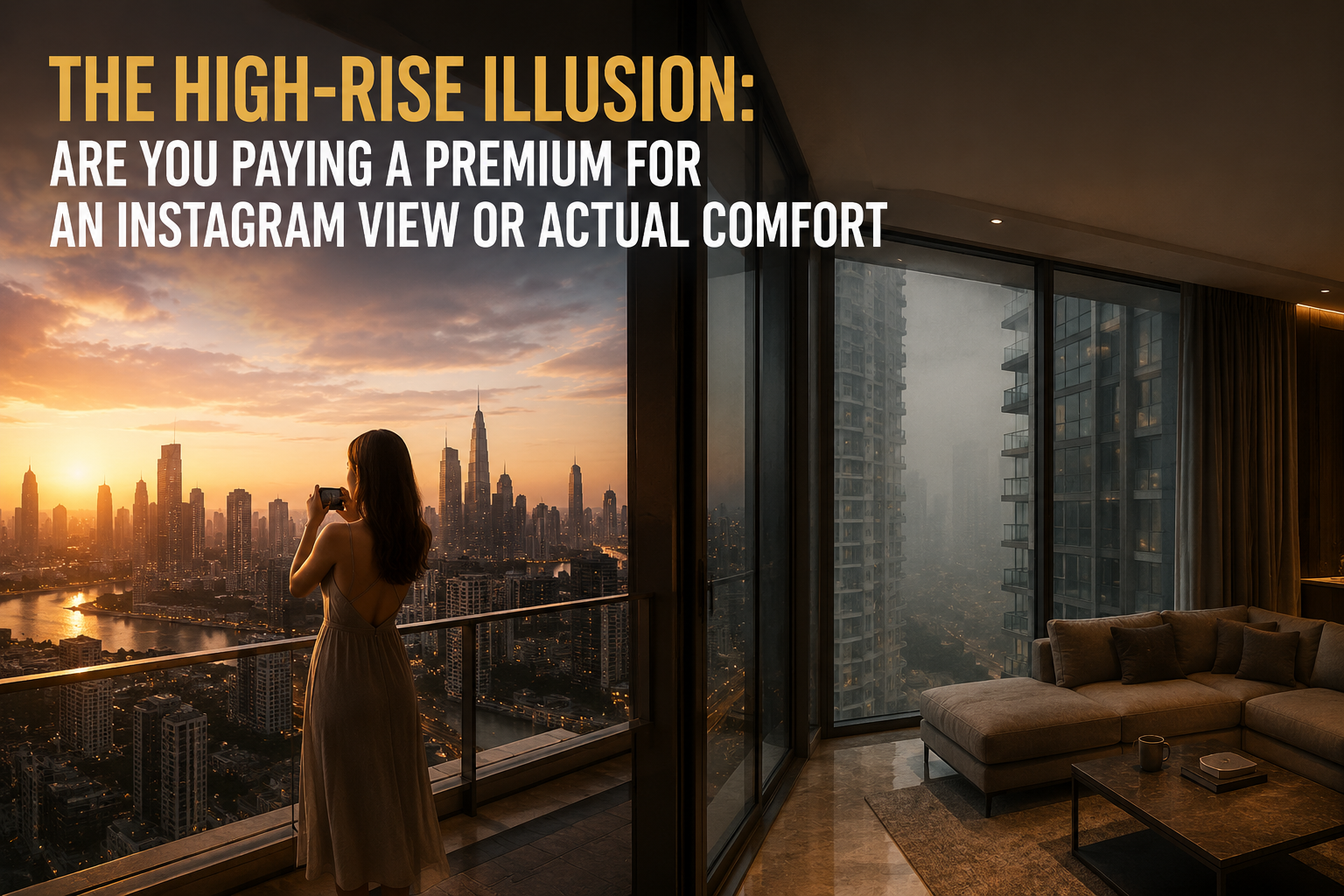
The dream of modern urban living is almost always visualized from the top down. For years, the ultimate real estate status symbol has been the high-rise apartment. Towering above the chaos of the city, these upper-floor sanctuaries promise unobstructed skyline views, cleaner air, and a quiet retreat from the bustling streets below. Real estate brochures heavily lean into this aesthetic, marketing the sky-high lifestyle as the pinnacle of luxury.
However, a growing debate among homeowners has started to peel back the glossy veneer of these premium properties. Triggered by a recent viral discussion online, where a frustrated homeowner detailed their decision to sell a lavish 21st-floor apartment after just four years, many are beginning to question the actual value of living in the clouds. When the novelty of the panoramic view inevitably fades, what are residents left with? Are high-rise apartments genuinely worth the steep floor-rise premiums, or are modern buyers simply financing an expensive backdrop for social media?
To make an informed decision in today’s real estate market, it is essential to look past the marketing and explore the day-to-day realities, hidden costs, and practical trade-offs of upper-floor apartments.
There is a distinct psychological pull to living high above the ground. Real estate developers understand this demand perfectly, which is why floor-rise charges exist. In most high-rise projects, the cost of an apartment incrementally increases with every floor you go up. Buyers willingly absorb this premium for several promised benefits.
The most obvious draw is the view. An apartment on the 20th floor or above often features sweeping, unobstructed vistas of the cityscape, ocean, or surrounding greenery. In a dense urban environment, looking out of a window and not immediately seeing a concrete wall or a neighbor’s balcony is a rare luxury.
Beyond aesthetics, higher floors are marketed as being far removed from the sensory overload of the city. The promise includes freedom from the incessant honking of traffic, the chatter of pedestrians, and the rumble of street-level commercial activity. Additionally, upper floors benefit from spectacular natural light and robust cross-ventilation, which can reduce the need for artificial lighting during the day and lower the reliance on air conditioning during milder months. For many, these benefits equate to a higher quality of life, justifying the initial financial stretch required to secure a top-floor unit.
Despite the heavily advertised benefits, the reality of living dozens of stories in the air often contradicts the brochure. Several long-held myths about luxury high-rise living fall apart upon closer inspection.
The most pervasive myth is the promise of a pest-free and dust-free environment. Sales pitches frequently suggest that mosquitoes, flies, and street dust simply do not travel past the 12th or 15th floors. Homeowners quickly discover that this is a fallacy. Without the natural barriers provided by surrounding trees or shorter buildings, upper floors are entirely exposed to the elements. High winds easily carry fine dust particles directly into open windows, making daily cleaning a necessity rather than a choice. Furthermore, mosquitoes and other insects easily navigate their way to the top floors through internal service shafts, stairwells, and elevators.
The elements themselves act differently at higher altitudes. A pleasant breeze on the ground floor can translate to a relentless, howling wind on the 25th floor. Homeowners who dream of cultivating lush, sprawling balcony gardens often find themselves fighting a losing battle. The combination of fierce winds and harsh, unfiltered sunlight can quickly dry out and destroy delicate plants, making balcony maintenance a frustrating chore rather than a relaxing hobby.
The financial burden of a high-rise apartment does not end with the down payment and the monthly mortgage. Living at the top introduces a variety of hidden logistical costs that accumulate significantly over time.
Delivery logistics become a constant source of friction. Standard apartment elevators are rarely designed to accommodate oversized items like large modular sofas, king-sized mattresses, or massive double-door refrigerators. When these items inevitably fail to fit into the lift, delivery personnel are forced to carry them up multiple flights of stairs. This almost always incurs a hefty manual labor surcharge. For a resident on the 20th floor, ordering new furniture means factoring in an unavoidable logistical tax.
Surprisingly, even standard utility bills can be impacted by the altitude. Electrical meters for large residential towers are typically housed in the basement or on the ground floor. Routing power all the way to the top floors requires significantly longer wiring. Over time, this extended distance can lead to minor power loss, meaning that an upper-floor resident running the exact same appliances as a ground-floor neighbor might quietly incur slightly higher electricity bills.
The single most critical piece of infrastructure in a high-rise building is the elevator. It is the lifeline that connects the resident to the outside world, but it is also the most significant bottleneck.
During morning and evening peak hours, catching a lift can feel akin to riding a crowded local transit train. An elevator stopping at every other floor to pick up school children, delivery workers, and other commuting residents turns a simple exit from the building into a time-consuming daily commute of its own. This dependency becomes a glaring vulnerability during routine maintenance, unexpected breakdowns, or power outages. The sheer anxiety of being stranded on a high floor during an emergency, such as a fire alarm, is a psychological weight that many residents underestimate before moving in.
There are also subtle health and lifestyle implications. The logistical friction of getting in and out of the building often deters residents from stepping out casually. A resident in an independent house might step out into their yard multiple times a day for fresh air, while a high-rise resident might skip an evening stroll simply because waiting for the elevator feels like too much effort. This increased indoor isolation can lead to a more sedentary lifestyle and, in some cases, limited sun exposure, which has been linked to issues like Vitamin D deficiency.
Furthermore, essential utilities can be compromised. Hard water pumped from deep borewells struggles to maintain pressure at extreme heights, and the mineral-heavy water provided in many modern complexes is frequently cited by residents as a primary cause of severe hair fall and skin irritation. Mobile network connectivity is another casualty of height. Cell phone towers are generally optimized to broadcast signals closer to the ground. Consequently, residents on upper floors frequently battle dropped calls and weak data signals, forcing them to rely entirely on Wi-Fi calling just to conduct basic business from home.
With all the logistical hurdles of high-rise living laid bare, one might assume that lower floors or independent homes are universally superior. However, the ground floor comes with its own unique set of compromises, which is why the debate over the perfect apartment level remains so heavily polarized.
Lower-level apartments suffer from a severe lack of privacy. Ground-floor patios and first-floor balconies are often at eye level with walking paths, driveways, and common recreational areas, forcing residents to keep their curtains permanently drawn. Traffic noise from nearby streets is significantly louder, and the rumble of vehicles entering and exiting the basement parking can be a constant background hum.
Pest control is a far more immediate battle on the ground floor. While high floors get dust, lower floors get rodents, cockroaches, and a much higher concentration of mosquitoes breeding in nearby landscaping. During the monsoon season, the threat of waterlogging and dampness is a persistent anxiety.
There is also a unique financial grievance among ground-floor residents in large societies: they are often required to pay the exact same flat-rate maintenance fees as top-floor residents. This means they are subsidizing the massive electricity and maintenance costs of high-speed elevators that they almost never use. Additionally, living on the lower floors of a towering building means dealing with the unfortunate reality of items—ranging from dripping laundry water to accidentally dropped objects—falling from the balconies above.
Choosing between the sprawling views of a top-floor apartment and the grounded convenience of a lower unit ultimately boils down to a buyer's core lifestyle priorities. The real estate market recognizes this divide, which is why developers often hold back both the ground floor and the top floor units until the final stages of a project’s sales cycle. They appeal to two completely different demographics, both willing to pay a premium for their preferred living style.
When evaluating a luxury high-rise, prospective buyers need to shift their focus from the aesthetic to the practical. A stunning view makes for a fantastic photograph, but real, sustainable comfort is rooted in convenience, accessibility, and peace of mind. Buyers should actively investigate the building's infrastructure. How many high-speed elevators serve each tower? Is there a dedicated, oversized service lift for furniture and deliveries? What is the mobile network reception like in the actual unit, not just in the sales lobby?
It is also crucial to assess personal daily routines. Families with young children or elderly members might find the immediate accessibility of a lower floor far more accommodating than a penthouse. Conversely, a working professional who values absolute silence, privacy, and natural light might find the elevator commute a completely acceptable trade-off for a serene environment.
The decision to invest in a high-rise apartment should never be driven by the fear of missing out on a status symbol. While towering skyscrapers define the modern urban skyline, the reality of living inside them is a complex mix of breathtaking luxury and mundane logistical friction. The unobstructed views and cool breezes are undeniable perks, but they must be carefully weighed against the realities of crowded elevators, delivery surcharges, and a subtle sense of isolation. Ultimately, the perfect home is not defined by its altitude or its potential for social media validation, but by how seamlessly it supports the everyday rhythm of your life.
