Published On:
December 14, 2025
Updated On:
January 31, 2026
UP government approves Water Metro services for 6 cities to boost tourism and decongest roads using the state's national waterways.
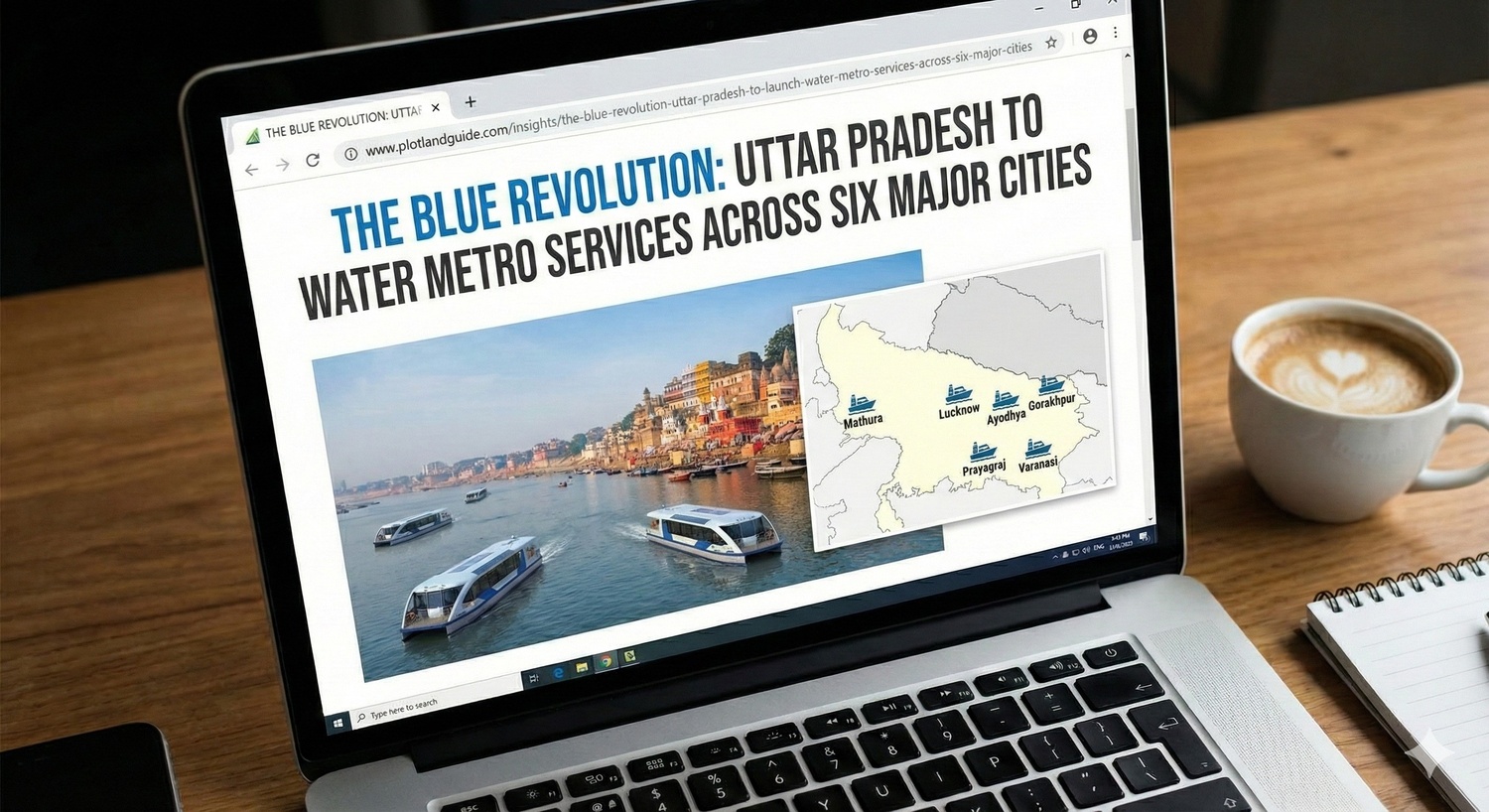
The landscape of urban transport in Uttar Pradesh is about to undergo a radical shift as the state government officially moves toward implementing Water Metro services. During the inaugural meeting of the Uttar Pradesh Inland Waterways Authority (UPIWA) held on December 9, 2025, a roadmap was laid out to transform the state’s rivers into bustling corridors for both passengers and freight.
The project targets six primary cities: Lucknow (Gomti), Varanasi (Ganga), Ayodhya (Saryu), Prayagraj (Sangam), Agra (Yamuna), and Mathura (Yamuna). By utilizing the 11 national waterways that pass through the state, the government aims to replicate the successful multi-modal model currently operational in Kochi. This initiative is not merely about novelty; it is a strategic move to address the extreme road congestion in these heritage and industrial hubs.
A key highlight of the plan is its impact on the logistics sector. Official data suggests that a single cargo vessel can carry the equivalent load of 50 to 60 trucks. This is particularly relevant for the industrial belt spanning Kanpur and Unnao, where the cost of moving goods could drop significantly once river navigation is fully operational. To ensure private sector participation, the UP Tourism Policy 2025 has introduced a 25% subsidy for investors focusing on floating restaurants and other river-based infrastructure.
However, the project faces technical hurdles. Rivers like the Gomti in Lucknow require significant dredging to maintain the Least Available Depth (LAD) required for high-capacity vessels. The UPIWA is currently in the process of appointing specialized consultants to conduct feasibility studies and is expected to collaborate with Kochi Metro Rail Limited for technical expertise. While the potential for tourism and decongestion is immense, the state must navigate the environmental challenges of river desilting and seasonal water level fluctuations to ensure a sustainable year-round service.
Summary:
