Published On:
February 1, 2026
Updated On:
February 1, 2026
Starting February 1, 2026, the Uttar Pradesh government has made Aadhaar-based biometric authentication mandatory for all property registrations. This landmark policy aims to eliminate identity theft, curb "Benami" transactions, and protect homebuyers by ensuring that sellers, buyers, and witnesses are verifiable in real-time.
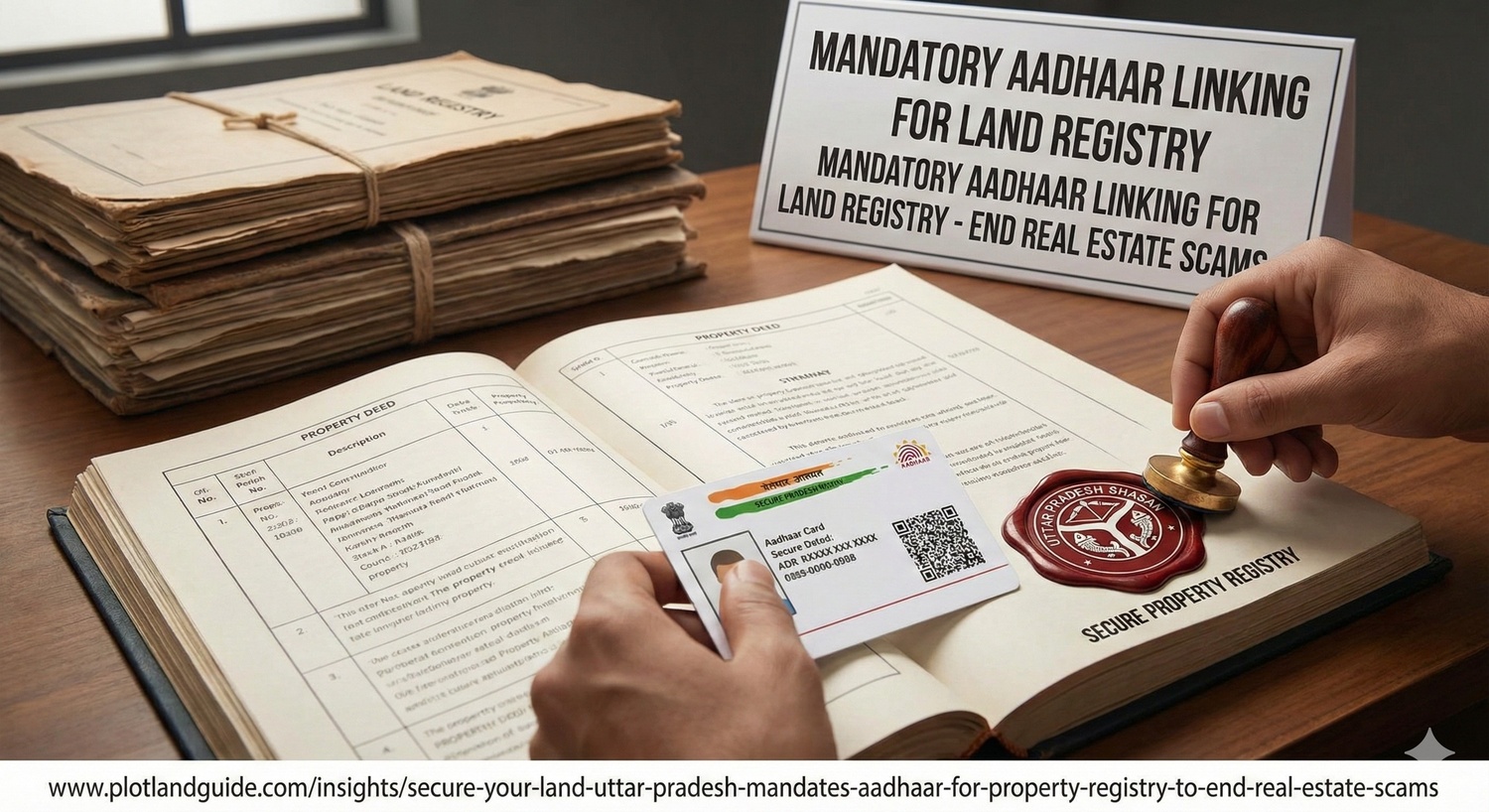
For anyone who has navigated the real estate market in Uttar Pradesh, the fear of fraud is often as palpable as the excitement of buying a new home. Stories of "ghost sellers"—impostors who sell land they don't own—or the nightmare of discovering that your newly purchased plot has been sold to three other people are all too common. These scams have plagued the state for decades, clogging the courts with litigation and eroding trust in the property market.
However, February 1, 2026, marks a turning point in this narrative.
In a decisive move to clean up the sector, the Uttar Pradesh Stamp and Registration Department has implemented a new mandate: Aadhaar-based authentication is now compulsory for all property registrations. This isn't just a procedural tweak; it is a fundamental overhaul of how land changes hands in the state. By linking the identity of every buyer, seller, and witness directly to the UIDAI database, the government is effectively closing the loop on identity theft and Benami transactions.
This blog breaks down exactly how this new system works, why it was necessary, and what it means for your next property investment.
Until now, property registration relied heavily on physical ID cards—PAN cards, voter IDs, or driving licenses—copies of which were submitted to the Sub-Registrar. While these documents are valid, they are static. A skilled fraudster could forge a voter ID or use an old photo to impersonate a landowner. The Sub-Registrar had no immediate way to verify if the person standing at the counter was truly who they claimed to be.
The new rule changes this dynamic entirely. From now on, physical document verification is being replaced (or heavily supplemented) by real-time biometric verification.
The mandate is comprehensive. It applies to:
For the average homebuyer, the process at the Sub-Registrar's office will look slightly different but significantly more secure. Here is what you can expect under the new regime:
This entire sequence happens in seconds, but its impact lasts forever. It creates an immutable digital footprint of the transaction.
To understand the weight of this policy, we have to look at the "Benami" property crisis. A Benami transaction is one where a property is bought in the name of one person (the Benamidar), but the money is paid by another, who holds the actual benefit. This has long been a vehicle for parking black money and evading taxes.
By making Aadhaar mandatory, the government is forcing a direct link between the individual and the asset. It becomes incredibly difficult to use a fake identity to act as a front for someone else when your biometrics are on the line.
Another common fraud involves selling the same plot of land to multiple buyers. In the old manual system, a fraudster could execute a sale deed in the morning and another in the afternoon with a different set of forged IDs. With a centralized, Aadhaar-linked digital registry, the system can instantly flag if the same seller is attempting to execute multiple deeds for the same property ID, alerting the officials immediately.
For the honest taxpayer and the genuine homebuyer, this is excellent news. The immediate benefit is Title Security. When you buy a property verified through this system, the chances of a third party challenging your ownership in court based on "impersonation" drop to near zero.
Uttar Pradesh, particularly hubs like Noida, Greater Noida, and Lucknow, attracts investors from across India and abroad. NRIs, who often hesitate to invest in UP land due to the fear of encroachment or fraud while they are away, will find this digital verification reassuring. It aligns the state's property market with global standards of transparency.
Currently, property disputes can drag on for decades in civil courts, primarily because establishing the identity of the signatories years later is difficult. With biometric records stored (securely and in compliance with privacy laws), proving who signed the deed becomes a matter of retrieving a digital log, drastically speeding up any potential judicial processes.
Naturally, with any mandatory Aadhaar linkage, concerns about data privacy arise. It is important to note that the Sub-Registrar's office does not store your biometric data (fingerprints or iris scans). The data is encrypted and sent to UIDAI for a "Yes/No" match. The registry office only stores the proof that the verification was successful. This follows the standard security protocols used by banks and passport offices across India.
This move is not an isolated event; it is part of a larger digital tapestry. The UP government has also extended the timeline for digitizing old property records (from 2002 to 2017). The ultimate vision is a seamless integration where land records (Khatauni), maps (Bhu-Naksha), and registration deeds are all interlinked and accessible online.
Imagine a future where you can check the ownership history of a plot on your phone, see the map, and verify the seller's identity without ever visiting a government office until the final signature. That is the future this policy is building toward.
The implementation of mandatory Aadhaar authentication from February 1, 2026, is a "safety valve" that the Uttar Pradesh real estate market desperately needed. While there may be initial teething troubles—such as connectivity issues in rural registrar offices or confusion among the public—the long-term gains are undeniable.
For the homebuyer, it offers peace of mind. For the seller, it offers credibility. And for the state, it marks the end of the era of the "land mafia." As we move forward, your fingerprint will be the most powerful seal of trust on your property documents, ensuring that the land you buy is truly, and legally, yours.
