Published On:
February 10, 2026
Updated On:
February 10, 2026
The Delhi government is reviewing a proposal to construct a new bridge over the Yamuna River near the existing Signature Bridge or potentially replace the colonial-era Old Iron Bridge. This initiative aims to alleviate severe traffic congestion on the Ring Road and improve connectivity between North, Central, and North-East Delhi, promising significant boosts to local real estate and commuter convenience.
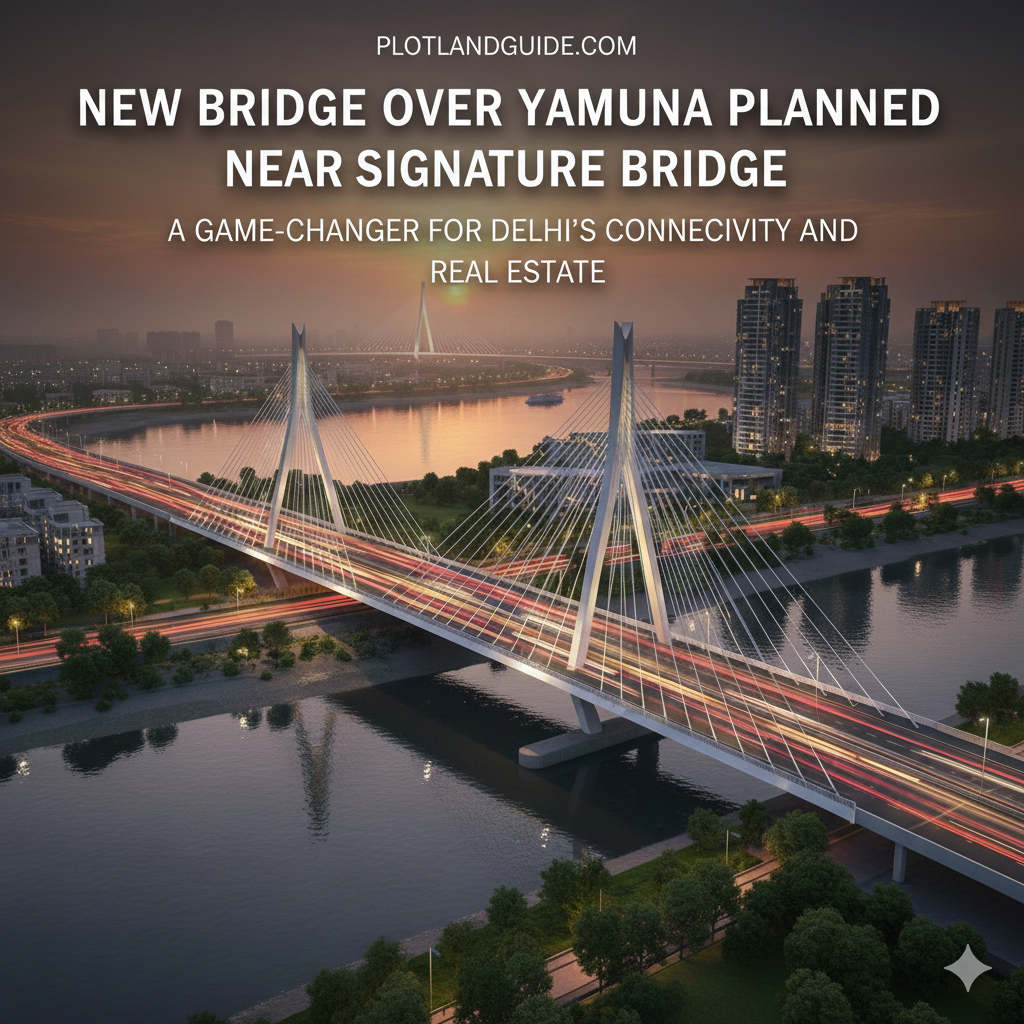
Delhi, a city that never sleeps, is also a city that spends a significant portion of its waking hours stuck in traffic. For millions of residents commuting between the bustling hubs of Central and North Delhi to the densely populated neighborhoods of East and North-East Delhi, the Yamuna River has historically been both a lifeline and a bottleneck. While engineering marvels like the Signature Bridge have redefined the city’s skyline, the sheer volume of vehicular traffic continues to outpace infrastructure growth.
In a significant development that promises to reshape the capital's transit landscape, the Delhi government is currently actively reviewing a proposal to construct a brand-new bridge over the Yamuna River. Strategically planned to come up near the iconic Signature Bridge—or potentially serve as a modern replacement for the diligent but aging Old Iron Bridge (Loha Pul)—this project is poised to be the next big infrastructure milestone for the National Capital Region (NCR).
For homebuyers, investors, and daily commuters, this news brings a wave of optimism. Infrastructure projects of this magnitude do more than just asphalt and concrete; they bridge gaps between communities, unlock real estate value, and significantly upgrade the quality of life. In this comprehensive analysis, we delve deep into the details of this proposed project, the critical needs it addresses, and the ripple effects it will likely have on Delhi’s property market and urban ecosystem.
The initiative stems from a pressing reality: Delhi’s existing river crossings are operating at or beyond their designed capacity. The proposal, recently placed before the Public Works Department (PWD) by the Trans-Yamuna Board, suggests a new corridor to ease the burden on existing structures.
Officials are currently in the preliminary stages of examining the feasibility of this massive undertaking. The core idea is to create a robust alternative route that can handle the spillover traffic from the Ring Road and the Signature Bridge. The Signature Bridge, while successful in diverting traffic from the Wazirabad Barrage, has itself become a high-traffic zone due to its popularity and critical positioning.
The government’s plan involves a detailed study of the river stretch from Old Wazirabad to Kalindi Kunj. This holistic approach ensures that the new bridge won't just shift the bottleneck from one point to another but will instead integrate seamlessly into the wider traffic grid. By potentially replacing the Old Iron Bridge—a double-decker relic from the British era that carries trains on top and vehicles below—the city could reclaim a vital corridor with modern, high-capacity infrastructure capable of supporting the heavy vehicular load of 21st-century Delhi.
To understand the significance of this proposed bridge, one must look at the current state of Trans-Yamuna connectivity. The eastern flank of Delhi, housing millions in localities like Seelampur, Shastri Park, Shahdara, and Laxmi Nagar, relies heavily on a handful of bridges to access the commercial and institutional centers of Central and North Delhi.
1. The Ring Road Bottleneck: The Ring Road is the spine of Delhi’s traffic, but it suffers from chronic severe congestion, particularly around the Sarai Kale Khan and ISBT Kashmere Gate areas. With the impending full operation of major expressways—including the Delhi-Meerut Expressway and the Delhi-Dehradun Expressway—the volume of traffic dumping onto the Ring Road is set to skyrocket. A new bridge near the Signature Bridge would act as a critical pressure valve, offering an alternative for traffic that would otherwise clog the arterial Ring Road.
2. The Saturation of Existing Bridges: Currently, commuters rely on the Signature Bridge, the Wazirabad Bridge, the Old Iron Bridge, and the Geeta Colony Bridge. During peak hours, these crossings turn into parking lots. The Wazirabad Bridge, in particular, is narrow and often in need of repair, leading to frequent diversions. The proposed new structure would provide a reliable, high-speed link that ensures continuity of movement even if one of the older bridges faces maintenance issues.
3. Future-Proofing for Rapid Growth: Delhi is not static. With new Regional Rapid Transit System (RRTS) stations coming up and the continuous expansion of the Metro network, the multimodal transport hubs near the Yamuna are becoming busier. The new bridge is not just a reaction to today’s traffic but a proactive measure to accommodate the vehicular explosion expected over the next decade.
While the exact alignment is still under review, the proposed location "near the Signature Bridge" is strategic. This area, connecting the outer reaches of North Delhi (like Timarpur and Mukherjee Nagar) to the North-East districts (like Khajuri Khas and Bhajanpura), is a critical junction.
A new bridge here would likely offer direct connectivity benefits to:
If the decision leans towards replacing the Old Iron Bridge near Kashmere Gate, the impact would be equally transformative. It would revitalize the connectivity between the historic Old Delhi area and the burgeoning residential zones of Shahdara, replacing a slow, narrow crossing with a multi-lane modern thoroughfare.
History has repeatedly shown that in Delhi, where the metro goes and where bridges are built, real estate appreciation follows. Infrastructure is the single biggest driver of property values in the NCR, and this new bridge will be no exception.
1. North-East Delhi: The Primary Beneficiary Localities such as Khajuri Khas, Bhajanpura, Sonia Vihar, and Yamuna Vihar have traditionally been viewed as affordable but somewhat less accessible markets compared to South or West Delhi. A new bridge changes this perception overnight. Enhanced connectivity reduces the "friction of distance," making these areas attractive for middle-class families looking for affordable homes within striking distance of the city center. We can expect a steady appreciation in capital values and rental yields in these precincts.
2. North Delhi and University Enclave On the western bank, areas like Timarpur, Civil Lines, and Mukherjee Nagar could see a renewed interest. Better connectivity to the east opens up a larger catchment area for businesses and educational institutions located here. For investors, this signals a potential rise in demand for student housing and commercial spaces.
3. The "Signal-Free" Premium Properties located along the approach roads of major bridges often command a premium due to the promise of a "signal-free" commute. Real estate developers are likely to highlight this new connectivity in their future projects, marketing the ease of access to Central Delhi as a key selling point.
The benefits of the new Yamuna bridge extend beyond just saving time. There is a profound environmental and economic angle to this development.
It is important to note that the project is currently in the proposal and review stage. Infrastructure projects of this scale require meticulous planning, environmental clearances, and budgetary allocations.
Feasibility Studies: The Public Works Department (PWD) will conduct comprehensive studies to determine the best alignment, soil conditions, and structural design. This phase is crucial to ensure the bridge is safe, durable, and environmentally sustainable, given the sensitive ecology of the Yamuna floodplain.
Design and Aesthetics: Following the precedent set by the Signature Bridge, which has become a tourist landmark with its viewing gallery and distinctive pylon, there is an opportunity for this new bridge to also be an architectural icon. Whether the government opts for a utilitarian design or another landmark structure remains to be seen.
Timeline Expectations: While no official deadline has been set, similar projects typically span several years from conception to commissioning. However, the urgency shown by the administration in addressing the Ring Road congestion suggests that this project could be fast-tracked.
The proposal for a new bridge over the Yamuna River marks a pivotal moment in Delhi’s urban planning. It acknowledges that for the capital to grow sustainably, its infrastructure must stay ahead of the curve. By addressing the critical chokepoints near the Signature Bridge and the Old Iron Bridge, the government is looking to weave a tighter, more efficient urban fabric.
For the residents of Delhi, this is more than just a construction update; it is a promise of reclaimed time, cleaner air, and better living standards. As the city continues to expand, projects like these ensure that no part of the capital is left behind. Whether you are a real estate investor scouting for the next growth corridor or a daily commuter dreaming of a jam-free drive, this new bridge is a development worth watching closely.
As we await further official announcements and the detailed project report, one thing is clear: the bridge over the Yamuna is not just crossing a river; it is crossing into a new era of connectivity for Delhi.
