Published On:
April 19, 2026
Updated On:
April 19, 2026
Noida is set to overhaul its internal transit with a massive Rs 600 crore elevated corridor connecting Sector 15 to Sector 63. While the project promises to drastically cut commute times and boost commercial real estate, it has also sparked concerns among local retailers and residents fearing a dip in ground-level footfall and property livability.
For years, the sheer volume of daily commuters navigating the arterial roads of Noida has outpaced the city's original master plan. While the region is celebrated for its wide avenues and high-speed expressways, the internal connectivity between its prime residential blocks and sprawling IT hubs has increasingly become a logistical nightmare. The daily grind from the Delhi border to the commercial epicentres of Sector 62 and 63 is often characterized by endless red lights, severe vehicular congestion, and mounting commuter frustration.
To break this gridlock, the Noida Authority is currently advancing one of its most ambitious and expensive infrastructure interventions to date: a massive elevated platform project. Estimated to cost a staggering Rs 600 crore, this proposed corridor aims to completely redefine urban mobility within the city. However, the introduction of heavy infrastructure in established urban zones is rarely a frictionless process. As the blueprints are finalized and the soil testing concludes, a complex narrative of rapid modernization clashing with local livelihoods is unfolding on the ground.
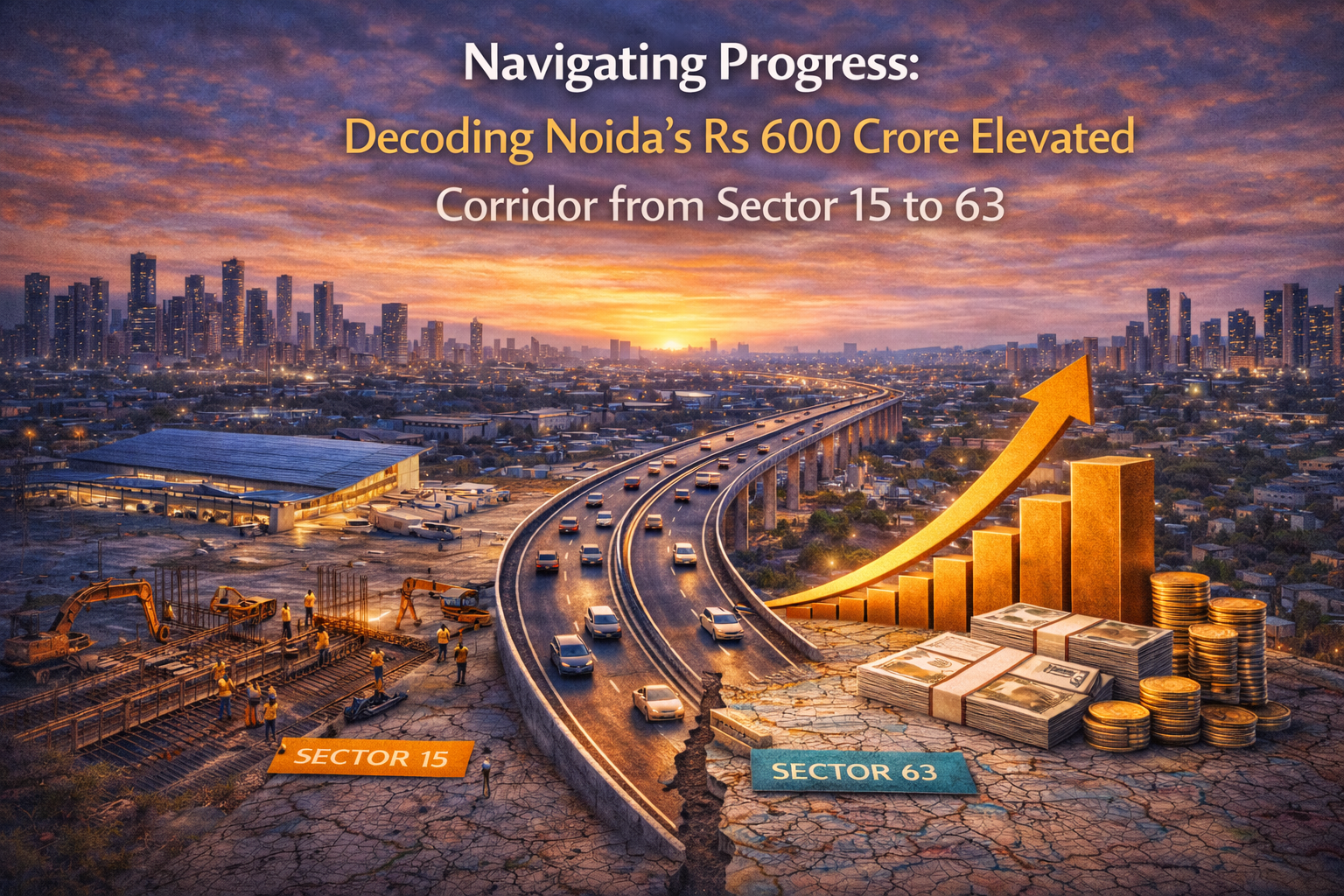
The fundamental objective of this new infrastructure is to create a seamless, high-speed bypass right over the city's most congested zones. The planned route is an engineering marvel designed as a massive shortcut. It originates near Sector 15, effectively capturing the heavy influx of vehicular traffic entering the city from the Chilla border and the DND Flyway. From there, it stretches continuously all the way to Sector 63, slicing directly above the notorious MP-1 road.
The dream being sold to the daily commuter is highly appealing: the ability to cross from the Delhi border straight into the heart of Noida’s IT and industrial sector without touching the brakes for a single traffic signal.
To achieve this, the elevated corridor is being engineered with several modern features:
The corridor is projected to feature a robust four to six-lane configuration. This width is absolutely critical to absorb the peak-hour rush of thousands of corporate employees, heavy commercial transport, and regular city traffic without causing bottlenecks on the elevated stretch itself. The entire length of the corridor will be heavily equipped with modern LED lighting and 24/7 CCTV surveillance, ensuring absolute safety for late-night commuters.
A major flaw in many elevated highways is their restrictive nature—once you are on them, you are trapped until the very end. The planners of the Noida elevated corridor have actively avoided this trap by integrating strategic entry and exit ramps. These meticulously placed drop-downs will allow motorists to seamlessly enter or exit the elevated road at crucial, high-density junctions like Sector 18, Sector 25, and Sector 37.
Furthermore, to protect the residential neighborhoods situated directly beneath the structure, the project includes the installation of high-grade acoustic noise barriers. These are designed to absorb the heavy vibrations and relentless tire noise that typically accompany high-speed elevated traffic.
The primary catalyst driving this massive investment is the immediate relief it promises to the everyday commuter. Once operational, the corridor is expected to shave off nearly thirty to forty minutes from the daily travel time between the city's western borders and its eastern commercial hubs.
Beyond the sheer convenience of a faster commute, there is a strong economic and environmental argument supporting the project. Thousands of vehicles idling at prolonged red lights along the MP-1 road currently burn massive amounts of fuel, contributing heavily to the city’s localized air pollution. By moving a significant chunk of this traffic to a high-speed, signal-free elevated platform, the overall vehicular emissions at the ground level will plummet. A moving vehicle is inherently cleaner than a stationary, idling one, making this project a crucial step toward improving the city's overall air quality index.
Additionally, pulling the heavy, through-traffic off the ground-level roads will essentially return the neighborhood streets to the local residents. People living in the adjacent sectors will finally be able to navigate to their local grocery stores or neighborhood parks without being swept up in the aggressive cross-city rush hour.
The announcement of a Rs 600 crore infrastructure project acts as a massive seismic event for the regional real estate market. However, the impact is highly localized and deeply asymmetrical, creating distinct zones of extreme appreciation and noticeable devaluation.
The most immediate beneficiaries of this elevated corridor are the commercial real estate hubs located at its terminal points. Sector 62 and Sector 63 are the undisputed engines of Noida’s IT and corporate economy. However, their immense growth has historically been somewhat hindered by how difficult it is to reach them during peak hours. The new corridor completely erases this friction. With travel times slashed, corporate offices in these sectors will command a massive premium. Businesses are highly willing to pay top-tier leasing rates for office spaces that their workforce can access easily and without daily fatigue. We are already witnessing a sharp upward revision in commercial property valuations in these specific zones.
For seasoned investors, the announcement of such massive infrastructure acts as a clear signal for long-term wealth planning. The fundamental rule of real estate economics is that land appreciates, while constructed structures inevitably depreciate. When evaluating the wealth creation potential triggered by this new corridor, historical precedent serves as the best possible guide.
Consider the massive real estate boom witnessed in the region during the late 2000s. Investors who aggressively bypassed densely packed city apartments to acquire raw plots in the emerging sectors of Noida around 2007 experienced exponential, multi-fold capital appreciation over the subsequent decades. They built generational wealth by holding an indestructible asset while the surrounding infrastructure matured.
The new elevated road is actively setting the stage to replicate this exact dynamic in the newly connected peripheral zones and the expanding Greater Noida influence areas. Acquiring independent plots offers absolute ownership control and massive upside potential, completely free from the heavy depreciation risks and escalating maintenance overheads associated with aging high-rise apartments. As connectivity to the IT hubs becomes frictionless, plotted developments situated just off the highway exits will see intense demand from upwardly mobile professionals seeking to build custom legacy homes, driving land values significantly higher than group housing flats in the same vicinity.
Conversely, the real estate narrative for properties located directly underneath or immediately adjacent to the elevated structure is notably grim. In urban planning, an elevated highway often creates a "concrete shadow." Residential houses that once enjoyed an open view of the sky may suddenly find their bedroom windows opening up to a massive concrete pillar. Despite the planned noise barriers, the constant hum of high-speed traffic overhead severely impacts the daily livability of these homes.
Similarly, retail shops located directly on the ground-level stretches of the MP-1 road are facing a severe threat. High-street retail relies heavily on visibility and slow-moving traffic. When a massive percentage of the daily commuters are elevated above the shops, completely bypassing the ground-level storefronts, impulse buying drops to zero.
This brings us to the core of the local resistance. The project is a classic textbook example of macro-level progress conflicting with micro-level survival. The thousands of local shopkeepers, small business owners, and street-level vendors who have spent decades establishing their livelihoods along this specific route are currently in a state of deep anxiety.
For these local economies, the elevated road represents an existential threat. They argue that turning the bustling MP-1 road into a high-speed bypass will transform their vibrant commercial stretches into dead zones. The fear is that the ground-level roads will essentially become dark, uninviting service lanes, severely impacting footfall and pushing many small retailers toward bankruptcy.
The residents living in the immediate vicinity are also deeply concerned about the multi-year construction phase. Building a Rs 600 crore elevated platform through a densely populated urban area is a highly disruptive process. It requires massive road barricades, heavy machinery operations deep into the night, severe dust pollution, and highly convoluted traffic detours that will test the patience of the city for years.
Executing a project of this magnitude requires deep pockets and flawless administrative coordination. The estimated budget of Rs 600 crore makes this one of the most capital-intensive infrastructure bets the city has ever placed. The funding is expected to be drawn largely from the Noida Authority’s own robust internal coffers, supplemented by potential state government backing.
Currently, the project is navigating the complex, advanced stages of planning and bureaucratic approval. The Detailed Project Report has been highly scrutinized, and extensive soil testing and ground feasibility studies have been conducted across various critical patches. The engineering teams are meticulously fine-tuning the structural design to ensure it does not clash with the city’s existing underground utility networks or the operational pillars of the Delhi Metro’s Blue Line, which is a massive logistical headache in a heavily planned city.
In terms of a realistic timeline, massive civil engineering projects rarely happen overnight. Once the final approvals from the Uttar Pradesh government and the requisite environmental boards are secured, the Authority aims to break ground rapidly. From the day the first concrete is poured, residents should expect a grueling 24 to 36-month construction cycle. Realistically, the first vehicles are expected to hit the fresh asphalt of the elevated corridor sometime in late 2026 or early 2027.
The proposed Rs 600 crore elevated corridor from Sector 15 to Sector 63 is the ultimate manifestation of Noida’s growing pains. It perfectly encapsulates the eternal urban dilemma: the absolute necessity of modernization versus the inevitable disruption of the existing socio-economic fabric.
On a macro level, it is a highly necessary upgrade. If Noida is to sustain its reputation as a premier IT and industrial hub, it simply cannot allow its workforce to remain paralyzed in daily traffic jams. The seamless connectivity will undeniably propel the city’s corporate sectors forward and offer lucrative wealth-generation opportunities for smart land investors.
However, the human cost cannot be ignored. The local administration faces the monumental task of executing this massive project while aggressively mitigating the damage to the ground-level retail economy and ensuring the livability of the adjacent residential sectors. As the city watches the initial barricades go up, it is clear that the road to a faster, highly connected future will require navigating a long, disruptive, and highly complex present.
