Published On:
February 10, 2026
Updated On:
February 10, 2026
Buying a home next to an electrical transformer is a calculated risk; while it may offer a lower purchase price, it often brings challenges like potential fire hazards, noise pollution, and a significant hit to future resale value. Experts generally advise caution, suggesting strict adherence to safety clearance norms and a thorough inspection of the equipment's condition before signing on the dotted line.
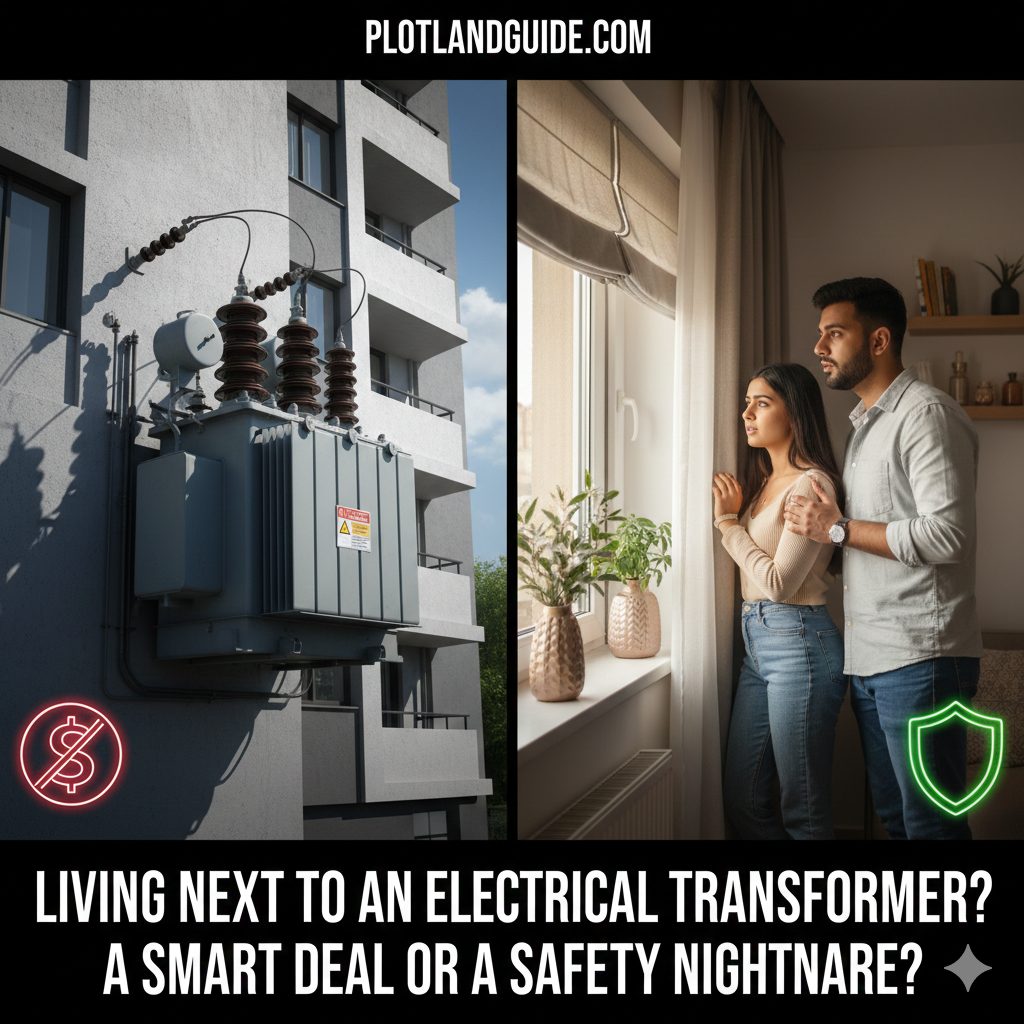
Finding the perfect home often feels like a series of compromises. You find the right neighborhood, but the price is too high. You find the right price, but the commute is too long. Then, occasionally, you find a property that seems to check every box—great location, spacious layout, and a price tag that makes you look twice. But then you spot it: a massive, humming electrical transformer right outside the balcony or adjacent to the compound wall.
This is a scenario countless homebuyers face, especially in densely populated urban areas where utility infrastructure jostles for space with residential buildings. The immediate reaction is often hesitation. Is it safe? Will the noise drive me crazy? Is this why the property is cheaper?
While the discount might be tempting, the proximity to high-voltage equipment brings a unique set of considerations that go beyond just curb appeal. Before you make a decision that could impact your family's safety and your financial future, it is crucial to peel back the layers of this "electric" debate.
The most immediate concern with living next to a transformer is physical safety. In many cities, especially in older neighborhoods, transformers are often pole-mounted or placed on plinths with minimal protective fencing.
1. Fire Risks and Oil LeaksTransformers, particularly the oil-filled variety commonly used in distribution networks, can be volatile if poorly maintained. Overloading—a frequent occurrence during peak summer months—can lead to overheating. In extreme cases, this causes the insulating oil to catch fire or the unit to explode. If your home is within a few feet of such a unit, the radiant heat and potential fire spread are serious risks.
2. Monsoon HazardsDuring heavy rains or waterlogging, ground-level transformers can become electrocution hazards. If the drainage around the transformer is poor, the risk of short circuits increases, posing a danger to anyone walking nearby—including children and pets.
What to Check:
Beyond the tangible risk of fire, there are the intangible stressors that can affect your daily quality of life.
The EMF DebateElectromagnetic Fields (EMF) are a constant source of anxiety for buyers. While scientific consensus generally suggests that low-frequency EMFs from residential transformers are within safe limits for adults, the "perceived risk" remains high. Many families worry about long-term exposure, particularly for young children or the elderly. Even if the medical verdict is not definitive, the psychological stress of worrying about radiation can take a toll on your peace of mind.
The Nuisance of NoiseOne factor that is often underestimated during a 15-minute property visit is noise. Transformers emit a constant, low-frequency hum due to "magnetostriction"—the vibration of the magnetic core. During the day, city traffic might drown this out. However, at night, this hum can become a persistent, irritating drone that disrupts sleep and increases anxiety levels.
Real estate is an investment, and this is where the transformer issue hits hardest. You might be getting a great deal today, but you have to consider the person who will buy the house from you ten years down the line.
1. The "Stigma" DiscountProperties located adjacent to electrical infrastructure often carry a "stigma." Even if the unit is perfectly safe, the perception of danger limits the pool of potential buyers. Most buyers will instinctively prefer the house down the street that doesn't have high-voltage wires dangling outside the window.
2. Longer Time on MarketWhen you eventually decide to sell, be prepared for the property to sit on the market longer. You may have to offer significant price corrections to attract buyers, effectively neutralizing the "deal" you got when you bought it.
3. Curb AppealLet’s face it: transformers are ugly. They are often surrounded by overgrown weeds, garbage, or fencing that obstructs the view. This lack of aesthetic appeal can significantly lower the rental yield and capital value of the property compared to similar units in the same complex.
It is not all doom and gloom. For the pragmatic buyer, there are silver linings to consider, provided safety norms are met.
If you are seriously considering a property near a transformer, do not rely on the broker’s word. Conduct your own due diligence:
Buying a house next to an electrical transformer is not a strict "no," but it is certainly a "proceed with extreme caution." For most families, the peace of mind that comes with safety and silence is worth the extra cost of a different unit. However, for investors or those on a tight budget, it can be a viable option if—and only if—the safety parameters are non-negotiable and the price discount justifies the trade-off.
Ultimately, your home should be your sanctuary. Ensure that the energy buzzing outside doesn't disrupt the energy inside.
