Published On:
April 23, 2026
Updated On:
April 23, 2026
Discover why the Delhi-NCR real estate market is experiencing a massive surge in branded residences, how infrastructure developments in Noida and Gurugram are driving this ultra-luxury boom, and the critical due diligence homebuyers must conduct before investing their capital.
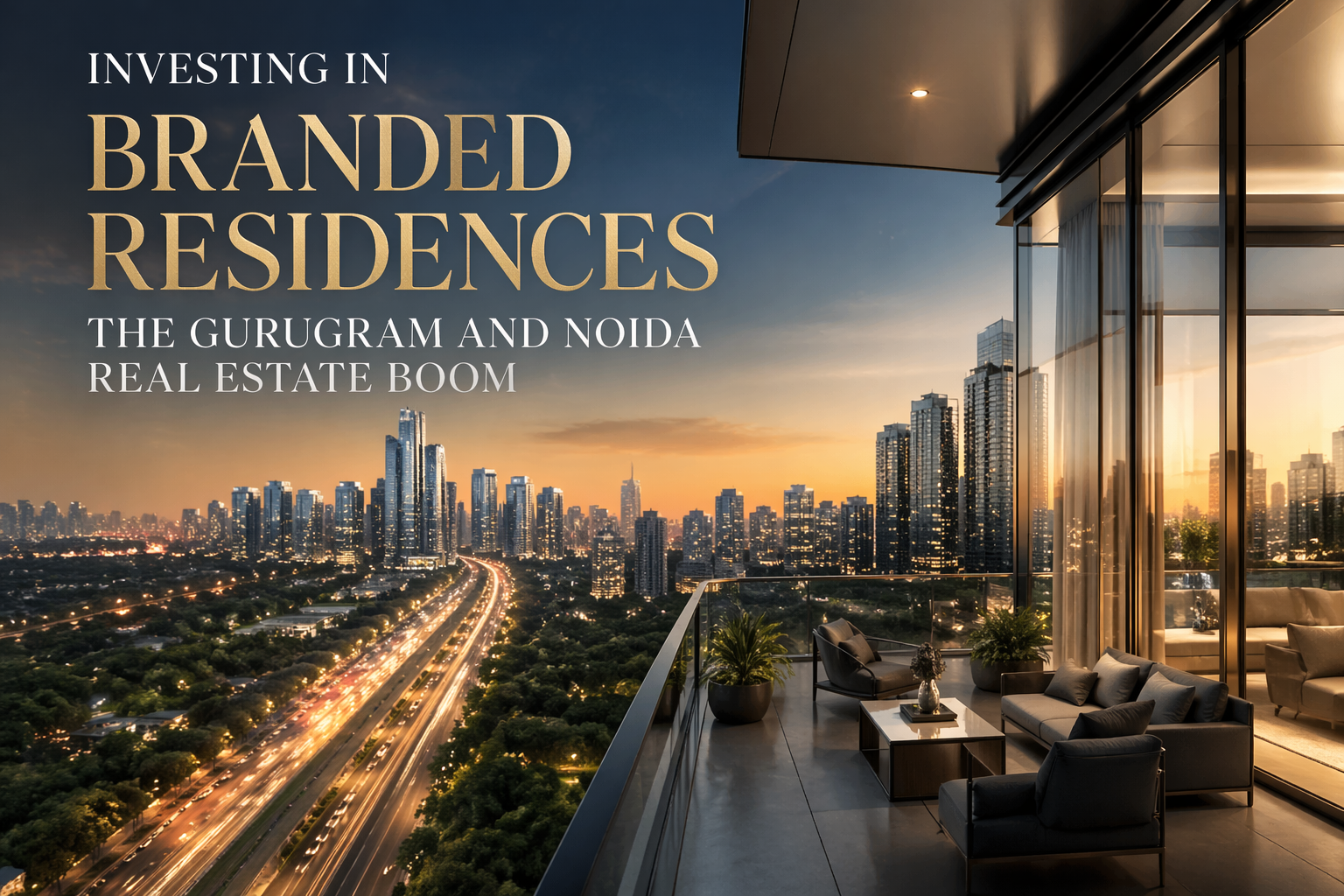
The landscape of ultra-luxury real estate across the Delhi National Capital Region is undergoing a massive transformation. A sudden wave of branded residence launches in Noida and Gurugram is completely reshaping how high-net-worth individuals and corporate leaders view premium housing. Real estate developers in these twin micro-markets are aggressively competing to stand out, bypassing standard luxury amenities in favor of exclusive, global brand tie-ups.
As both cities try to outdo each other on brand differentiation and architectural grandeur, the stakes for investors are higher than ever. Buyers are now faced with properties that command staggering premiums, making it absolutely essential to look far beyond the glamorous label. A smart real estate investment in this tier requires a deep assessment of whether a project actually delivers tangible value across service, design, legal accountability, and the overall living experience.
The Evolution of Ultra-Luxury Living in Delhi-NCR
The concept of branded residences has expanded significantly over the past decade, moving away from being a mere novelty to becoming a defining pillar of the premium housing market. Historically, cities like Mumbai and Bengaluru were the primary testing grounds for these global collaborations. Today, the epicenter has firmly shifted toward Noida and Gurugram.
Developers are partnering with an incredible array of global names to create homes with highly distinct positioning. These collaborations are no longer limited to hospitality chains; they now include luxury watchmakers, boutique fashion houses, elite lifestyle labels, renowned interior designers, and even premium automobile brands. The overarching goal is to offer a high-end living experience that seamlessly blends daily lifestyle, bespoke design, and international brand appeal.
These residences generally fall into two distinct formats. The first is service-led, which essentially brings hotel-style living into a private residential environment. These properties offer around-the-clock concierge support, dedicated housekeeping, in-room dining, and end-to-end property management handled by elite hospitality operators. The second format is design-led. In these projects, global fashion or architectural icons bring their signature aesthetic to the property, dictating everything from the lobby architecture to the intricate interior finishes of each individual apartment. Across both formats, the target demographic remains the same: a niche, highly affluent buyer focused entirely on comfort, exclusivity, and social status rather than pure, short-term investment returns.
The Premium Price Tag and the Target Demographic
Investing in a globally recognized home comes with a steep financial commitment. Typically priced upwards of ₹15 crore, branded residences command an 8% to 10% premium over conventional, standard luxury housing in the exact same micro-market. For the target demographic—comprising top-tier CXOs, successful entrepreneurs, ultra-high-net-worth individuals, and Non-Resident Indians—this premium is a small price to pay for unparalleled lifestyle differentiation.
This buyer profile is evolving rapidly. They are no longer simply looking for large square footage or a prime location; they are purchasing a curated lifestyle. The demand is heavily driven by the aspirations of a new generation of wealth that values world-class security, total privacy, and proximity to a globally benchmarked standard of living. These homes offer exactly that through highly personalized services and a promise of long-term prestige that standard luxury apartments often struggle to maintain.
Gurugram: A Magnet for Global Real Estate Partnerships
Gurugram has always been at the forefront of the corporate and luxury real estate ecosystem in India, and its current pipeline of branded residences reflects this unstoppable momentum. The city’s well-established infrastructure, corporate hubs, and proximity to the international airport make it a natural fit for global luxury brands looking to enter the Indian market.
Recent project launches highlight exactly how fast this segment is growing. Massive developments are taking shape across prime sectors, integrating international lifestyle brands with large-scale residential planning. For instance, massive luxury projects spread across sprawling acreage in Sector 71 are bringing Italian lifestyle elements into everyday living, featuring hundreds of high-end units with imported finishes and bespoke amenities.
Similarly, boutique developments along the highly coveted Golf Course Road are setting new benchmarks for exclusivity. Projects featuring less than a hundred residences are offering customized, designer-curated spaces starting at ₹10 crore, catering strictly to a highly selective clientele. Other massive developments spread across 20 acres in Sector 103 are introducing premium hospitality-branded residences. These projects offer expansive three and four-bedroom configurations, some exceeding 4,000 square feet, ensuring that space, luxury, and brand standards are perfectly aligned.
The Unprecedented Rise of Noida, Greater Noida, and YEIDA
While Gurugram has long been the traditional hub for luxury, Noida is fast emerging as India’s next major hotspot for branded living. Once known primarily for its affordable housing and industrial clusters, Noida is undergoing a total metamorphosis. This shift from a value-driven market to a premium residential destination is backed by robust infrastructure, impeccable urban planning, and unmatched connectivity.
The real estate corridors along the Noida-Greater Noida Expressway and the Yamuna Expressway Industrial Development Authority region are witnessing an unprecedented luxury boom. The fundamental growth driver for these micro-markets is the rapid development of the Jewar International Airport. As this massive aviation hub nears operational readiness, it is attracting a surge of corporate investments, hospitality brands, and logistics centers. This economic influx is naturally followed by an elite workforce demanding world-class residential options.
High-end developments are now dotting prime sectors along the expressway. Major domestic developers are partnering with premium Indian hospitality giants to create ultra-luxury serviced apartments. Some of these units along the Noida Expressway span a massive 7,500 square feet each, commanding prices between ₹35 crore and ₹40 crore. These numbers were once unthinkable in the Noida market, illustrating a total paradigm shift in buyer perception.
Furthermore, areas within Greater Noida and the YEIDA corridor are offering low-density luxury planning that is hard to find in the more congested parts of the capital. With vast green belts, wide avenues, and upcoming mega-projects like the Film City and proposed IT corridors, the region is perfectly positioned for long-term appreciation. Global design brands and international luxury real estate conglomerates, which previously hesitated to enter Noida, are now actively planning signature projects in these exact corridors to capture the growing NRI and HNI demand.
Why Buyers Must Look Beyond the Luxury Label
The allure of a global name plastered across a building’s entrance is undeniably strong, but real estate analysts heavily caution against letting a brand name cloud financial judgment. For prospective buyers, the most critical step in the purchasing process is determining whether the brand association is deeply meaningful or entirely cosmetic.
To make a safe and lucrative investment, buyers need to ask a series of hard questions before signing any paperwork. It is essential to uncover if real estate is actually a core component of the brand's global business. Buyers should investigate whether the brand has a dedicated global real estate vertical and if they have successfully delivered and maintained similar projects in other international markets. The tangible value brought to the development must justify the massive financial premium being charged.
The presence of a luxury tag does not automatically guarantee a flawless, risk-free purchase. It is vital to understand the exact structure of the branding agreement between the local real estate developer and the international brand.
Crucial Due Diligence for High-Net-Worth Investors
Due diligence in the ultra-luxury segment requires looking closely at the fine print. Industry experts emphasize that buyers must ascertain whether the international brand is actively involved in the day-to-day development and long-term management of the property, or if they are simply licensing their name for marketing purposes. This distinction is critical because it directly impacts the overall quality of service, operational accountability, and long-term maintenance costs.
If the luxury brand is merely licensing its name for a fixed fee, all liabilities regarding construction quality, project delays, and legal compliance remain entirely with the local developer. If the local developer has a poor track record of delivery, a global fashion or automotive brand name on the brochure will not protect the buyer's capital. Therefore, reviewing the developer’s past performance, ensuring strict RERA registration, and analyzing the legal structure of the partnership are non-negotiable steps.
Buyers must also investigate the longevity of the branding agreement. It is important to know if the association is for a fixed term, such as ten or fifteen years, and what exactly happens to the property’s status and service standards if that agreement expires and is not renewed.
Furthermore, the operational costs associated with branded residences are significantly higher than standard housing. The maintenance and service charges required to sustain premium amenities, dedicated concierge teams, and international staffing standards are substantial. These recurring costs must be carefully factored into the long-term affordability and holding cost of the asset.
Evaluating Long-Term Value and Market Position
A successful branded residence partnership should fundamentally enhance the core real estate offering, not just serve as a tool to justify an inflated price tag. The best projects in this category are those where the brand's identity is deeply integrated into the lifecycle of the building, ensuring that the property adheres to stringent international standards decades after the initial handover.
India’s branded residences sector is still in its relatively nascent stages, but it is expanding at a phenomenal pace. Market reports currently place India as the sixth-largest market globally for completed branded residence projects, and tenth in the global development pipeline. This signals a very strong, sustained future supply of ultra-luxury homes.
With a rapidly rising base of affluent individuals and an insatiable appetite for global lifestyle products, branded residences have firmly established themselves as a distinct, highly resilient segment within the luxury housing market. As Noida and Gurugram continue to battle for supremacy in this space, bringing better infrastructure and more iconic partnerships to the table, buyers are spoilt for choice.
Ultimately, navigating this high-stakes market requires balancing emotional aspiration with cold, calculated real estate fundamentals. The true value of these magnificent homes lies not in the famous name engraved on the gate, but in the flawless execution, impeccable service, and superior quality of life they can genuinely deliver day after day. Buyers who prioritize strict due diligence alongside their desire for luxury will undoubtedly secure the best assets in the thriving Delhi-NCR real estate market.
