Published On:
January 27, 2026
Updated On:
February 7, 2026
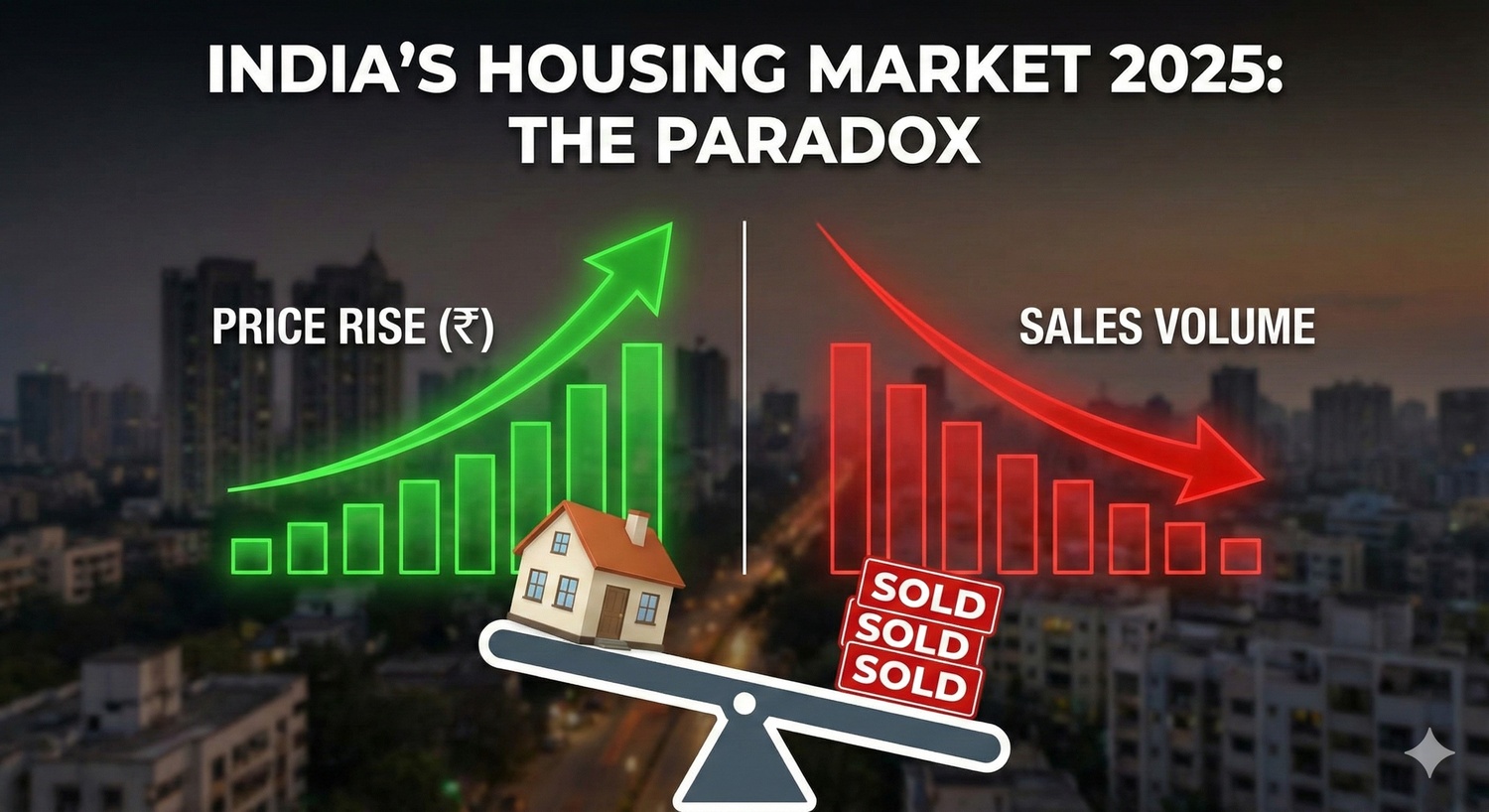
The Indian housing market in 2025 defied traditional logic, with sales volumes dipping by 12-14% while property values and prices surged, driven by a decisive shift toward premium luxury homes. This "value-over-volume" trend signals a maturing market where developer discipline and genuine end-user demand are prioritizing quality and execution over speculative growth.
The year 2025 will likely be remembered as the year the Indian real estate market finally took a breath. After two years of frantic, post-pandemic buying sprees, the residential sector entered a phase of "measured normalisation." While headline numbers show a dip in the number of units sold, a deeper dive reveals a market that is fundamentally stronger, richer, and more disciplined than it has been in a decade.
Industry analysis paints a fascinating picture of a market in transition. We are seeing a classic "value versus volume" paradox: fewer homes are being sold, but the homes that are selling are significantly more expensive, keeping the sector's overall revenue ticker moving upward.
For the first time since 2022, residential sales volume took a backseat. Data indicates a dip in sales ranging between 12% to 14% across India's top eight cities compared to the previous year. In simple terms, buyers purchased fewer units. However, this is not a story of a market crash or demand destruction. Instead, it is a story of recalibration.
While the number of transactions dropped, the total value of sold inventory actually grew by approximately 6%. This divergence is the most critical trend of 2025. It suggests that the average Indian homebuyer is moving up the ladder. The entry-level and affordable housing segments faced pressure due to rising interest rates and inflation, but the appetite for luxury and premium homes remained insatiable. Buyers weren't leaving the market; they were simply becoming more selective and aspiring for bigger, better, and costlier homes.
If one wonders why prices didn't correct despite falling sales, the answer lies in the changing "product mix." The market has pivoted aggressively toward premiumization. In 2025, homes priced above ₹1 crore captured a massive share of the market—estimates suggest over 60% of sales value came from this bracket.
This shift explains why developers remained bullish on pricing. With input costs for construction materials remaining high and land becoming scarcer in prime city corridors, builders focused their energy on high-margin luxury projects rather than volume-driven affordable housing. This strategy paid off, as the affluent demographic—unaffected by minor economic ripples—continued to buy, effectively insulating the market from a broader downturn.
A decade ago, a slowdown in sales would have led to a massive inventory pile-up as developers frantically launched new projects. 2025 was different. Learning from past cycles, developers exercised remarkable discipline. New project launches dropped significantly year-on-year.
By calibrating supply to match the moderated demand, real estate companies prevented an inventory glut. This supply-side control is the primary reason property prices remained firm. In the National Capital Region (NCR), for instance, despite a drop in sales volume, prices appreciated significantly—up to 19% in some premium pockets—because ready-to-move-in inventory for quality homes remains critically low.
The normalisation trend was not uniform across India. The market effectively split into two distinct narratives:
As we move further into 2026, the "frenzy" of speculative buying is essentially over, replaced by a mature, execution-led market. The focus has shifted entirely to project delivery and livability. For homebuyers, this is good news. The market is less volatile, and while prices aren't dropping, the risk of stalled projects is lower than ever due to the financial discipline of established players.
We are likely to see this trend of "quality over quantity" solidify. The days of rapid, blind price appreciation across all asset classes are gone. Instead, growth will be micro-market specific, driven by infrastructure upgrades—like new metro lines or expressways—and the reputation of the developer. The Indian housing market hasn't weakened; it has simply grown up.
