Published On:
September 12, 2026
Updated On:
September 12, 2026
The massive 40,254-square-meter land transfer request from HSVP to the Gurugram Metro Rail Limited is set to supercharge the Priority-1 Metro Corridor. By integrating expansive commercial hubs directly into transit stations, this infrastructure milestone will drastically improve urban mobility and ignite a major real estate boom across Old Gurugram and the Dwarka Expressway.
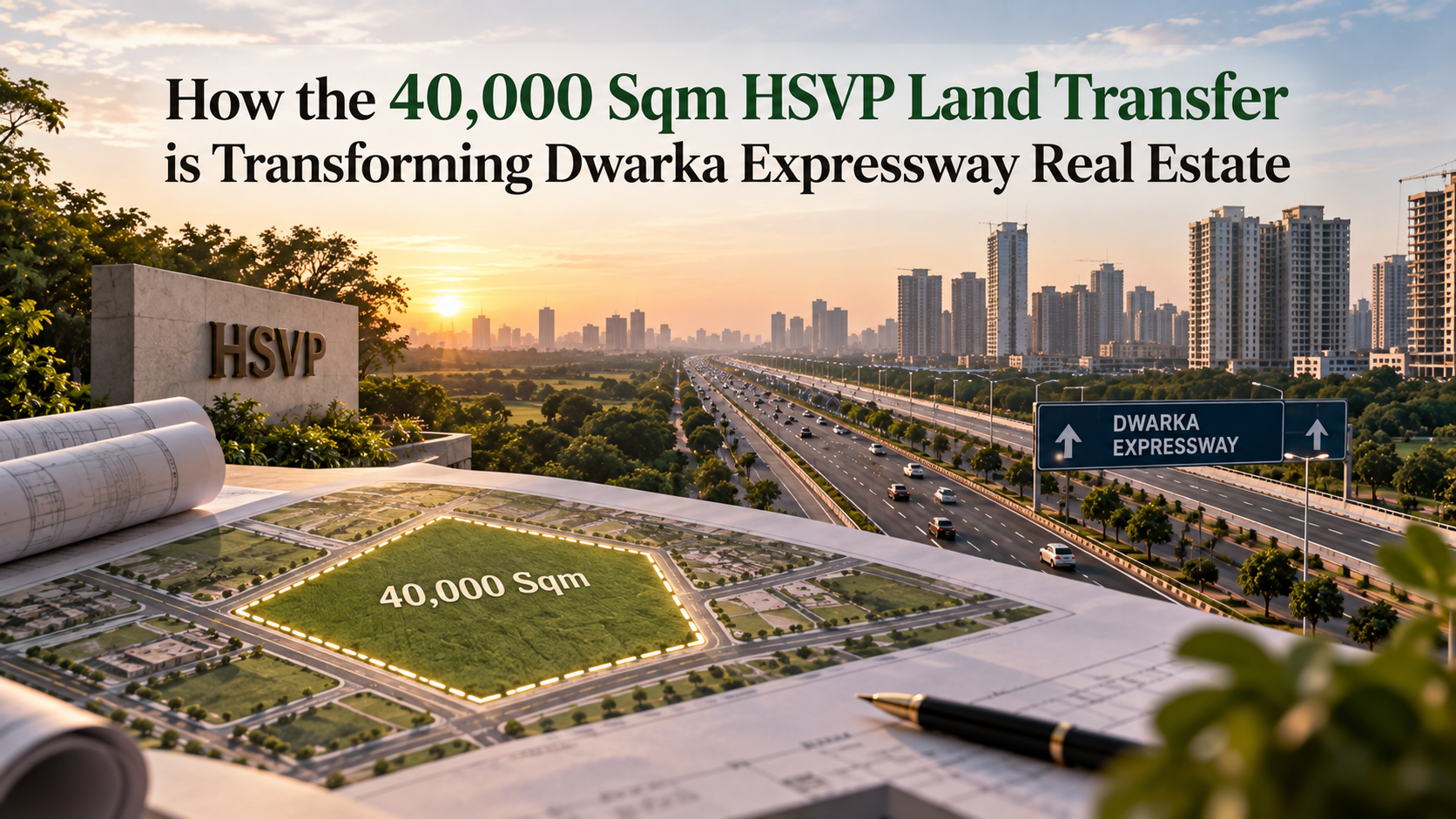
Gurugram is synonymous with rapid economic growth, towering corporate parks, and premium residential townships. As a primary financial and technology hub in the National Capital Region, the city attracts a massive workforce and billions in institutional investment. However, this spectacular metropolitan rise has historically been bottlenecked by an over-reliance on road networks. For years, the absence of an expansive, internal mass transit system has led to severe traffic congestion, forcing daily commuters to navigate gridlocked arterial roads to reach major corporate zones like Cyber City and Golf Course Road.
This daily reality is on the verge of a permanent transformation. The highly anticipated Gurugram Metro extension project, commanding a massive budget of over Rs 5,452 crore, is rapidly moving from the drawing board to the deployment phase. Designed to weave together the isolated pockets of the city, this 28.5-kilometre corridor featuring 27 planned stations will fundamentally alter urban mobility. Now, a major administrative push is accelerating the project's timeline and expanding its scope. The nodal agency executing the project has formally requested a permanent transfer of over 40,254 square meters of land from the state’s urban development authority. This strategic land acquisition is not just about laying down tracks; it is a master plan to build vibrant, multi-modal transport hubs and commercial ecosystems right at the heart of the city's most promising real estate corridors.
To understand the sheer scale and impact of this land transfer, one must look at the specific alignment it serves. The requested land is dedicated to the Priority-1 Corridor, a critical segment of the new metro line designed to connect the existing Millennium City Centre station directly to Sector 101, located near the rapidly developing Dwarka Expressway.
For the longest time, the geographic divide between Old Gurugram, the newer sectors along the Dwarka Expressway, and the established commercial hubs near the Delhi border created isolated micro-markets. The Priority-1 Corridor acts as the vital bridge, seamlessly joining these disparate zones. By establishing a direct, high-speed transit link, the corridor will drastically cut down travel times for hundreds of thousands of residents. Commuters who previously relied on personal vehicles, cabs, or fragmented public transport will soon have a predictable, air-conditioned, and rapid alternative to reach the city's primary employment centres.
The request for 40,254.2 square meters of land from the Haryana Shehri Vikas Pradhikaran (HSVP) is a carefully calculated urban planning maneuver. Rather than acquiring small slivers of land merely for staircases and ticket counters, the transit authorities are securing massive parcels to build comprehensive station infrastructure intertwined with commercial spaces.
The land allocation is strategically distributed across several key nodes along the Priority-1 route:
Sector 101 (Dhanwapur): The largest chunk of the requested land, measuring over 19,000 square meters, is earmarked for the Sector 101 station. Situated in close proximity to the Dwarka Expressway, this massive land parcel will house both core station infrastructure and sprawling business development zones. Given its strategic location, this station is expected to serve as a massive catchment area for the densely populated, newly built luxury condominiums dotting the expressway.
Kadipur (Udyog Vihar Phase 6): The second major node is the Udyog Vihar Phase 6 station at Kadipur. Here, the authorities have requested 18,136 square meters exclusively for business development, alongside an additional 1,200 square meters dedicated to station entry and exit structures. Udyog Vihar is a major industrial and corporate hub, and building a massive commercial transit point here ensures a steady daily footfall of working professionals.
Sector 37 and Basai Village: To ensure comprehensive last-mile connectivity for adjacent residential and industrial neighborhoods, smaller yet crucial land parcels have been identified. Over 900 square meters near Sector 37 and roughly 800 square meters at Basai village are slotted for station access infrastructure, ensuring that residents in these densely packed areas can seamlessly board the network.
Modern mass transit systems globally rarely survive on ticket sales alone. The operational costs of running an extensive metro network require robust, alternative revenue streams. The transit authority driving the Gurugram Metro understands this fundamental economic reality, which is exactly why such massive land parcels are being acquired for commercial development.
The vision extends far beyond traditional metro stations. The goal is to create integrated transport hubs that double as premium commercial destinations. The authorities are planning to utilise these massive land parcels to construct retail outlets, food courts, office spaces, and essential civic amenities directly above and around the metro stations.
To bring this vision to life, strategic dialogues are being initiated with top private real estate developers, corporate leaders, and industry groups. These collaborations will explore lucrative avenues such as station naming rights, co-branded retail spaces, and the construction of direct pedestrian skywalks linking corporate parks and luxury malls directly to the metro concourses. By monetising the real estate potential of the stations, the metro network can generate steady, non-fare revenue. This financial architecture is crucial, as it ensures the long-term economic viability of the infrastructure project without placing a heavy, recurring financial burden on local taxpayers.
A central pillar of this new infrastructure strategy is the aggressive implementation of Transit-Oriented Development, widely known as TOD. In urban planning, TOD refers to creating dense, walkable, mixed-use communities centered around high-quality public transit systems. By acquiring these large land parcels, the transit authorities are laying the groundwork for a textbook TOD model in Gurugram.
When a new metro line is announced, the land value in the immediate vicinity naturally skyrockets due to improved accessibility. The transit authority has actively petitioned the state government to secure a reasonable share of the financial benefits arising from this increased land value and development potential along the corridor. By capturing a portion of the wealth generated by the infrastructure upgrade, the agency can reinvest those funds directly into maintaining and expanding the metro network.
For the everyday citizen, TOD means convenience. It means being able to step off a train, pick up groceries from a station-integrated supermarket, drop children off at a nearby daycare, and walk to a modern apartment complex without ever needing to cross a chaotic highway or start a car engine.
The ripple effects of this infrastructure deployment on local real estate are already becoming visible, well before the first tracks are laid. The extension of the metro network over acquired corridors is acting as a massive catalyst for property markets that were previously overshadowed by newer sectors.
Old Gurugram, which encompasses areas like Palam Vihar and Sectors 3, 4, 7, and 9, is on the brink of a structural renaissance. Historically, these areas have been characterized by independent houses, low-rise structures, and standalone builder floors. However, the promise of direct metro connectivity to the primary corporate hubs of Cyber City and Golf Course Road is altering buyer preferences.
There is a distinct, growing demand for gated redevelopments and modern high-rise apartments in these older sectors. Developers are actively scouting for consolidation opportunities to build premium group housing societies that cater to modern lifestyle demands while offering the ultimate luxury of transit convenience.
Furthermore, this connectivity creates a highly attractive rental arbitrage opportunity for IT and corporate professionals. Historically, professionals working in Cyber City were forced to pay exorbitant rents to live nearby and avoid exhausting commutes. With the Priority-1 Corridor, a corporate employee can reside in the relatively affordable pockets of Old Gurugram or Sector 37 and commute to their Cyber City office in mere minutes via the metro. This dynamic will inevitably drive up rental yields and capital values in the older sectors, bringing them at par with the city's modern micro-markets.
While Old Gurugram experiences a revitalization, the sectors flanking the Dwarka Expressway are preparing for a massive acceleration in occupancy rates. Over the past few years, the Dwarka Expressway has emerged as the premier destination for luxury and ultra-luxury real estate in the National Capital Region. Top-tier developers have launched sprawling, amenity-rich condominiums, commanding premium prices based on the promise of world-class road infrastructure.
However, the missing piece of the puzzle for the expressway was always a dedicated mass transit system. The massive 19,000-square-meter land allocation for the Sector 101 station directly solves this missing link. By creating a multi-modal transport hub right at the edge of the Dwarka Expressway, the metro project provides the ultimate last-mile integration with both Delhi and the core commercial zones of Gurugram.
For prospective homebuyers and investors, this is the final green light. The integration of the metro network will drastically accelerate the absorption of newly delivered luxury housing units in Sectors 99 through 115. Homeowners will enjoy the dual benefits of residing in low-density, high-end residential townships while having immediate access to a high-speed transit corridor. The emergence of high-density residential and commercial hubs catering specifically to transit convenience will solidify the Dwarka Expressway's status as the most coveted real estate destination in Northern India.
Moving a project of this magnitude from paper to reality requires complex administrative maneuvering. Currently, the groundwork is heavily focused on finalizing the seamless transfer of the requested land. The local urban development authorities have confirmed that administrative procedures are actively underway to formally hand over the land required for the core metro tracks, pillars, and primary entry gates.
Because the request includes substantial parcels dedicated specifically to commercial business development, the final clearance and zoning approvals for those specific segments are being reviewed by higher state authorities in the capital. Securing permanent ownership of these land parcels is critical for the transit corporation, as it provides the legal and financial security required to issue construction tenders and invite private investment for the commercial hubs.
As these administrative milestones are achieved, residents can expect to see rapid on-ground deployment. Every major step in the construction phase—from the awarding of structural tenders and the erection of the first pillars to the eventual trial runs—will serve as a micro-catalyst for local property markets, driving steady, incremental price growth across the surrounding sectors.
The 40,254-square-meter land transfer request is far more than a bureaucratic transaction; it is the blueprint for Gurugram’s next phase of urban evolution. By moving away from the outdated model of standalone transit stops and embracing the creation of holistic, multi-modal commercial hubs, the city is aligning its infrastructure with global standards.
When the Priority-1 Corridor becomes fully operational, it will do much more than simply ferry passengers. It will fundamentally democratise mobility across the city, reducing the heavy carbon footprint associated with private vehicle usage and reclaiming the streets from chronic congestion. The seamless integration of Old Gurugram with the booming sectors of the Dwarka Expressway will create a cohesive, deeply connected urban tapestry.
For the real estate sector, the metro expansion is the ultimate growth multiplier. It ensures that the millions of square feet of residential and commercial spaces currently under construction will be supported by a transit system capable of handling the demands of a world-class metropolis. As the tracks are laid and the commercial hubs rise from the ground, Gurugram will finally secure the comprehensive public transit backbone it needs to sustain its position as a premier global business destination.
