Published On:
February 13, 2026
Updated On:
February 13, 2026
The Gurgaon Metro Phase 1 project has officially commenced physical construction, with the first concrete pile cast in Sector 45. Spanning from Millennium City Centre to Cyber City, this Rs 5,452 crore elevated corridor will bridge Old and New Gurugram, featuring a specialized land acquisition bonus scheme to fast-track development and trigger a massive real estate boom along its route.
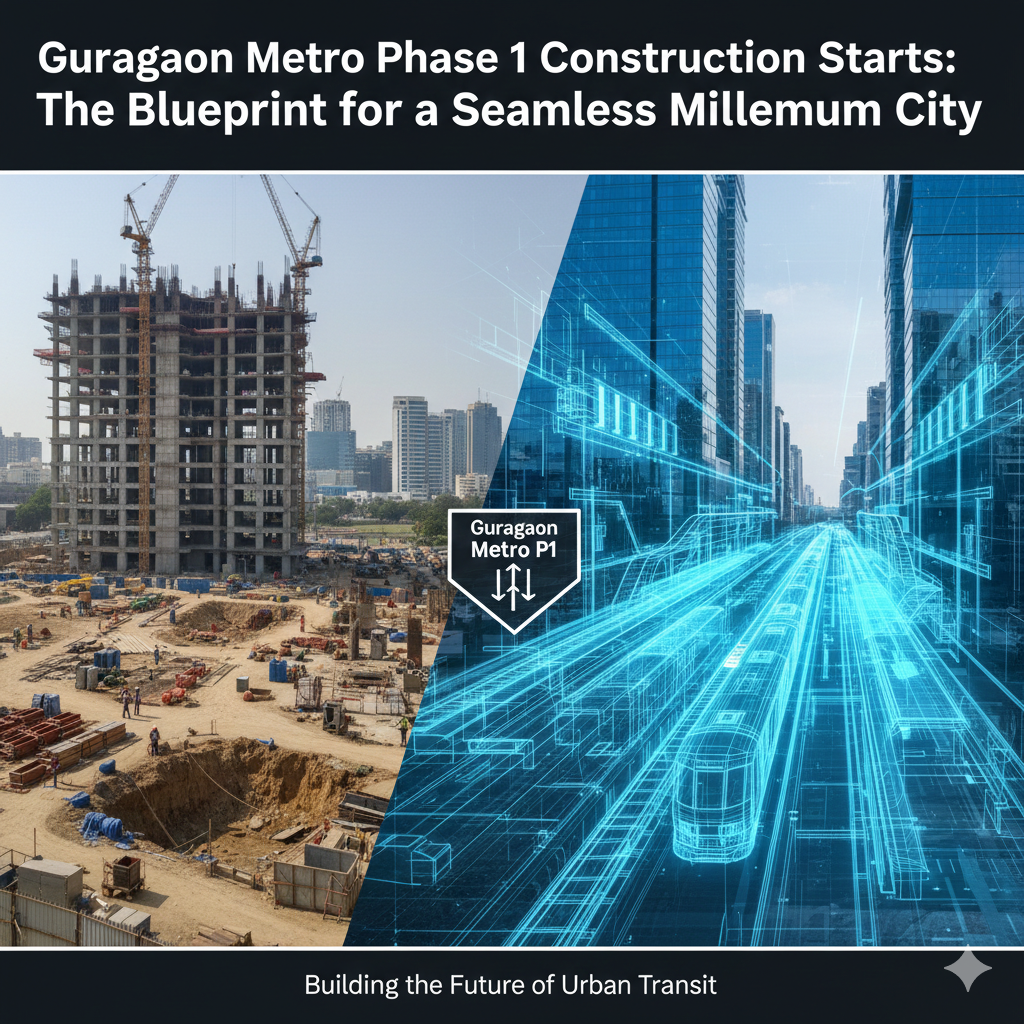
For the millions of professionals and residents navigating the daily labyrinth of Gurugram’s traffic, a definitive solution is finally materializing on the ground. The long-awaited Gurgaon Metro expansion has transitioned from paper approvals to physical reality. Heavy machinery, barricades, and engineering crews are now a common sight along the bustling arterial roads, signaling the dawn of a transformative era in urban mobility.
The Gurugram Metro Rail Limited (GMRL) recently achieved a major milestone by casting the first concrete pile in Sector 45, situated on the crucial stretch connecting the Millennium City Centre to Subhash Chowk. This foundational work marks the official start of on-ground construction for Phase 1 of the mega-project. As the city watches its new transit spine take shape, the implications extend far beyond shorter commute times. This infrastructure overhaul is set to redraw the real estate map, integrate historically divided neighborhoods, and drastically reduce the carbon footprint of India’s foremost corporate hub.
The Gurgaon Metro project is a highly ambitious endeavor, budgeted at a staggering Rs 5,452 crore, designed to create a continuous, high-speed loop through the city. The entire approved corridor spans 28.5 kilometers and will feature 27 fully elevated stations. However, the current construction activity focuses strictly on the extensive Phase 1 segment.
Phase 1 covers a substantial 15.22-kilometer elevated viaduct that originates at the Millennium City Centre (formerly known as HUDA City Centre) and snakes its way to Sector 9. This primary stretch is designed to host 15 elevated stations, strategically placed to capture maximum footfall from densely populated residential pockets and bustling commercial zones.
A defining feature of this phase is the inclusion of a 1.85-kilometer spur line branching out from Basai Village directly to the Dwarka Expressway. This spur is a masterstroke in urban planning, as it provides the critical last-mile rail connectivity required to seamlessly link the rapidly expanding "New Gurugram" sectors along the expressway with the established commercial centers of the city. Furthermore, Phase 1 incorporates a dedicated ramp leading to a massive proposed metro depot in Sector 33, which will serve as the nerve center for train maintenance and operational logistics.
Executing an infrastructure project of this magnitude in a heavily congested urban environment requires meticulous engineering and phased execution. The commencement of work in Sector 45 began with pile casting, which is the most critical foundational step for any elevated transit system.
Pile casting is a heavy-duty process that involves drilling deep cylindrical boreholes into the earth until a stable soil stratum is reached. Massive iron reinforcement cages are then carefully lowered into these cavities, followed by the continuous pouring of high-grade concrete. This creates deep-rooted, immovable foundations capable of supporting the immense weight of the elevated viaducts, the station infrastructure, and the dynamic load of speeding metro trains.
The sheer scale of the engineering required for just the first phase is monumental. Project engineers have outlined plans to cast approximately 3,000 individual piles between the Millennium City Centre and the Sector 9 station. Once a cluster of piles is securely cast, a thick concrete slab known as a pile cap is constructed over them to bind the foundation together and distribute the load evenly. Work on these pile caps has already commenced near the proposed Cyber Park station.
Following the completion of the pile caps, the vertical pier shafts—the pillars that commuters see above ground—will be erected. The current construction timeline suggests that nearly 750 pillars will be built in this initial phase. By the end of May 2026, a large number of these towering pillars will become highly visible to the public, particularly along the busy corridor between Subhash Chowk and the Millennium City Centre, offering a tangible glimpse of the elevated track that will soon carry thousands of passengers daily.
One of the most notorious hurdles for any large-scale infrastructure project in India is land acquisition. Legal disputes over land valuation can stall construction for years, driving up project costs and delaying public benefits. To ensure the Gurgaon Metro Phase 1 construction stays strictly on schedule, the state government has rolled out an aggressive and highly lucrative land acquisition policy.
Rather than relying solely on the slow and often contentious process of compulsory acquisition, the authorities have introduced a "Direct Purchase" plan based on mutual negotiation. Landowners whose properties fall within the metro alignment—whether required for a pillar, a station entry point, or the expansive Sector 33 depot—are being offered a substantial 25 percent bonus over the standard market compensation rate if they agree to sell voluntarily.
This financial incentive is designed to eliminate the exhausting cycle of litigation. In addition to the premium payout, the government has streamlined the process to ensure immediate electronic transfer of funds directly to the landowners' bank accounts, completely bypassing the bureaucratic delays traditionally associated with government payouts. Furthermore, the authorities absorb all stamp duty costs related to the transfer.
This proactive approach is already yielding results. Critical land patches, particularly those required for the Sector 33 depot where numerous structures need to be cleared, are being acquired swiftly. By treating landowners as stakeholders and offering them a highly profitable exit, the metro administration is effectively clearing the path for uninterrupted civil work.
Beyond the concrete and steel, the true value of the Gurgaon Metro Phase 1 lies in its socio-economic impact. For over a decade, the city has experienced a stark developmental divide. The eastern side, featuring Cyber City, Golf Course Road, and the Millennium City Centre, has flourished with global corporate offices and premium rapid transit. In contrast, Old Gurugram—encompassing areas like Sadar Bazaar, Palam Vihar, and Sector 4—has remained heavily congested, relying entirely on choked surface roads and private vehicles.
This new metro corridor acts as the ultimate urban equalizer. By forming a massive hemicyclic loop, it physically and economically integrates the older, traditional neighborhoods with the ultra-modern corporate hubs. A professional residing in Palam Vihar or Sector 7 will no longer have to endure an hour-long, stressful commute through gridlocked traffic to reach an office in Udyog Vihar or Cyber Park. The elevated rail network will compress travel times drastically, offering a clean, air-conditioned, and highly predictable daily commute.
Moreover, the project is designed with a strong emphasis on multi-modal integration. The new network will seamlessly interchange with the existing Delhi Metro Yellow Line at the Millennium City Centre, the Rapid Metro system near Cyber City, and the proposed Regional Rapid Transit System (RRTS) corridors at Hero Honda Chowk. There are also advanced plans to link the network directly with the Gurgaon Railway Station and the primary interstate bus terminal at Sector 10. This interconnected web will allow a commuter to transition from a local metro ride to an interstate train journey without ever needing to step onto a congested road or hire a private cab.
Infrastructure and real estate share a symbiotic relationship, and the initiation of the Gurgaon Metro Phase 1 construction has sent a massive demand shockwave through the local property market. Historically, the announcement of a new metro line triggers speculative buying, but the actual commencement of ground-level piling work converts that speculation into aggressive, high-value investments.
Properties located within a 500-meter to 1-kilometer radius of the proposed metro stations are already experiencing a sharp appreciation in value. The immediate residential sectors adjacent to the first phase of construction—namely Sectors 45, 46, and 47—are transforming into highly coveted pin codes. Homebuyers and investors are willing to pay a premium for the guaranteed future convenience of walking to a metro station.
The impact is perhaps most profound along the Dwarka Expressway belt. The dedicated 1.85-kilometer spur line connecting Basai to the expressway is acting as a massive catalyst for the "New Gurugram" housing market. For years, massive luxury townships along this expressway struggled with the narrative of poor last-mile connectivity. The physical arrival of the metro completely neutralizes this concern, accelerating the occupancy rates of ready-to-move-in projects and triggering a flurry of new residential launches by top-tier developers.
Old Gurugram is also experiencing a renaissance. With the impending metro connectivity, older flats, builder floors, and independent houses in areas like Sector 4, Sector 7, and Palam Vihar are shedding their "remote" tag. The prospect of being just a 15-minute train ride away from the central business district has driven property inquiries in these older sectors up significantly, making them highly attractive for both end-users and long-term rental investors.
On the commercial front, the landscape is equally dynamic. The areas surrounding the proposed transit hubs, particularly Subhash Chowk and the Sector 33 depot region, are bracing for a surge in Transit-Oriented Development (TOD). Increased daily footfall around the stations naturally encourages the development of mixed-use retail spaces, multiplexes, and Grade-A office buildings. Corporations that previously restricted their office searches to Golf Course Road or Cyber City are now actively exploring commercial spaces along Sohna Road (Sector 48) and Sector 72, knowing that their workforce will soon have effortless access via the new metro line.
While the heavy lifting for Phase 1 is underway, the administrative machinery is simultaneously preparing for the next stages of the city's transformation. The Gurugram Metro Rail Limited is currently in the advanced stages of finalizing the precise alignment and tender documents for the second phase of the project, which will extend the network from Sector 9 all the way to Cyber Hub, completing the grand loop.
Concurrently, peripheral infrastructure projects are being synchronized to support the metro development. The construction of the highly anticipated Bakhtawar Chowk underpass is slated to begin shortly, following final approvals from the Gurugram Metropolitan Development Authority (GMDA). Such allied projects are crucial to ensuring that the city's surface traffic continues to flow smoothly while the elevated tracks are built above.
As the piling rigs dig deeper into the soil of Sector 45, they are laying the groundwork for a more cohesive, sustainable, and economically vibrant Gurugram. The target for operationalizing this massive transit network is set for mid-2027. Until then, the residents of the Millennium City will witness a spectacular feat of urban engineering unfold right in their backyards, step by step, pillar by pillar.
