Published On:
October 21, 2025
Updated On:
October 21, 2025
India slashes GST on cement, marble, and bricks — a move that cuts project costs, revives affordability, and fuels housing growth.
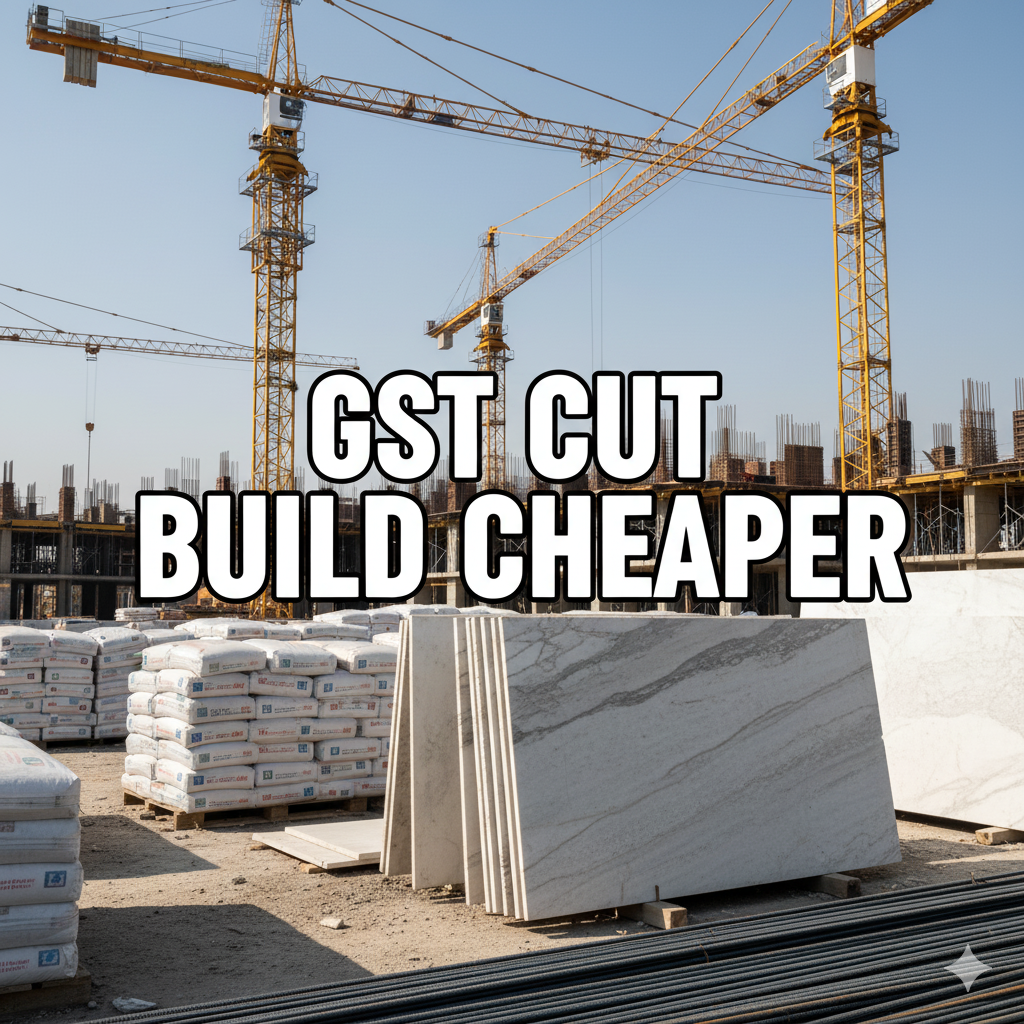
In a long-awaited move to revive India’s real estate and construction sector, the GST Council has announced a major reduction in Goods and Services Tax (GST) rates on several key building materials.
The decision is expected to lower project costs, improve affordability, and stimulate new housing demand, especially in the mid-range and affordable housing segments that have been under pressure from rising input costs and interest rates.
For years, the real estate industry has highlighted the burden of high GST on core inputs — especially cement, which was taxed at 28%, one of the highest slabs under India’s GST framework.
With the latest revision, cement now attracts only 18% GST, a 10% cut that directly reduces per-square-foot construction costs.
Similarly, natural stone materials such as marble, granite, and sand-lime bricks — previously taxed at 12% — have been brought down to 5%, significantly reducing costs in both structural and finishing stages of construction.
Cement alone contributes 12–15% of a project’s total cost, making it one of the most impactful components in construction budgets.
This 10% tax cut can translate into ₹80–₹120 per square foot savings, depending on project type and location.
For affordable and mid-segment housing, where cost sensitivity is highest, this can meaningfully improve project viability and buyer affordability.
For luxury housing and commercial interiors, the reduction in GST on marble and granite will make premium finishes more accessible, potentially reviving demand in the higher-end segment that had slowed in recent years.
The GST relief extends beyond builders and buyers.
Thousands of brick, block, and stone manufacturers, many of whom operate in the semi-formal or unorganized segment, will now face lower compliance pressure and improved cash flow.
Previously, higher GST rates meant significant working capital locks due to input tax credits.
With the reduced rates, smaller manufacturers can expect better liquidity, improved margins, and higher compliance — leading to greater formalization of the materials market.
Developers can expect 3–5% overall cost savings per project, depending on the materials mix and scale.
This could either improve profit margins or allow developers to pass some savings to buyers through limited price reductions or promotional offers.
For homebuyers, the benefit will be indirect but significant.
Lower input costs mean developers can price more competitively, especially in new launches and under-construction projects where GST applies directly.
However, under anti-profiteering provisions, builders are required to pass on any tax-related cost benefits to customers.
Authorities are expected to monitor implementation closely to ensure the savings are not absorbed entirely by developers.
The timing of this rate cut is strategic.
With interest rates remaining elevated and housing affordability stretched, the government aims to reignite construction momentum without introducing direct subsidies.
This measure complements ongoing policy pushes such as:
By lowering tax rates on core materials, the government also signals support for employment-intensive sectors like construction, stone processing, and cement manufacturing — all major contributors to India’s GDP.
Despite the headline relief, several practical considerations remain:
Still, the overall direction is clear — this is a pro-construction, pro-affordability move at a time when the sector needs it most.
The GST Council’s reduction in tax rates for construction materials marks one of the most meaningful reforms for real estate since GST’s inception.
By lowering costs on essentials like cement, marble, granite, and bricks, the government has created room for developers to improve efficiency, homebuyers to gain affordability, and manufacturers to regain competitiveness.
If the benefits are transparently passed down the value chain, this move could reshape project economics across India — from high-rise apartments in metros to township projects in emerging growth corridors.
In essence, India just made it cheaper to build — and more attractive to buy.
