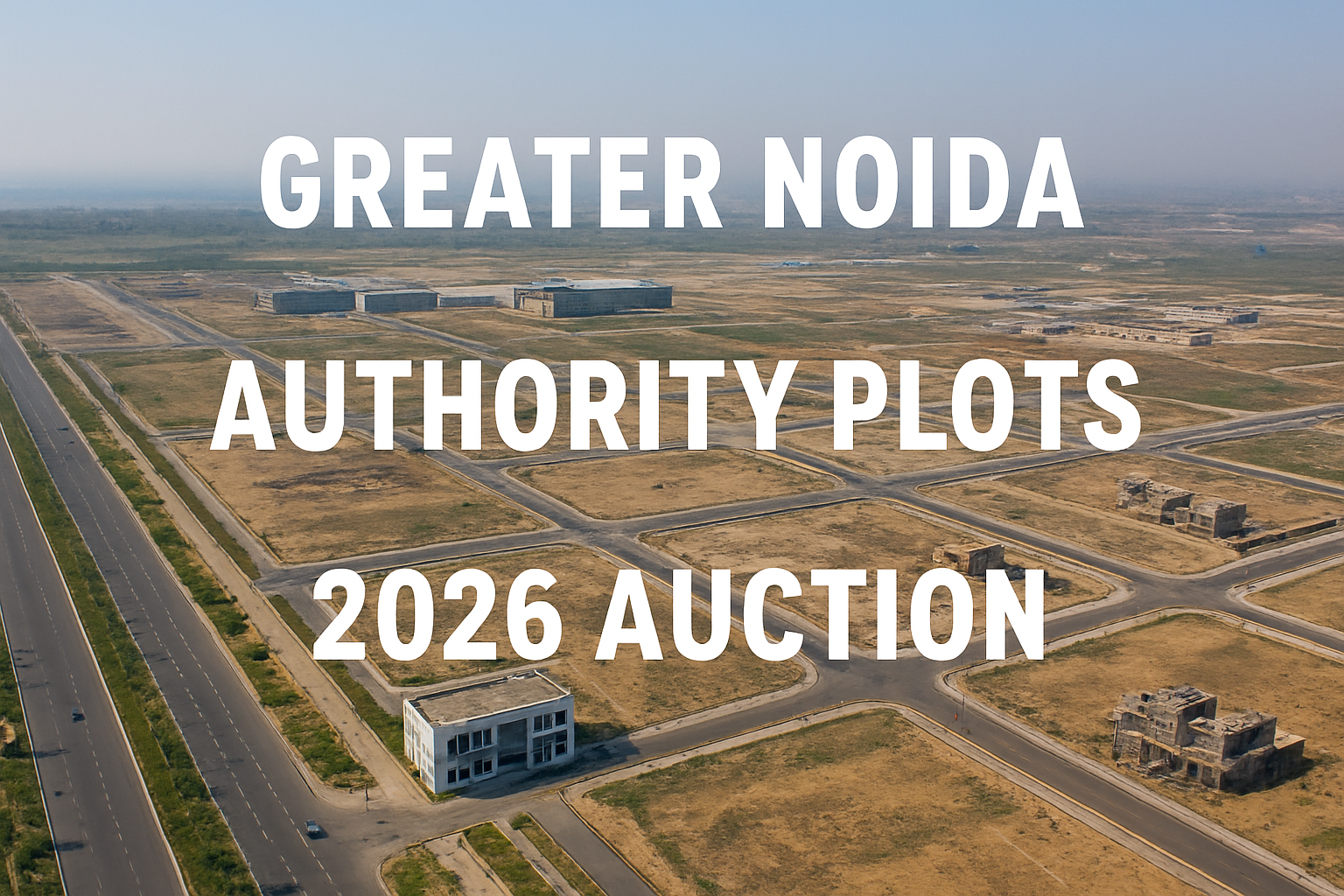
A comprehensive look into Greater Noida Authority’s latest plot schemes, ongoing e-auctions, sector-wise developments, and investor insights for 2026
The National Capital Region (NCR) of India has long been a sprawling tapestry of growth, but few threads in this tapestry shine as brightly as Greater Noida. Managed by the Greater Noida Industrial Development Authority (GNIDA), this region has evolved from a satellite town into a robust economic engine in its own right. As we navigate through 2026, the real estate landscape here is undergoing a significant transformation, driven by transparent e-auctions, massive infrastructure projects like the Jewar Airport, and a strategic pivot towards becoming a tech and industrial hub.
This comprehensive guide delves into the nuances of GNIDA’s latest plot schemes, the intricacies of the e-auction process, sector-specific opportunities, and the long-term investment horizon that makes Greater Noida a compelling choice for homebuyers and investors alike.
The Engine Room: Understanding GNIDA’s Role
To understand the value of a plot in Greater Noida, one must first appreciate the machinery behind it. The Greater Noida Industrial Development Authority (GNIDA) is not merely a municipal body; it is a planning agency armed with the legislative power of the UP Industrial Area Development Act. Unlike the haphazard growth seen in some other Indian cities, Greater Noida was born on a drawing board. Its wide avenues, underground cabling, and distinct zoning (industrial, residential, institutional) are the results of this foresight.
In 2026, GNIDA has doubled down on modernization. The Authority has moved away from opaque allotment processes of the past to a completely digital, transparent e-auction system. This shift is not just bureaucratic; it democratizes access to land. Whether you are a multinational corporation seeking a 10-acre campus or an individual looking for a 200-square-meter plot for a dream home, the playing field is leveled. The process cuts out the middlemen, ensuring that the premium paid goes directly into public coffers for infrastructure development rather than into the pockets of brokers.
The 2026 Scheme Landscape: A Buffet of Opportunities
The year 2026 has brought a fresh wave of opportunities, with GNIDA rolling out aggressive schemes catering to diverse needs. The portfolio is balanced, but three specific categories stand out:
1. The Commercial Push: Call Centers and BPOs
In a strategic move to pivot from "manufacturing-heavy" to "service-oriented," GNIDA has launched a headline scheme auctioning 22 specialized commercial plots aimed at BPOs (Business Process Outsourcing) and call centers.
- Location Strategy: These plots are not located in the hinterlands but in established commercial spines like Techzone 4, Knowledge Park III, and the Alpha Commercial Belt. This ensures that businesses have immediate access to public transport and an existing workforce catchment area.
- The Economics: With sizes ranging from 500 sqm to 4,000 sqm and reserve prices hovering between Rs 40,000 to Rs 60,000 per sqm, these plots are competitively priced compared to Gurugram or Bangalore.
- The Vision: By targeting the IT/ITeS sector, GNIDA is aiming to create a white-collar job market that will, in turn, fuel demand for residential real estate and retail in the vicinity.
2. Residential Plots: The "Dream Home" Segment
For the individual investor, the residential plot schemes remain the biggest draw. These are typically located in sectors like Delta, Chi, and Phi, as well as the premium Alpha, Beta, and Gamma sectors.
- Size Matters: The plots generally range from a manageable 120 sqm (perfect for a small family floor) to expansive 500 sqm parcels (ideal for luxury villas).
- Price Points: In established sectors (Alpha/Beta), prices have hardened to Rs 1.2–1.8 lakh per sqm due to the "live-ability" factor—parks are green, markets are open, and neighbors have moved in. In contrast, emerging sectors offer entry points at significantly lower rates, trading immediate habitability for higher future appreciation.
3. The Industrial Backbone: Ecotech
Greater Noida’s DNA is industrial. The Ecotech sectors continue to see auctions for industrial plots ranging from Rs 18,000 to Rs 35,000 per sqm. These are targeted at MSMEs (Micro, Small, and Medium Enterprises) in electronics, logistics, and light manufacturing. With the nearby Jewar Airport set to handle air cargo, these plots are becoming prime real estate for logistics companies.
Decoding the E-Auction Process
For the uninitiated, the term "e-auction" can be intimidating. However, GNIDA has streamlined it into a user-friendly 6-step journey:
- Digital Onboarding: The journey begins at the official GNIDA E-Tender Portal. There are no physical forms to buy. You create a user profile using your PAN and Aadhaar, ensuring KYC compliance.
- Skin in the Game (EMD): To filter out non-serious buyers, applicants must deposit an Earnest Money Deposit (EMD), typically 10% of the plot's reserve price. This is refundable if you don't win.
- Due Diligence: Once registered, you gain access to the "dossier"—detailed layout maps, lease terms, and site conditions. Pro Tip: Always visit the physical site before this stage. Google Maps doesn't show you if a plot is low-lying or has an obstruction in front of it.
- The Bidding War: On the scheduled date, the live auction happens. It’s transparent—you see the highest bid and can choose to top it. The adrenaline is real, but so is the need for financial discipline. Set a hard limit before you start clicking.
- Allotment & Payment: Winners receive a provisional allotment letter. The payment plan usually involves paying a chunk upfront (allocation money) and the rest in installments, though specific schemes may vary.
- The Lease Deed: The final step is the execution of the lease deed for 90 years. This is effectively "ownership" for all practical purposes, renewable at the end of the term.
Sector-Wise Analysis: Where to Put Your Money?
Not all sectors in Greater Noida are created equal. The investment potential varies drastically based on location, connectivity, and development status.
- The "Premium" Belt (Alpha, Beta, Gamma): These are the Lutyens' Delhi of Greater Noida. They are fully developed, leafy, and expensive.
- Best for: End-users who want to move in immediately.
- Risk: Low.
- ROI: Moderate (Capital values are already high).
- The "Knowledge" Corridor (Knowledge Park & Techzone): Originally planned for universities, this area is morphing into a mixed-use commercial and residential hub.
- Best for: Commercial investors and those looking to build PG (Paying Guest) accommodations or rentals for students and IT workers.
- Risk: Moderate.
- ROI: High rental yield potential.
- The "Growth" Frontiers (Sector Chi, Phi, and Ecotech Extensions): These are the developing zones. Infrastructure is largely in place, but habitation density is lower.
- Best for: Long-term investors (5-10 year horizon) looking for capital multiplication.
- Risk: Moderate (dependence on future occupancy).
- ROI: High capital appreciation expected as the city fills up.
The Infrastructure Multiplier Effect
Why invest in Greater Noida in 2026? The answer lies in the massive infrastructure projects that are converging in this region.
- Noida International Airport (Jewar): By late 2025/early 2026, the airport’s operational status changes the game. It turns Greater Noida from a "suburb of Delhi" into a "Gateway to the World." Multinational companies prefer setting up offices near international airports, which will drive commercial demand.
- Metro Connectivity: The Aqua Line is the lifeline of the city, but the proposed extensions (Sector 51 to Knowledge Park V) will stitch the city closer to the central Noida commercial hub.
- Multi-Modal Logistics Hub (MMLH): Located near Dadri, this project will integrate rail and road freight, making Greater Noida a logistics superpower. This directly boosts the value of industrial plots in Ecotech.
The Fine Print: Risks and Reminders
No investment is without risk, and GNIDA plots are no exception.
- The "Leasehold" Nature: Remember, you are buying a 90-year lease, not freehold land. While this is standard for industrial authorities in India, it does come with transfer restrictions. You cannot simply flip the plot the next day. Usually, you must complete some construction or pay a hefty transfer charge to sell.
- Construction Penalties: GNIDA wants urbanization, not speculation. If you buy a plot and leave it empty for years, be prepared to pay time extension fees (often 2-4% of the plot cost annually). This eats into your returns.
- Sector Readiness: While the map might show a park or a 60-meter road, the reality on the ground in newer peripheral sectors might be different. Verify the status of sewage connections and electricity before bidding.
Conclusion: The Verdict for 2026
Greater Noida in 2026 is a market that has matured. It has shed the "ghost town" tag of the early 2010s and emerged as a functioning, breathing city. The Greater Noida Authority’s 2026 plot schemes offer a structured entry point into this growth story.
For the commercial investor, the BPO/Call Center scheme is a tactical play on the service sector boom. For the homebuyer, the residential plots in sectors like Delta or Chi offer a lifestyle that is cramped and unaffordable in Delhi or Gurugram. And for the industrialist, the Ecotech belt is the logical choice for a factory in North India.
The key to success lies in participating in the e-auctions with a clear strategy—know your sector, know your budget, and understand the construction timelines. As the first flights land at Jewar and the metro network expands, those holding a piece of the Greater Noida pie are likely to see their patience rewarded with robust returns. The city is no longer just "Greater" in name; it is well on its way to becoming greater in value, liveability, and economic stature.