Published On:
May 8, 2026
Updated On:
May 8, 2026
The newly proposed 16-km Ghaziabad metro corridor linking Vaishali to Gokulpuri will provide the first direct rapid transit access to Hindon Airport, drastically reducing commute times and sparking a major real estate boom across the trans-Hindon region.
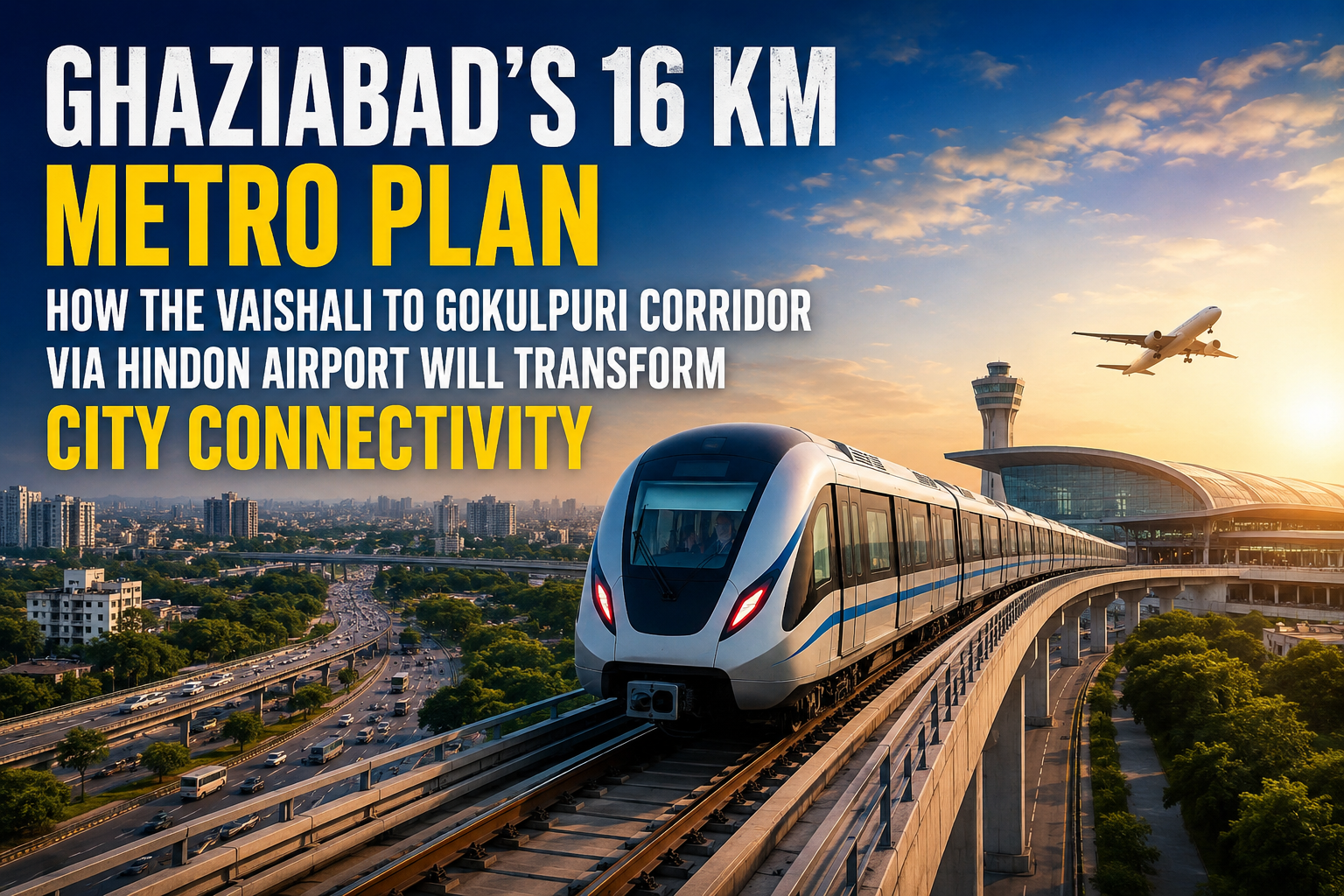
Every single day, hundreds of thousands of commuters navigate the chaotic and heavily congested roads between Ghaziabad and the national capital. For years, the physical infrastructure has struggled to keep pace with the massive population surge in the trans-Hindon region, turning daily travel into a grueling test of patience. However, a sweeping transit overhaul is officially on the horizon. A highly ambitious 16-km metro plan has been proposed to bridge the critical gap between busy residential neighborhoods and Delhi. By establishing a direct link from Vaishali to Gokulpuri, this upcoming corridor is engineered to do much more than just slash travel times. It will integrate the Hindon Civil Terminal into the rapid transit network for the very first time, completely redefining urban mobility. This massive transit upgrade is set to shift the city’s narrative from endless traffic gridlock to seamless, high-speed regional connectivity.
To fully grasp the magnitude of this upcoming infrastructure project, it is essential to look at the current realities of local commuting. Over the last two decades, areas like Indirapuram, Vasundhara, and Sahibabad have experienced explosive demographic growth. While these neighborhoods have evolved into thriving residential hubs with excellent modern amenities, getting in and out of them during peak office hours remains notoriously difficult.
Currently, the existing Delhi Metro network leaves a massive, densely populated zone without direct last-mile connectivity. The Blue Line terminates at Vaishali, while the Red Line runs slightly further north through Dilshad Garden and Mohan Nagar. Commuters living in the vast geographical pocket between these two lifelines are forced to rely heavily on private vehicles, shared auto-rickshaws, and app-based cabs just to reach a train station. This reliance on road-based transport stretches the local road networks well beyond their intended capacity, leading to severe bottlenecks at major traffic intersections. It also heavily contributes to the worsening air quality in the region. The urgent need for a cohesive, looping transit system that stitches these fragmented travel routes together has been evident for years, and the new metro proposal is designed precisely to solve this structural issue.
The proposed metro extension is meticulously planned to resolve these deep-rooted connectivity bottlenecks. In earlier phases of urban planning, authorities had outlined a much shorter 12 to 13-kilometer alignment connecting Gokulpuri on the Pink Line to Arthala on the Red Line via the airport. However, recognizing the pressing needs of the broader suburban population, city development authorities pushed for a more comprehensive, extended solution. The revised 16-kilometer metro link to Delhi now stretches all the way to Vaishali on the Blue Line. This strategic modification ensures that over five lakh residents living in high-density residential clusters get direct, hassle-free access to the larger network.
This alignment functions as a vital transit loop connecting the Blue Line with the Pink Line. Commuters will be able to board a train at Vaishali and travel seamlessly toward Northeast Delhi without enduring multiple frustrating interchanges. The route is expected to host seven strategic stations positioned at key transit nodes. The trains will halt at Vaishali, Sahibabad, Mohan Nagar, Pasunda, the Hindon Civil Terminal, Gagan Vihar, and finally terminate at Gokulpuri. By covering all major commercial and residential touchpoints in the area, this single corridor provides a straight, uninterrupted path across the city, eliminating the need for long, roundabout commuting routes.
Perhaps the most transformative aspect of this entire project is its seamless integration with the Hindon Civil Terminal. Currently acting as the secondary aviation facility for the National Capital Region, Hindon has become increasingly important for regional flights, relieving pressure on the highly congested Indira Gandhi International Airport. However, getting to the regional terminal has always been a frustrating endeavor for passengers. The airport sits roughly five kilometers away from the closest Red Line stations, and even with the introduction of the nearby Sahibabad Regional Rapid Transit System, air passengers still rely on local cabs for the final leg of their journey.
The new metro corridor will completely change this dynamic by providing the first rapid transit option directly to the airport gates. Air travelers will be able to bypass city traffic entirely, stepping off the metro and walking straight into the terminal. This connectivity upgrade perfectly coincides with a massive ₹63-crore expansion project currently underway at the airport. To handle a steep anticipated rise in passenger volumes, the terminal is being heavily upgraded with additional check-in counters, new departure gates, and significantly increased seating capacity.
The overall passenger experience is being modernized from the ground up. Authorities are upgrading the facility with advanced Variable Refrigerant Flow air-conditioning systems to ensure comfortable temperatures year-round, alongside the addition of various new retail outlets and passenger amenities. Together, the airport expansion and the direct metro link will solidify Hindon's position as a highly preferred, functional relief hub for domestic travelers across the country.
Executing a project of this scale requires immense financial backing and high-level urban engineering. The estimated cost to build this advanced transit system sits at nearly ₹300 crore for every kilometer constructed. Given the densely packed geography and existing infrastructure of Trans-Hindon Ghaziabad, excavating underground tunnels is both prohibitively expensive and logistically highly complex. Therefore, the architectural focus for the entire 16-kilometer corridor is on elevated tracks. This approach clears the crowded local terrain, minimizes disruptions to underground utilities, and allows for much faster construction timelines.
The project is currently moving steadily through the administrative pipeline. The Delhi Metro Rail Corporation has been officially tasked with drafting the Detailed Project Report. This highly technical document will outline the exact engineering specifications, route alignments, environmental impact assessments, and final financial outlays required to bring the blueprint to life. Once this report is finalized and submitted, the immediate next step will be securing the necessary capital from state and central authorities. This massive financial injection is viewed by urban planners not just as a transport expense, but as a critical, long-term investment in the region's broader economic future.
Unsurprisingly, the ripple effects of this proposed infrastructure are already being heavily felt across the local real estate market. Historically, the introduction of a new metro line triggers a substantial jump in housing demand, and the Vaishali to Gokulpuri corridor is no exception. However, the impact is manifesting differently depending on the maturity of the local micro-markets.
In established residential hubs like Indirapuram, Vaishali, and Vasundhara, the property market has always been relatively robust. Here, the new metro line will dramatically enhance daily livability. Young professionals and families are actively hunting for modern flats in these areas to capitalize on the upcoming faster transit connections. Because these neighborhoods are already highly developed, property appreciation is expected to remain steady rather than volatile. The sheer convenience of walking to a nearby metro station adds a tremendous lifestyle premium to these homes, making them highly desirable for end-users.
Conversely, emerging areas and peripheral zones are witnessing a much more aggressive surge in real estate momentum. Localities such as Sahibabad and Raj Nagar Extension are rapidly becoming prime targets for long-term investors. The demand for residential plots and newly launched high-rises in these pockets is climbing exponentially. With better transit options making these areas highly accessible, the potential for long-term capital appreciation and higher resale values is immense. Commercial real estate is also poised for a boom, as the improved connectivity will inevitably draw retail chains, corporate offices, and local businesses to the areas immediately surrounding the newly elevated stations.
The 16-kilometer stretch is not an isolated undertaking; it is the cornerstone of a much larger strategy aimed at creating a seamlessly integrated multimodal transport hub in the region. The ultimate goal is to ensure that commuters can effortlessly switch between the local metro network, the high-speed regional rail at Sahibabad, and domestic air travel at Hindon.
Furthermore, the region's transit master plan includes two other vital metro extensions under the broader Phase 5 expansion framework. The first is a highly anticipated five-kilometer link connecting Noida Electronic City directly to Sahibabad. This specific route is intricately designed to weave through Indirapuram, Shakti Khand, and Vasundhara Sector 5, effectively merging the massive commercial hubs of Noida with the residential heart of Ghaziabad. The second proposal involves a shorter three-kilometer extension from the Shaheed Sthal New Bus Adda station to the Ghaziabad Railway Station, bridging the gap between the modern mass transit system and the traditional heavy rail network. When combined with the Hindon airport link, these three corridors will add roughly 25 kilometers of new tracks to the city's network, representing an estimated combined investment of around ₹7,500 crore.
Beyond merely easing travel, massive infrastructure projects of this caliber act as powerful economic engines for the entire community. The construction phase alone is expected to generate substantial employment opportunities, drawing in engineers, project managers, and skilled labor over several years. Once the trains start running, the stations themselves will transform into thriving micro-economies. A proliferation of retail spaces, food and beverage outlets, and essential services will inevitably pop up around major transit nodes like Mohan Nagar and Pasunda. Small local businesses will gain immediate access to a larger, highly mobile customer base, while corporate entities may find surrounding areas increasingly attractive for setting up satellite offices.
Equally important is the profound environmental impact of this transit expansion. The surrounding regions frequently battle severe air quality issues, which are heavily exacerbated by vehicular emissions from thousands of idling cars caught in daily traffic jams. By offering a clean, electricity-driven alternative, this mass transit system will play a crucial role in lowering the city's overall carbon footprint. Every individual who chooses the train over driving contributes to a collective reduction in greenhouse gases. This shift in commuting behavior is absolutely fundamental to achieving broader sustainability goals and creating a healthier, more breathable environment for future generations.
The authorization and eventual construction of the Vaishali to Gokulpuri metro link marks a defining moment for suburban modernization. It represents a clear, strategic move to pull the region out of its infrastructural constraints and launch it into a new era of highly connected, vibrant urban living. As the detailed project reports are finalized and funding falls into place, the days of being trapped in heavy traffic are finally numbered, paving the way for a faster, smarter, and more integrated city.
