Published On:
January 27, 2026
Updated On:
February 7, 2026
YEIDA is developing a dedicated 250-acre Fintech Park in Sector 11, strategically positioned near the upcoming Noida International Airport. Designed to rival global financial districts, this hub aims to attract stock exchanges, blockchain startups, and banking majors, fundamentally transforming the region's economic landscape.
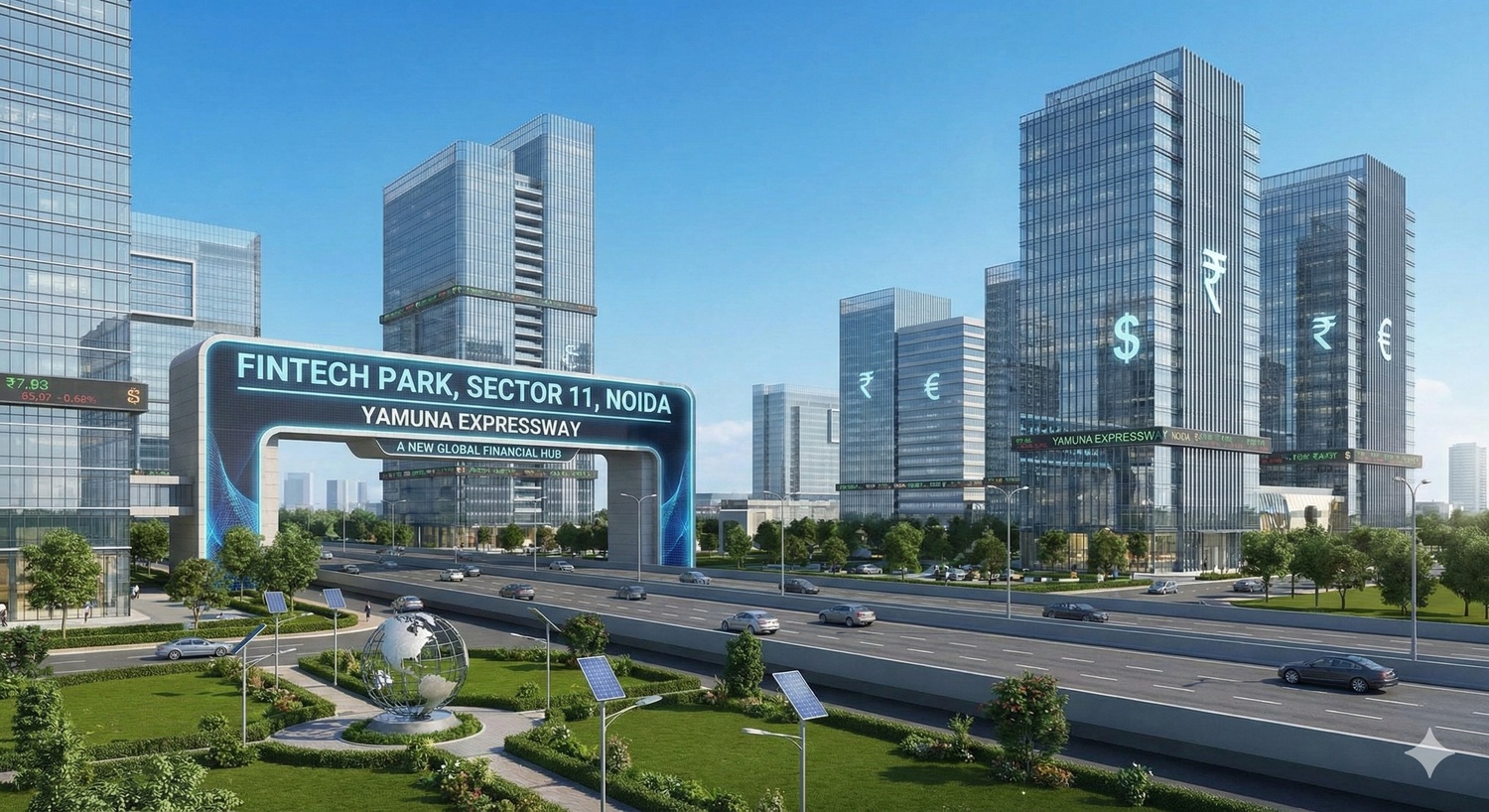
The Yamuna Expressway is rapidly shedding its identity as merely a transit corridor connecting Delhi to Agra. In what could be the region's most significant economic pivot yet, the Yamuna Expressway Industrial Development Authority (YEIDA) has set the wheels in motion for a massive Fintech Park in Sector 11.
This development is not just about allocating land; it is a calculated move to create a "Mini Financial Capital" in Uttar Pradesh, designed to cater to the new-age digital economy that traditional financial hubs are struggling to accommodate.
The proposed park, spanning approximately 250 acres, is being envisioned as a specialized zone rather than a generic IT cluster. The distinction is crucial. While IT parks often focus on software services and back-office operations, this Fintech Park is targeting the high-value upper crust of the financial world.
The master plan includes provisions for stock exchanges, crowdfunding platforms, insurtech firms, and blockchain research centers. The goal is to create a self-sustaining ecosystem where financial technology companies can co-exist with traditional banking institutions. By clustering these specific industries, YEIDA aims to foster the kind of cross-pollination and innovation seen in global hubs like London’s Canary Wharf or Singapore’s Fintech District.
Real estate and industrial logic dictate that location is everything, and this project has a trump card: the Noida International Airport at Jewar. Financial institutions and global fintech giants require seamless connectivity for their executives and clients. Being situated just minutes away from what will be Asia’s largest airport changes the game entirely.
This proximity allows for a "fly-in, fly-out" business culture that is essential for top-tier corporate operations. Furthermore, the region’s connectivity is being bolstered by the Delhi-Mumbai Industrial Corridor (DMIC), ensuring that the park is not an isolated island but a well-integrated node in India’s logistics and transport network.
One of the biggest hurdles for companies setting up in new regions is the lag time between land allotment and operational readiness. To counter this, the Fintech Park is expected to feature a "plug-and-play" model. The infrastructure planning prioritizes high-speed data corridors, uninterrupted power supply, and ready-to-use office spaces that allow companies to start operations almost immediately.
This approach is specifically designed to attract startups and mid-sized fintech firms that cannot afford the capital expenditure or the delay of constructing their own campuses from scratch.
Modern urban planning acknowledges that professionals in the high-stress financial sector prioritize quality of life. The development plan for Sector 11 and its surroundings is likely to incorporate a mixed-use element. The vision includes high-quality residential zones, recreational facilities, and hospitality projects integrated within or adjacent to the park.
The concept of "Walk-to-Work" is central to this design, ensuring that the workforce can live in close proximity to their offices, thereby reducing the commuting strain that plagues other NCR hubs like Gurugram.
With the Detailed Project Report (DPR) underway and international consultants being roped in to shape the final blueprint, the Fintech Park is moving from concept to reality. For investors and real estate watchers, Sector 11 has now emerged as a critical micro-market to watch.
As the Noida International Airport nears completion, the demand for commercial and residential real estate in this specific pocket is expected to surge. The Fintech Park acts as a major anchor tenant for the region, promising not just jobs, but high-income employment that drives consumption and long-term real estate appreciation.
