Published On:
November 25, 2025
Updated On:
February 23, 2026
The Digital Property Card (e Milkat Property Card) is the mandatory electronic document proving property ownership and history, required for loans and sales. It can be obtained by registering on the state's Land Record website, submitting an application with documents (like Aadhaar and Registered Sale Deed), and paying the online fee. The PC includes the Survey Number, area, and dispute history, providing critical information that reduces fraud, though it is legally distinct from the Title Deed.
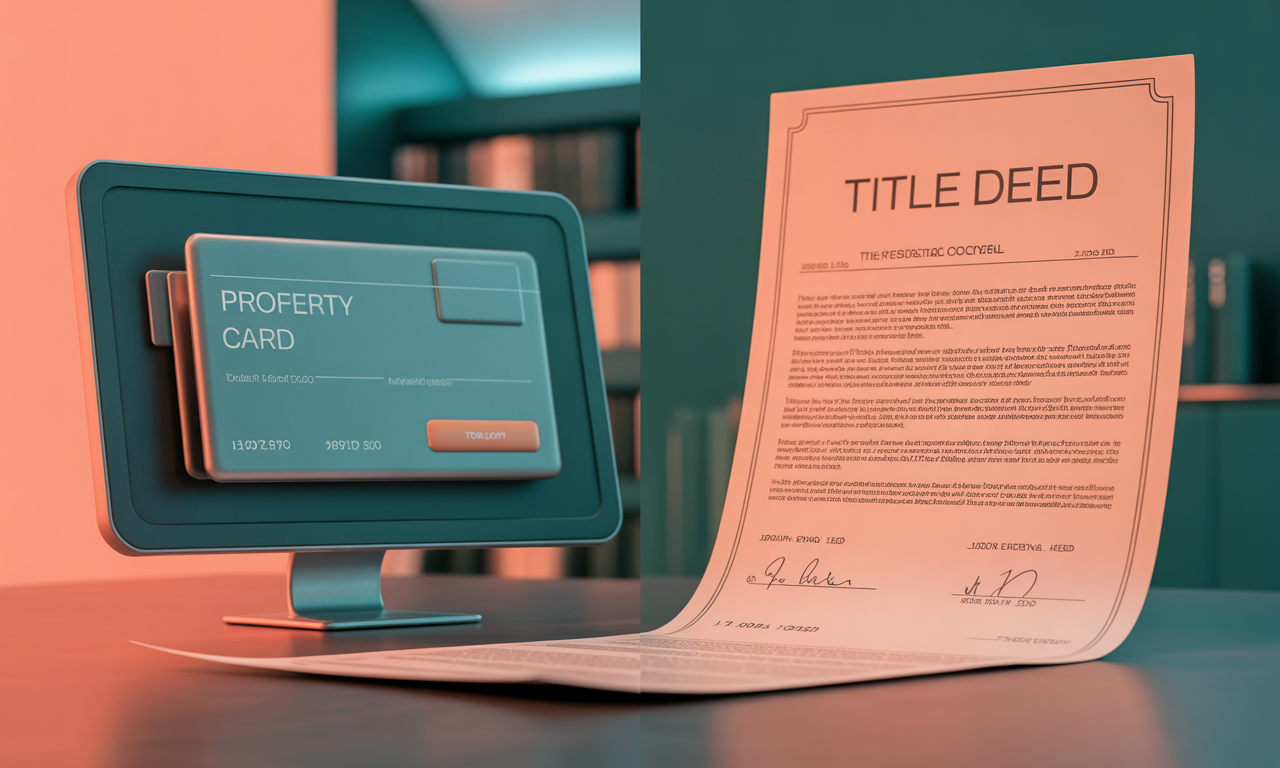
The landscape of real estate documentation in India is undergoing a monumental transformation. Following the massive success of digital public infrastructure in the financial sector, the government has turned its attention to modernizing land records. At the heart of this revolution is the successful nationwide implementation of the digital Property Card system.
Previously known as the tedious and highly bureaucratic 'Malikana Hak Praman Patra' (Ownership Certificate), the Property Card has evolved into a secure, government-issued electronic document. Frequently referred to as the Digital Property Card, e-Milkat, or Gharauni (under the national SVAMITVA scheme), its modern accessibility has fundamentally simplified how citizens, farmers, and urban investors manage their land and residential assets.
Whether you are holding a long-term farmland investment, executing a rapid residential sale, or arranging a commercial mortgage, this digital record is no longer just a convenience—it is an absolute prerequisite for seamless, secure real estate transactions in modern India.
For decades, Indian real estate was plagued by opaque documentation. Physical land records were stored in local tehsil offices, prone to damage, misplacement, and deliberate tampering. Verifying the true owner of a property required navigating a maze of middlemen, paying arbitrary fees, and waiting weeks for a simple stamped piece of paper.
The introduction of the Digital Property Card system eradicates these pain points. By digitizing revenue records and integrating them into centralized state databases, property ownership is now verifiable with a few clicks. This digital leap not only protects individual assets but also fuels immense confidence in the broader real estate market, inviting both domestic and non-resident Indian (NRI) investments.
The Property Card (PC) serves as the singular, authoritative repository of crucial information regarding a land parcel's history and current status. When you download a detailed digital PC, it typically contains the following critical data points:
This final point provides an instantaneous snapshot of the property's legal health—an invaluable tool for conducting quick, foolproof due diligence before signing any agreements.
A major driver behind the Digital Property Card is the SVAMITVA (Survey of Villages Abadi and Mapping with Improvised Technology in Village Areas) scheme. Launched by the Ministry of Panchayati Raj, this initiative uses high-resolution drones piloted by the Survey of India to map inhabited rural land (abadi areas) across the country.
Millions of rural homeowners and landowners, who previously possessed no physical proof of ownership for their ancestral homes, are now receiving their digital property cards (Gharauni). This formalizes rural real estate, allowing owners to finally use their properties as financial assets to secure bank loans and credit.
For those actively acquiring resale plots, farmland, or semi-commercial spaces in high-growth corridors—such as the Yamuna Expressway (YEIDA), Greater Noida, and surrounding zones in Western Uttar Pradesh—the digital property card accelerates the entire investment cycle.
Previously, verifying physical land records for "Farmer Quota" plots or 7% abadi land could take weeks, carrying a high risk of encountering dual-allotted or disputed properties. Today, the digitized format allows buyers to instantly verify clear titles online. It drastically reduces the risk of fraud, ensures the land is not under government acquisition, and verifies that the person selling the land is the sole, legal owner. Furthermore, because these digital records are integrated with state banking APIs, financial institutions can process property-backed loans and construction mortgages in a fraction of the time.
The process for obtaining a Digital Property Card has been heavily streamlined. It completely eliminates the need for burdensome, repeated visits to local revenue offices. Here is how you can secure yours:
1. Identify and Visit Your State Portal: Land is a state subject in India, meaning every state maintains its own portal. Navigate to your specific state's official Land Record website. For example:
2. User Registration: Create a new user account on the portal. This requires basic personal identification details, including your full name, an active mobile number (ensure it is the one linked to your Aadhaar), and a valid email address. You will verify this via an OTP.
3. Fill the Application Form: Accurately fill out the online Property Card application form. You will need to select your District, Taluka, and Village from the drop-down menus, and input detailed information about the property, particularly the exact Survey/Gata Number.
4. Document Upload: You must scan and upload necessary identity and property validation documents. Essential documents typically include:
5. Fee Payment: Submit the required nominal application fee. This is usually a very small amount (ranging from ₹50 to ₹200 depending on the state) and can be paid through designated secure online payment gateways via UPI, Net Banking, or Debit/Credit cards.
6. Submission, Verification, and Download: Once submitted, the system will generate an official tracking receipt or application number. The card cannot be downloaded immediately. The state revenue authority must first complete a backend digital verification (satyaapan) of the submitted details, cross-referencing your uploaded Sale Deed with their records. Once approved, you will receive an SMS alert, and you can log in to download the digitally signed e-Property Card.
The importance of the Property Card cannot be overstated. It acts as the definitive legal proof of ownership (swamitva), confirming the owner's title in the eyes of the government and the judiciary.
Unlike outdated paper records, the digital system ensures that all changes—whether a subdivision in the land area, a shift in ownership status due to inheritance, or the initiation of a court dispute—are regularly and permanently updated. Many state governments are now backing these databases with blockchain technology, making unauthorized alterations virtually impossible. This makes the e-Milkat a strong, unassailable piece of evidence in any litigation.
Furthermore, the "anytime, anywhere" digital access drastically curtails incidences of fraud, reduces the extortionate costs associated with physical document retrieval, and minimizes clerical errors.
A common point of confusion among new buyers is equating the Property Card with the Title Deed. They are completely distinct documents that serve different legal functions.
While a Title Deed proves a transaction took place, the Property Card proves that the government recognizes you as the current, rightful owner based on that transaction. Both are crucial, but banks and authorities will always ask to see the updated Property Card to ensure the property wasn't subsequently sold to someone else.
Is the digital property card mandatory for selling property?Yes, in almost all rapidly digitizing states, the sub-registrar will require an updated digital property card (or an extract like the 7/12 or Khatauni) to verify the seller's title before executing a new Sale Deed.
Can I use the e-Property Card to get a bank loan?Absolutely. In fact, banks prefer the digitally verifiable property card over paper documents because they can instantly authenticate it through the state’s revenue API, speeding up your loan approval process.
What should I do if there is a spelling mistake or incorrect area listed on my digital card?If you spot an error regarding your name, land dimensions, or survey number, you must immediately file a rectification application online through the same state portal, supporting your claim with your original registered Sale Deed.
How long does it take to get the digital property card after applying?If all uploaded documents are accurate and match the existing registry records, the digital verification process typically takes anywhere from 7 to 15 working days, after which the card is available for download.
The secure, simplified, and clear availability of the Digital Property Card is a landmark achievement for Indian real estate. By bringing absolute transparency to land records, it protects individual assets from encroachment and fraud while simultaneously fueling confidence in the broader market. For any proactive property owner or investor, ensuring your assets are accurately reflected in the digital property card system is the ultimate safeguard for ensuring your investments remain secure, legally sound, and highly liquid for generations to come.
