Published On:
February 5, 2026
Updated On:
February 5, 2026
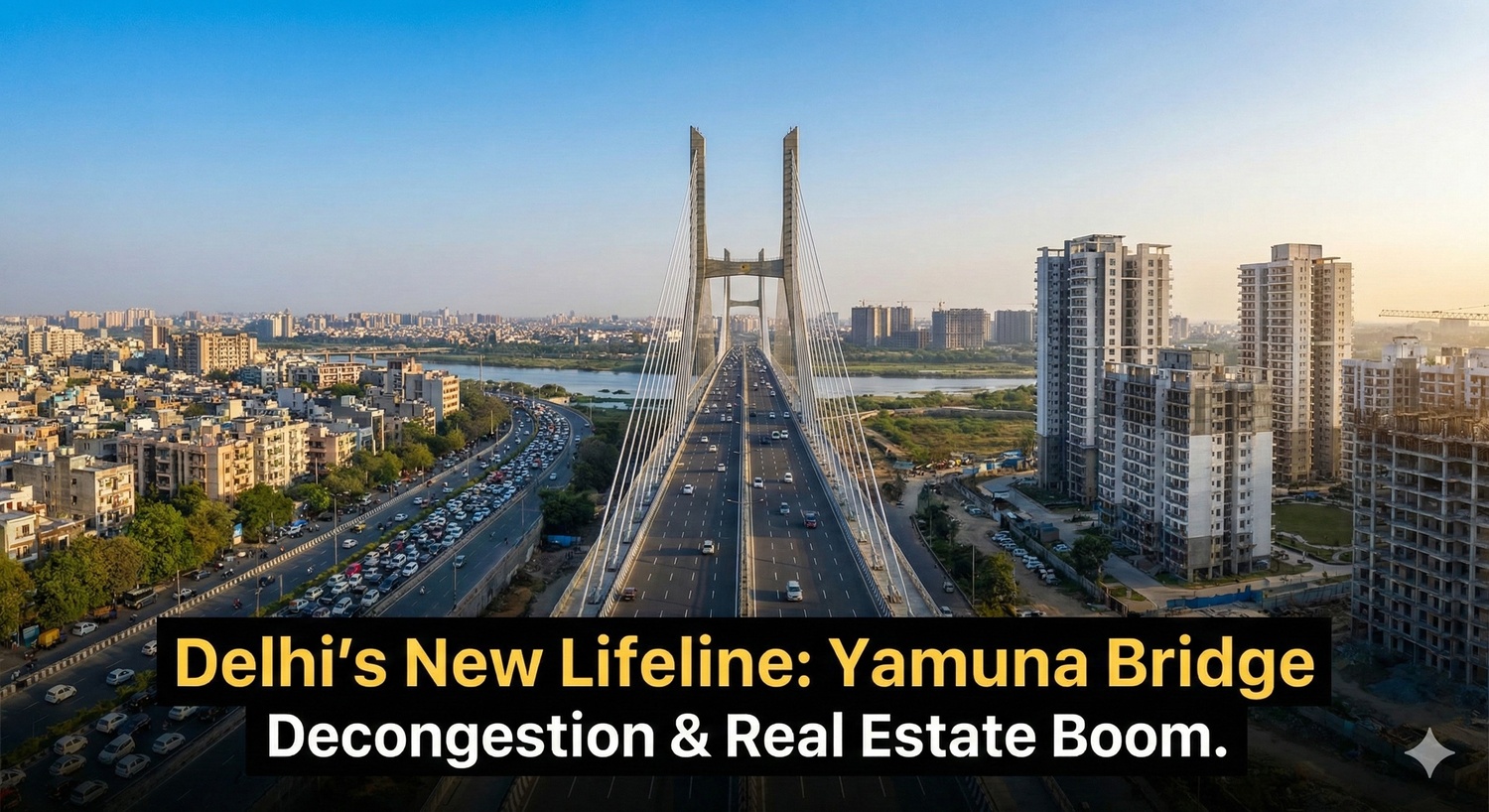
The Delhi Government has initiated plans for a new bridge over the Yamuna River to tackle the city’s chronic traffic congestion. This proposed infrastructure project, likely to come up near the Signature Bridge or replace the Old Iron Bridge, aims to act as a critical pressure valve for the Ring Road and boost real estate prospects in Trans-Yamuna areas.
For any commuter navigating the chaotic arteries of Delhi, the daily crossing of the Yamuna River is less of a journey and more of a battle. Whether you are crawling bumper-to-bumper on the DND Flyway, inching through the ITO barrage, or stuck in the perennial gridlock of the Old Iron Bridge (Loha Pul), the experience is universally exhausting. The river, which should be a scenic divider, has effectively become a bottleneck for millions of residents moving between East Delhi, Noida, and the administrative heart of the capital.
However, a wave of relief appears to be on the horizon. In a move that promises to reshape the city’s traffic dynamics, the Public Works Department (PWD) has initiated the groundwork for a brand-new bridge over the Yamuna. This isn't just another infrastructure announcement; it is a strategic necessity born out of the looming convergence of three massive expressways that threaten to choke the capital's existing ring roads.
This blog delves deep into the proposed project, analyzing why it is being planned now, the potential locations under consideration, and, most importantly, how it will trigger a fresh wave of appreciation in Delhi’s real estate market.
The core of the proposal is simple yet ambitious: create a new corridor that allows traffic to bypass the saturated hotspots. Currently, the PWD is in the initial stages of feasibility studies, but the intent is clear—to decongest the Outer Ring Road and the Ring Road. These two circular arteries are the lifelines of Delhi, but they are currently operating well beyond their design capacity.
The authorities are considering two primary locations for this new structure. The first option is replacing the colonial-era Old Iron Bridge (Loha Pul), which has long outlived its utility and structural integrity. A modern, multi-lane bridge here would seamlessly connect the dense neighborhoods of Shahdara and Seelampur with Old Delhi and Central Delhi. The second option being explored is a location near the iconic Signature Bridge. This alignment would cater to the heavy traffic moving from North Delhi towards the trans-Yamuna pockets, offering a signal-free alternative to the Wazirabad barrage.
This project is designed to be more than just a river crossing; it is envisioned as a "connector" that will integrate with the existing flyover networks, ensuring that vehicles don't just cross the river faster but also exit into the city without hitting an immediate bottleneck.
To understand the urgency behind this project, one must look at the larger map of National Capital Region (NCR) infrastructure. Delhi is currently in the middle of a connectivity revolution, but this comes with a side effect: traffic spillover.
Three major expressways are set to dump thousands of additional vehicles daily into the heart of Delhi:
All these massive arteries converge near the Sarai Kale Khan and Ring Road area. Without a new outlet, this convergence threatens to turn South and Central Delhi into a permanent parking lot. The new bridge is essentially a preemptive strike—a "relief valve" designed to siphon off this inter-state traffic and distribute it across the river without clogging the central districts like ITO and Pragati Maidan.
For the average Delhiite, this project translates to one precious commodity: Time. Currently, during peak hours, crossing the Yamuna can take anywhere from 30 to 50 minutes. A new, modern bridge could slash this to under 10 minutes.
The ripple effect of this decongestion will be felt city-wide. When the Ring Road flows smoothly, fuel consumption drops, and the collective blood pressure of the city lowers. For residents of East Delhi—areas like Laxmi Nagar, Preet Vihar, and Mayur Vihar—this means improved accessibility to workplaces in Connaught Place and South Delhi. It effectively shrinks the distance between the affordable residential hubs of the east and the commercial powerhouses of the west and south.
Infrastructure is the primary driver of real estate value, and a bridge is arguably the most powerful of all infrastructure assets. History suggests that property prices in neighborhoods surrounding a new river crossing appreciate significantly from the moment the foundation stone is laid.
Trans-Yamuna ResurgenceAreas in North-East Delhi and the Trans-Yamuna belt have historically traded at a discount compared to South or West Delhi due to "accessibility issues." This new bridge will erode that discount. We can expect a sharp correction in property prices in localities like Shastri Park, Gandhi Nagar, and the older pockets of Shahdara. For investors, these areas represent a "value buy" opportunity—entry prices are low, but the potential upside is high.
Central Delhi SpilloverOn the other bank, areas near Civil Lines and the periphery of Old Delhi could see renewed interest. Better connectivity often leads to gentrification. Old commercial zones might get a facelift as they become more accessible to the workforce living across the river.
Rental Market BoomImproved connectivity makes these areas viable for the rental population. Professionals working in Central Delhi government offices or the IT hubs of Noida will find it feasible to live in the more affordable pockets of North-East Delhi if the commute is reliable. This will drive up rental yields for landlords in these zones.
Building over the Yamuna is never just an engineering challenge; it is an ecological one. The project will face strict scrutiny regarding the Yamuna floodplains. Modern construction techniques, however, allow for bridges with longer spans and fewer pillars in the riverbed, minimizing the impact on the water flow and the ecosystem.
The PWD is likely to adopt a design philosophy similar to the Signature Bridge—creating a landmark structure that adds to the city's skyline while serving a functional purpose. There is also talk of integrating pedestrian and cycling tracks, aligning with global urban trends that prioritize non-motorized transport. This would transform the bridge from a car-centric corridor into a public space, allowing citizens to actually interact with the river rather than just driving over it.
The proposed new bridge over the Yamuna is more than concrete and steel; it is a critical piece of the puzzle for Delhi’s future. As the capital expands and absorbs millions more into its fold, the need for robust, redundant connectivity becomes non-negotiable.
For the homebuyer, this news is a signal to look East. The mental barrier of "crossing the river" is being dismantled one bridge at a time. By 2030, with this new link operational, the distinction between "Delhi" and "Trans-Yamuna" will likely blur, creating a unified, accessible, and vibrant housing market for all. The wait for a traffic-free Delhi continues, but with this project, the roadmap is finally looking clear.
