Published On:
January 27, 2026
Updated On:
February 11, 2026
Saving on Long-Term Capital Gains (LTCG) tax by reinvesting in an under-construction property is a popular strategy, but it comes with a strict 3-year deadline. If the builder delays possession, you could lose your exemption. Here is a guide on how to navigate Section 54 rules, manage construction delays, and use the Capital Gains Account Scheme effectively.
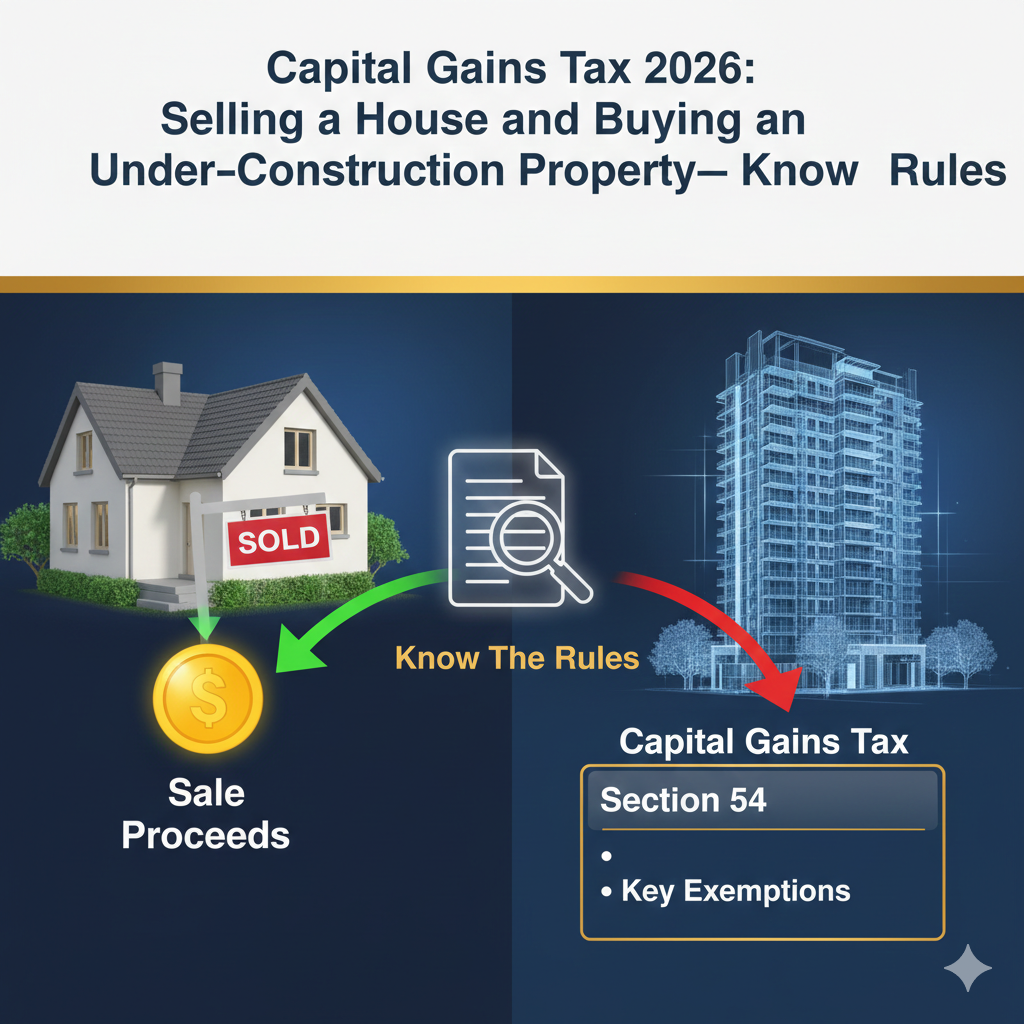
For many property sellers, the most logical next step is reinvesting the profits into a new, modern home to save on Long-Term Capital Gains (LTCG) tax. Under Section 54 of the Income Tax Act, this is a perfectly valid strategy. However, there is a catch that often catches investors off guard: the timeline.
While buying a ready-to-move-in home is straightforward (you have a two-year window), booking an under-construction apartment brings a stricter, more complex set of rules. A delay by your builder isn't just an inconvenience—it could cost you lakhs in taxes.
Here is what you need to know to protect your tax exemption when upgrading to an under-construction property.
The Income Tax Department is clear: if you are claiming an exemption under Section 54 by constructing a new house, the construction must be completed within three years from the date of selling your old property.
This is where the distinction between "buying" and "constructing" blurs.
The Risk: If you sign an agreement where the scheduled completion date itself is 4 or 5 years away, the tax officer may deny your exemption upfront. The agreement must ideally show a completion date within the 3-year limit.
This is the most common nightmare for Indian homebuyers. You booked a flat with a promise of delivery in 2.5 years, but the project drags on for 4 years. Who pays the tax?
Strictly speaking, if the project is not complete within 3 years, the exemption can be withdrawn. However, legal precedents suggest that if the delay is genuinely out of your control (and the developer's fault), you may still argue your case.
You cannot simply keep the profit in your savings account while waiting for the builder to demand payments. If you haven't utilized the entire capital gains amount by the time you file your Income Tax Return (usually July 31st), you must park the unutilized money in a Capital Gains Account Scheme (CGAS) at a public sector bank.
This serves as proof to the tax department that the money is earmarked for the new property. You can then withdraw from this account to pay the builder as construction milestones are met.
If you suspect the project won't finish in time, or if you are already close to the deadline, consider these backups:
Final Thought: Tax planning isn't just about where you invest, but when the investment matures. When dealing with under-construction properties, always keep a buffer in your timeline. A delay in construction shouldn't become a delay in your financial freedom.
