Published On:
May 8, 2026
Updated On:
May 8, 2026
The Ayodhya Master Plan Phase 2 drastically expands the region's development footprint to 766 square kilometers, integrating 353 villages across three districts to launch an unprecedented era of real estate, commercial, and sustainable urban growth.
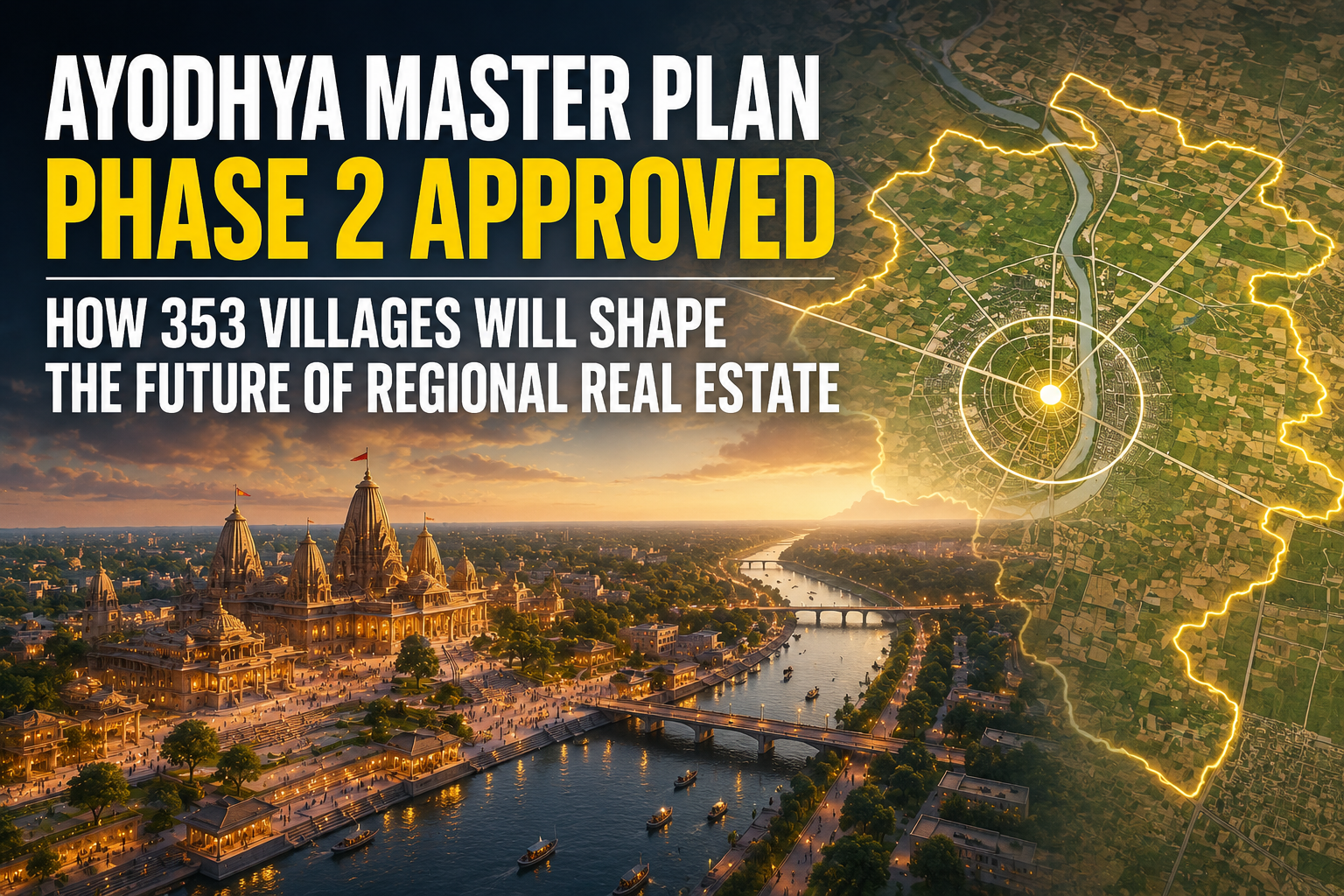
Ayodhya is no longer simply a spiritual epicenter; it is rapidly evolving into one of the most dynamic metropolitan regions in northern India. Following massive infrastructure upgrades and an exponential rise in global tourism, the city's core has experienced an unprecedented surge in real estate demand. To harness this momentum and prevent haphazard urban sprawl, a sweeping new developmental framework has been officially greenlit. The approval of the Ayodhya Master Plan Phase 2 represents a historic territorial shift, setting the stage for a highly organized, sprawling regional powerhouse. By aggressively expanding the planned urbanization boundary, authorities are laying down a structured roadmap for long-term real estate investments, comprehensive civic infrastructure, and sustainable ecological preservation.
This blueprint goes far beyond the immediate city limits. It aims to completely overhaul the economic geography of the region, ensuring that as the population balloons over the coming decade, the infrastructure is already in place to support it. For property developers, long-term investors, and local businesses, this comprehensive urban strategy serves as the ultimate green light for massive capital deployment.
The Massive Scale of the Phase 2 Expansion
The most striking element of this newly approved framework is its sheer geographical ambition. During the initial phases of city planning, the development footprint was confined to a relatively modest 133 square kilometers, focusing primarily on the immediate municipal boundaries and the most critical religious and civic centers. However, recognizing the explosive pace of growth, the second phase has aggressively ballooned this area to a massive 766.39 square kilometers.
This expansion is completely unprecedented for the region because it officially crosses traditional district borders, creating a cohesive tri-district metropolitan zone. A total of 353 revenue villages have now been brought under this organized planning umbrella. This includes 155 villages natively situated in Ayodhya, 129 villages located within the Harraiya tehsil of neighboring Basti, and 69 villages extending into the Tarabganj area of Gonda. The inclusion of full municipal board areas like Bhadarsa in Ayodhya and Nawabganj in Gonda signals a clear shift from city-centric development to regional integration.
By taking this macro approach, planners are preparing for an anticipated population surge that is projected to hit 2.4 million residents by 2031. Bringing these 353 villages into the official fold means that all future construction, land allocation, and utility distribution in these outer rings will follow a strict, modern urban code rather than growing into unregulated, chaotic fringes.
Unlocking Legal Clarity for Real Estate Developers
For years, the real estate market on the outskirts of the city has been trapped in a complex legal gray area. Investors eager to capitalize on the rising land values often hesitated to deploy large sums of capital in the peripheral villages because these areas lacked a sanctioned master plan. Without official zoning laws, obtaining approvals for large-scale township projects, commercial complexes, or hospitality ventures was incredibly difficult, leaving massive tracts of land underutilized.
The notification of Phase 2 completely removes this developmental bottleneck. Land use categories have now been distinctly defined, carving out specific sectors for residential neighborhoods, mixed-use commercial hubs, industrial parks, and modern office spaces. For the real estate sector, this translates into absolute legal clarity. Developers can now confidently purchase land parcels, submit their blueprints for official sanctioning, and move forward with large-scale projects without the fear of sudden regulatory roadblocks. This newfound transparency is expected to trigger an immediate and massive investment surge, particularly from national-level developers who have been waiting on the sidelines for a structured entry into the market.
Highway Corridors as the New Commercial Lifelines
A critical highlight of the new developmental blueprint is the strategic focus on transportation arteries. Recognizing that high-speed connectivity is the backbone of any modern economy, the plan establishes dedicated Highway Facility Zones along major national highways, including the NH-27, and the newly proposed bypass networks. These specialized zones are positioned just outside the main urbanization boundary, designed specifically to capture the massive volume of vehicular and tourist traffic flowing in and out of the region.
These corridors are poised to become the most lucrative commercial real estate assets in the state. The zoning laws here actively encourage the development of roadside commercial infrastructure. Investors are already looking at these highway-facing land parcels to construct a diverse range of assets, from budget hotels, guest houses, and massive dining complexes to essential services like petrol pumps and multi-brand service centers. Furthermore, the inclusion of extensive warehousing and logistics hubs within these zones will support the region's growing supply chain demands, ensuring that commercial transport vehicles do not need to enter and congest the inner city.
Redefining Residential Real Estate and Rural Expansion
As land within the core city becomes increasingly scarce and astronomically expensive, the natural progression of residential real estate is moving aggressively outward. The new framework directly addresses this by planning for comprehensive residential expansion beyond the traditional city limits. By integrating the surrounding rural belts into the formal development plan, authorities are ensuring that the inevitable suburban shift is beautifully organized.
One of the most thoughtful aspects of this strategy is the creation of Rural Population Expansion Zones. Planners recognized the danger of rapid urbanization completely swallowing small, traditional villages, leaving local communities priced out of their own native lands. To counter this, specific buffer zones have been carved out around existing rural settlements. These spaces allow for the natural, organic growth of these communities, providing adequate land for future housing and local village development without being overrun by high-density commercial projects.
Simultaneously, massive tracts of land have been opened up for private residential development. Developers are already pivoting toward these peripheral areas to launch massive plotted developments, expansive group housing societies, and integrated townships. These suburban projects are expected to feature modern amenities that were previously unavailable outside the city center, offering a high-quality lifestyle for the massive influx of professionals, hospitality staff, and new residents migrating to the region.
Sustaining the Environment Amidst Rapid Urbanization
The narrative of urban expansion in India is too often accompanied by severe environmental degradation, vanishing water bodies, and the loss of essential green cover. However, the authorities shaping this new metropolis are actively working to avoid the pitfalls of unchecked concrete expansion. Sustainability has been woven deeply into the fabric of the 2031 vision.
A massive environmental auditing process was undertaken, referencing decades-old revenue records, to identify and officially protect the region's natural ecology. As a result, approximately 1,200 natural ponds of varying sizes have been legally ring-fenced within the planning framework. Strict regulations prohibit any construction or encroachment on these water bodies, ensuring that the region maintains a healthy groundwater recharge system and robust ecological balance.
Beyond water conservation, the plan mandates extensive green belts and designates substantial land for public parks and entertainment sectors. These open, breathable spaces are critical for maintaining a high standard of livability. By keeping the city green and prioritizing water management, the real estate in these areas will likely command a sustained premium, as modern homebuyers increasingly prioritize environmental health and sustainable living conditions.
Current Land Valuations and Future Investment Potential
The financial implications of this master plan are already sending shockwaves through the local property markets. The real estate landscape is highly segmented, offering distinct opportunities depending on an investor's risk appetite and capital capacity.
In the immediate core areas of the city, land prices have already witnessed a massive escalation, currently averaging between forty to sixty lakh rupees per acre. Given the premium location and the scarcity of available plots, this zone is heavily favored for high-end luxury residential projects and premium commercial leasing. Even at these current valuations, market analysts project a solid thirty to fifty percent growth over the next three years, driven purely by the immense demand from institutional investors and high-net-worth individuals.
Moving outward to the newly defined highway corridors, the investment dynamic shifts toward high-yield commercial plays. Land here is currently trading in the range of twenty to thirty-five lakh rupees per acre. Because these zones are officially earmarked for hospitality and retail expansion, property values are expected to surge aggressively, potentially seeing a forty to sixty percent appreciation as construction begins on the new bypass roads and commercial transit hubs.
Perhaps the most dramatic transformations will occur in the newly integrated villages across Gonda and Basti, as well as the designated rural expansion zones. Land in the Gonda and Basti peripheries is currently highly affordable, sitting between eight and fifteen lakh rupees per acre. As basic utilities, roads, and public transport networks are extended into these districts, the land will transition from agricultural use to prime residential real estate. Investors targeting affordable housing projects and agricultural-residential crossovers can expect massive returns, with projections indicating a fifty to eighty percent growth.
Similarly, the outermost rural expansion areas, currently valued around five to ten lakh rupees per acre, represent the ultimate long-term hold. As developers begin to acquire large land banks for future mega-townships and luxury farmhouses, these deeply peripheral zones could easily see valuations double, reflecting a staggering sixty to one hundred percent growth trajectory over the short to medium term.
A Future-Ready Infrastructure Ecosystem
The master plan does not exist in a vacuum; it is designed to seamlessly integrate with a multi-billion-dollar infrastructure boom that is already reshaping the skyline. The region has recently benefited from the inauguration of the Maharishi Valmiki International Airport, which is currently undergoing its own Phase 2 expansion to connect the city with major domestic and international hubs. Simultaneously, the massive redevelopment of the central railway station into a high-capacity, architecturally stunning transit center ensures that millions of annual visitors can navigate the city effortlessly.
This macro-level infrastructure is supported by internal connectivity upgrades, including the sprawling Ram Path and a network of new four-lane and six-lane expressways. The newly planned urban zones across the 353 villages will be directly plugged into this high-speed grid. The strategy ensures that whether a resident lives in a new township in Basti or a commercial operator runs a logistics hub in Gonda, they will have uninterrupted, multi-modal access to the city core, the airport, and the national highway network.
Stepping Into a Metropolitan Future
The notification of this expansive urban blueprint is a watershed moment for the entire state's economic trajectory. By proactively managing growth rather than reacting to it, the region is successfully avoiding the chaotic growing pains that plague so many developing cities. The integration of 353 villages across an expansive 766-square-kilometer zone ensures that the benefits of this massive economic boom will be distributed evenly, sparking unprecedented development in neighboring districts.
As land use becomes formalized, highway corridors transform into commercial engines, and deep-rooted environmental protections take effect, the area is set to become a masterclass in modern urban planning. For those watching the real estate landscape, the era of speculation is giving way to structured, explosive growth, cementing the region's status as a premier destination for both global tourism and heavy-hitting infrastructure investment.
