Published On:
April 19, 2026
Updated On:
April 19, 2026
The Uttar Pradesh government has initiated the land identification process for a new international airport and a modern sports stadium in Agra, signaling a massive infrastructural shift. These upcoming mega-projects, combined with the proposed Greater Agra township, are set to transform the historic city into a thriving economic and real estate hub.
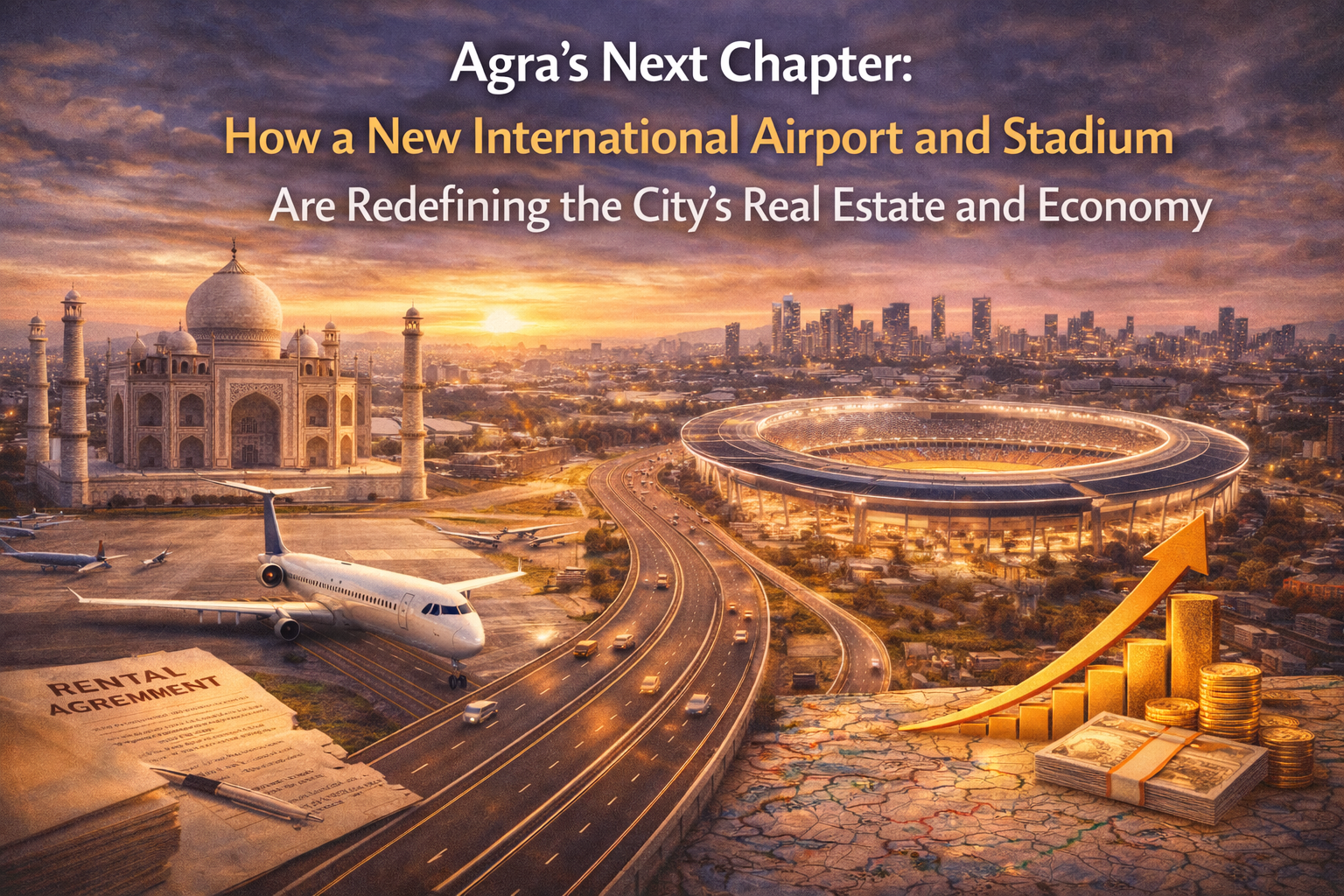
Agra is globally recognized as the home of the Taj Mahal, a city steeped in majestic history and architectural grandeur. For decades, its identity has been singularly tied to heritage tourism. Millions of domestic and international visitors travel to the city every year, marveling at its monuments before quickly moving on to their next destination. However, a city cannot sustain its long-term future solely on the legacy of its past. The modern urban landscape requires robust infrastructure, diversified economic drivers, and a living environment that caters to contemporary business and residential aspirations.
Recognizing this critical need for a massive developmental pivot, the Uttar Pradesh government has recently set in motion plans that will fundamentally alter the city's trajectory. A dedicated new international airport and a world-class stadium have been proposed, marking a definitive shift from historical preservation to aggressive modernization. Currently in the crucial land identification phase, these projects are not just about adding concrete structures to the map; they represent a highly strategic vision to reposition the region as a self-sustaining economic powerhouse, reducing its reliance on neighboring metropolitan areas and triggering an unprecedented wave of real estate and commercial growth.
For a city that ranks among the most visited tourist destinations on the planet, the logistical framework for reaching Agra has historically been somewhat circuitous. Most international tourists and high-profile business travelers currently land at the Indira Gandhi International Airport in Delhi or the upcoming Noida International Airport in Jewar, relying heavily on the Yamuna Expressway to complete the final leg of their journey. While the expressway provides a smooth transit, the absence of a large-scale, dedicated international aviation hub within the city limits has always been a glaring bottleneck for direct economic expansion.
The proposal for a brand-new international airport is designed to completely dismantle this barrier. By establishing direct global and extensive domestic air connectivity, the city will no longer function merely as a brief stopover. It will transform into a primary gateway. The state government has directed relevant administrative authorities to actively scout and identify suitable land parcels that can accommodate the massive footprint required for a modern aviation facility. This involves evaluating expansive tracts of land that offer clear approach paths, minimal ecological disruption, and seamless integration with existing highway networks.
Once operational, a dedicated airport alters the very economic fabric of a region. It facilitates rapid cargo movement, encourages corporate conferences, and dramatically extends the average duration of a tourist's stay, injecting millions directly into the local micro-economy. It allows international tour operators to chart direct flights into the city, completely bypassing the congested airspace of the national capital.
Infrastructure development is most effective when it deeply resonates with the local cultural and social ethos. The state's blueprint for the city's modernization goes far beyond just transit and logistics; it includes a strong focus on sports and community engagement through the proposed construction of an international-level stadium. What makes this particular project highly significant is the thoughtful intent behind its naming. The facility is likely to be dedicated to Deepti Sharma, the locally born cricketing star who played a pivotal role in the Indian women's cricket team's spectacular triumph at the 2025 Women's ODI World Cup.
Naming a monumental public asset after a contemporary local sports hero fosters a deep sense of civic pride and grounds these massive state projects in the immediate reality of the city's residents. Beyond the emotional connection, the economic mechanics of a modern stadium are incredibly powerful. A facility capable of hosting international cricket matches, large-scale domestic tournaments, and major live entertainment events introduces a completely new, highly lucrative revenue stream to the region. It creates a robust ecosystem of sports tourism, where thousands of spectators require accommodation, dining, and local transport, thereby keeping the city's hospitality sector highly active even during the traditional off-seasons for heritage tourism.
The mere announcement of mega-projects like an airport and a stadium acts as a powerful catalyst for the regional real estate sector. In the property market, asset valuations do not wait for the final ribbon-cutting ceremony; they begin to climb the exact moment the government signals its clear intent. Even though the projects are currently in the preliminary land identification stage, the speculative ripples are already being distinctly felt across the local property landscape.
Real estate developers, institutional investors, and individual homebuyers are keenly observing the administrative movements, attempting to predict the exact geographical corridors where these mega-facilities will be anchored. Historically, whenever a major aviation hub is announced, the surrounding radius experiences a massive surge in land acquisition. Agricultural and vacant tracts are rapidly rezoned, eventually giving way to planned commercial parks, advanced logistics centers, and premium residential townships.
Property agents operating in the region are already reporting a noticeable uptick in inquiries from outside investors looking to secure early-mover advantages. The pattern is highly predictable but immensely profitable: early land identification leads to a quiet accumulation of property, followed by a flurry of project launches once the official master plans and zonal regulations are approved. For anyone currently holding property or looking to invest heavily in the city's outskirts, the current administrative push is a definitive green light indicating massive, long-term capital appreciation.
To truly grasp the sheer scale of what is unfolding, the airport and stadium proposals must be viewed through the wider lens of the government's comprehensive urban expansion strategy. These proposed facilities are not isolated ventures functioning independently; they are integral, anchoring components of a much larger vision officially known as the Greater Agra township.
Taking direct inspiration from the phenomenal urban success of regions like Noida and Greater Noida, the state development authorities are actively working on a multi-billion rupee blueprint to create a completely new, meticulously planned urban center. Spread across a massive 449 hectares in areas like Raipur and Rahankalan, this ambitious new city promotion scheme is estimated to cost upwards of ₹5,142 crore. The primary goal is to build a modern metropolis entirely from scratch, featuring wide arterial roads, advanced subterranean sewerage systems, sprawling green spaces, and an equitable mix of multi-storey group housing and independent plots designed to accommodate over 10,000 families initially.
Interestingly, the internal sectors within this massive township are planned to be named after sacred Indian rivers like the Ganga, Yamuna, and Saraswati, flawlessly blending traditional cultural reverence with cutting-edge urban planning. The new international airport and the sports stadium will act as the primary infrastructural pillars for this Greater Agra region. They will provide the necessary logistical support and premium lifestyle amenities required to attract top-tier corporate offices, heavy manufacturing units, and a highly skilled, upwardly mobile workforce. This master plan effectively shifts the city's broader narrative from a purely historical conservation site to a dynamic, forward-looking economic engine.
The deliberate transition from a heritage-dependent economy to a highly diversified modern economy brings a massive wave of localized business opportunities and job creation. Large-scale infrastructural assets like international airports and modern sports stadiums are essentially massive economic magnets.
An international airport requires an incredibly complex supply chain to operate smoothly. The moment it becomes operational, it immediately spawns a high demand for ground handling services, aviation fuel suppliers, specialized facility management companies, and heavy logistics operators. Surrounding the immediate airport perimeter, a secondary micro-economy naturally develops, comprising luxury business hotels, transit lounges, retail high streets, and expansive food and beverage outlets.
Similarly, an active, high-capacity sports stadium requires continuous structural maintenance, professional event management teams, robust private security personnel, and sophisticated ticketing agencies. For the local youth and surrounding communities, this translates into thousands of direct and indirect employment opportunities that go far beyond the traditional, seasonal roles offered by the local tourism and handicraft industries. Furthermore, the massive construction phase itself, which will likely span several years, will inject massive capital directly into the local construction sector, heavily benefiting regional contractors, raw material suppliers, and heavy machinery operators. As these mega-projects materialize, the increased disposable income among the newly employed workforce will naturally drive up local retail consumption, creating a healthy, self-sustaining economic cycle that elevates everyday businesses across the entire city.
While the market enthusiasm surrounding these massive announcements is highly palpable, understanding the realistic timeline of such massive infrastructural undertakings is absolutely crucial for prudent investors and local residents alike. Mega-projects of this scale do not simply appear overnight. They must follow a rigorous, highly structured bureaucratic and engineering pipeline to ensure long-term viability and safety.
The current phase—focused heavily on land identification—is arguably the most critical and complex hurdle in the entire process. Finding contiguous, litigation-free land parcels that are physically large enough to safely accommodate a commercial runway and sprawling terminal infrastructure requires meticulous topographical surveying and highly sensitive negotiations with local landowners. Once the specific land is successfully identified and officially acquired by the state, the administrative focus will quickly shift to drafting detailed project reports, securing mandatory environmental clearances, and establishing sustainable public-private funding models.
Only after successfully navigating this dense maze of required paperwork and central approvals will the actual ground-breaking and heavy civil construction commence. It is entirely common for projects of this immense magnitude to experience minor administrative delays or necessary realignments based on extensive feasibility studies. However, the aggressive push originating from the highest levels of the state government indicates a firm, unwavering political will to see these critical developments through to completion. The administration is actively working to ensure that the usual bureaucratic friction is minimized, viewing these specific projects as essential, non-negotiable milestones in the state's broader, highly publicized objective to reach a trillion-dollar economy.
The overarching theme unifying these planned developments is the creation of seamless, frictionless connectivity. The proposed international airport will not operate in an isolated vacuum; it is being strategically planned to link directly with the city's existing and upcoming transit networks. This includes the rapidly progressing local metro rail system and the major, high-speed expressways currently crisscrossing the state.
This deep focus on multimodal integration ensures that international and domestic passengers landing at the new facility can transition smoothly to their final destinations. Whether they are heading to a high-stakes corporate meeting in the new Greater Agra commercial sectors, attending a highly anticipated major cricket match at the Deepti Sharma stadium, or visiting the iconic heritage monuments in the old city center, the transit experience will be modern and efficient.
This specific level of frictionless mobility is exactly what defines a truly world-class urban center in the 21st century. By actively planning for future population density and anticipating massive economic activity, the state authorities are effectively future-proofing the city. The strategic integration of modern aviation capabilities, professional sports infrastructure, and meticulously planned residential and commercial zones is set to completely redefine the overall demographic profile of the region. It is designed to attract a younger, highly mobile demographic of corporate professionals, tech entrepreneurs, and skilled laborers who inherently demand a high quality of life, robust digital and physical connectivity, and diverse recreational options.
Ultimately, the active proposals for a new international airport and a modern sports stadium represent a profound psychological and economic pivot for the entire region. For centuries, the city has primarily looked backward, focusing its energy on beautifully preserving the breathtaking architectural marvels of the past. While that heritage remains its soul, the city is now forcefully looking forward.
The heavy financial and administrative commitment to building these massive modern assets demonstrates a clear, modern understanding that sustainable regional prosperity relies entirely on continuous infrastructural evolution. As the complex land identification process steadily progresses and the architectural blueprints eventually begin to take physical shape, the city will slowly shed its singular, restrictive identity as just a historical tourist destination.
It is poised to emerge as a highly multifaceted urban powerhouse—a dynamic city where international business logistics, professional sports entertainment, modern residential living, and ancient global heritage can coexist and mutually thrive. For those closely watching the real estate market trends and regional economic indicators, the message from the government is unmistakably clear: the foundational stones for the city's next great era of growth are being laid today. This active administrative foresight promises a rapidly approaching future characterized by robust commercial growth, unparalleled global connectivity, and a radically transformed, highly lucrative economic landscape that will benefit generations to come.
