Published On:
May 26, 2026
Updated On:
May 26, 2026
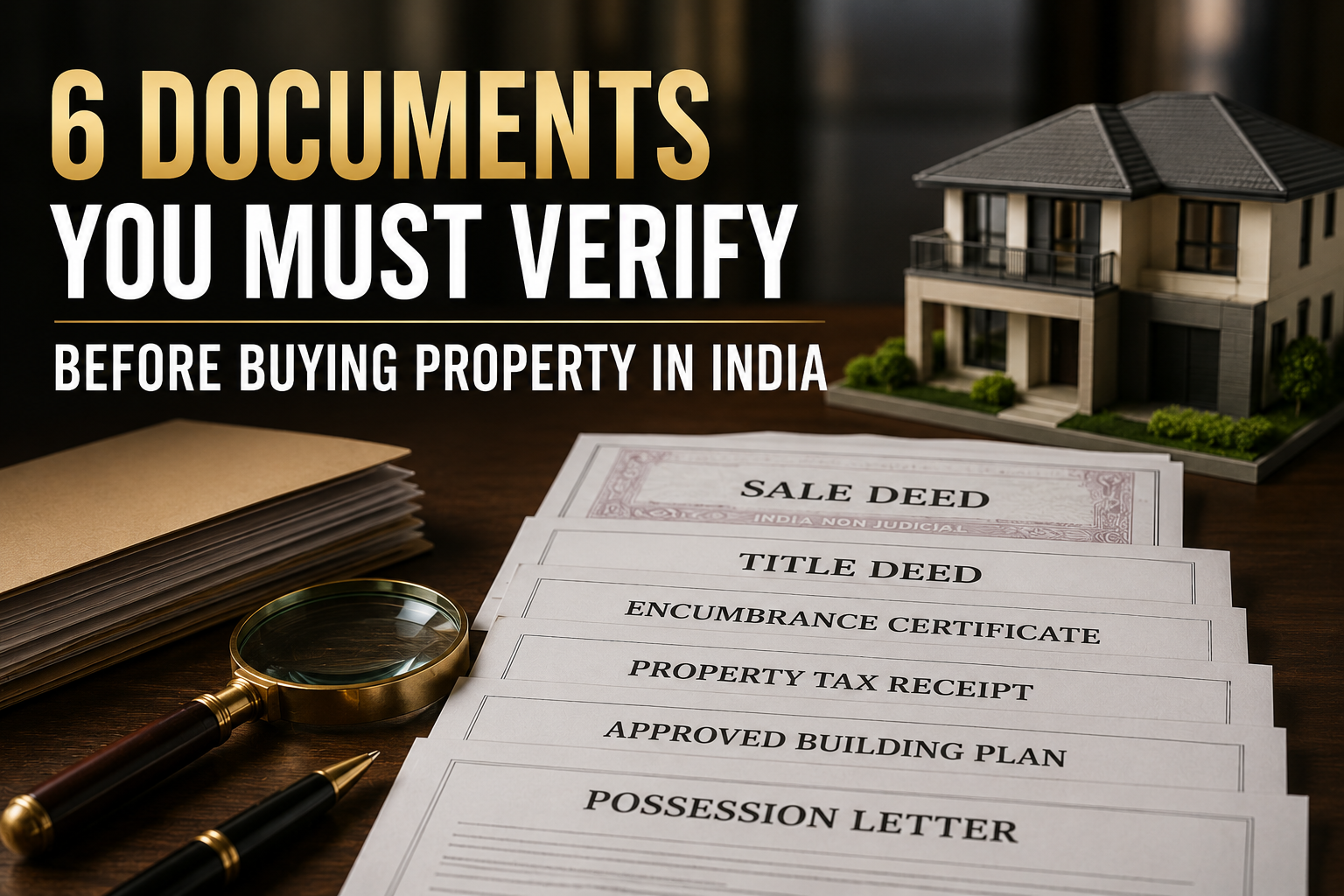
Purchasing a property in India demands rigorous verification of essential legal documents like the Sale Deed, Mother Deed, and Encumbrance Certificate. Checking these legalities—along with RERA registration and local building approvals—protects your investment from fraud, ensures a clean title, and guarantees a smooth, secure transition into your new home.
Investing in real estate is often a lifetime milestone, especially in booming property hubs across India. Whether you are eyeing an upcoming residential high-rise in Noida, securing a premium commercial plot in the YEIDA region, or buying an apartment in Greater Noida's established sectors, the physical location and modern amenities are just one side of the coin. The true foundation of a safe property investment is rooted entirely in its paperwork.
In recent years, the Indian real estate market has seen immense growth, but this boom has unfortunately been accompanied by instances of delayed projects, title disputes, and elaborate property scams. A single oversight in legal documentation can rapidly turn a dream home purchase into a drawn-out financial nightmare, threatening your hard-earned life savings. Focusing solely on the aesthetics of a property while ignoring the legal fine print is a risk no homebuyer should take.
To safeguard your investment and ensure a seamless, legally binding transfer of ownership, you must conduct a thorough audit of the property papers before transferring any major funds. Here is a comprehensive guide to the six essential legal documents you must meticulously verify before finalizing any property purchase in India.
The foundation of any real estate transaction rests on the Sale Deed and the Title Deed. These documents serve as the absolute, ultimate proof of ownership and validate the legal transfer of the property from the seller to you. A mere agreement to sell is not enough; the final Sale Deed is what gives you legal rights.
When evaluating these deeds, precision is key. First and foremost, the Sale Deed must be officially registered at the local sub-registrar office governing that specific jurisdiction. A non-registered deed has zero legal validity. The Title Deed must unequivocally prove that the seller has undisputed, unencumbered ownership of the property.
You need to cross-check the exact boundary measurements, survey numbers, and the specific layout details mentioned in the deed against the physical property. Furthermore, confirm that the seller's identity matches identically across all supporting documents, including PAN and Aadhaar cards. It is critical to verify if the seller is the sole owner or if the property is jointly held. If it is a joint property, the legal consent and signatures of all co-owners are mandatory for a valid transfer. Always demand to inspect the physical, original copies of these deeds, and ensure that all previous stamp duty obligations have been completely settled to avoid retroactive penalties.
While the Sale Deed proves the current transaction, the Mother Deed acts as the historical anchor. This document traces the continuous, unbroken chain of ownership of the land from its very first recorded owner down to the current seller.
A clean Mother Deed is non-negotiable for establishing a clear title. When reviewing this document, you are looking for an unbroken sequence. You need to track the transaction history, ensuring there are no missing links or unexplained gaps over the last 30 years.
If the property has changed hands multiple times through various means, specific secondary documents become vital. If the property was inherited, you must scrutinize the legal validity of the will and ensure that an official heirship clearance is in place, confirming no other legal heirs have outstanding, hidden claims. In cases where the property was gifted, verify the registration of the gift deeds. If the land was part of a larger family holding that was divided, official court partition deeds must be present. Additionally, if you are looking at residential developments in rapidly expanding areas—such as agricultural plots recently absorbed into urban zones—you must verify the official land conversion documents proving the land was legally converted from agricultural to residential or commercial use.
Even if the seller legitimately owns the property, you must ensure that they have not used it as collateral for unpaid loans or legal disputes. This is where the Encumbrance Certificate steps in. The EC is a legally verifiable document that proves the property is free from financial liabilities and legal attachments.
You should ideally extract the Encumbrance Certificate records for the past 15 to 30 years to be absolutely certain of the property's financial health. This certificate will reveal if there are any active bank mortgages or private financial claims tied to the property. It will also show if any court of law has attached the property due to ongoing civil disputes. You must demand a clean "Nil Encumbrance" certificate before releasing your final payment.
Equally important is verifying the property's municipal tax status. A seller attempting to quickly offload a property might leave behind years of unpaid municipal property taxes, which will automatically become the new buyer's burden upon transfer. Confirm that the seller has paid all property taxes up to the current date. Do not forget to cross-check the municipal tax assessment number on the receipts with the physical unit you are purchasing to ensure they match perfectly.
When purchasing a newly constructed apartment or a villa in a gated community, the physical structure itself must be legally authorized. Local municipal authorities and city development boards must approve the building plans before construction begins and certify it upon completion.
First, ensure the building plan aligns with the local city zoning laws and carries the official, valid stamp from the municipal corporation or the relevant development authority.
Once construction is completed, two critical certificates come into play. The Completion Certificate proves that the builder has constructed the building entirely according to the approved plan, adhering to building bylaws, height restrictions, and structural guidelines. However, the most important document for a homebuyer moving into a new flat is the Occupancy Certificate. Never accept possession of a flat without a valid OC. This document is the ultimate proof that the building has passed all final inspections, has legal utility connections (like sanctioned water and electricity), and is structurally safe for human habitation. Moving into a building without an OC can lead to immediate eviction and refusal of home loans by major banks. Additionally, verify that the local body has not issued any demolition notices or flagged the building for unauthorized structural deviations.
The introduction of the Real Estate Regulatory Authority has been the most significant protective shield for homebuyers in India. For any under-construction property, or new launches with multiple units, RERA registration is a strict legal mandate.
Do not just take the builder's word for it; you must independently verify the project's RERA status. Ensure the project holds an active RERA registration number and look it up on the official state RERA website. This portal will give you transparent access to the project's real health.
On the RERA portal, check the officially promised completion and delivery timeline. Developers are legally bound by these dates. Verify that the developer is utilizing a dedicated RERA escrow account, which mandates that a specific percentage of buyers' funds are locked strictly for construction use, preventing the diversion of funds to other projects. You should also read through the quarterly progress reports uploaded by the builder to spot any red flags regarding construction delays. Furthermore, the RERA portal is an excellent place to check the litigation history; it will list any active consumer complaints or legal actions taken against the builder. Lastly, RERA laws mandate that properties must be sold based on the 'Carpet Area' (the actual usable floor space) rather than the inflated 'Super Built-up Area,' ensuring you get exactly what you pay for.
A modern real estate project does not operate in a vacuum; it requires clearances from a multitude of civic and environmental bodies. A developer needs clear approvals, commonly known as No Objection Certificates, from various departments to ensure the building is legal, safe, and sustainable.
As a cautious buyer, you must verify these critical NOCs. The building must have a clear NOC from the fire safety department, ensuring adequate emergency protocols and equipment are in place. The state pollution control board must issue an NOC regarding waste management and environmental impact.
If the property is located in the vicinity of an airport, a specific aviation NOC is required to ensure the building height does not interfere with flight paths. Furthermore, there should be clear NOCs regarding sanctioned water supply connections, electrical board approvals for the building's load capacity, and specific safety certificates for the installation and operation of elevators within the society.
Stepping into the Indian real estate market requires an abundance of caution and rigorous due diligence. The aesthetic appeal of a model apartment in Greater Noida or the strategic location of a plot near the YEIDA expressway should never overshadow the absolute necessity of airtight paperwork.
Verifying the Sale Deed, tracing the Mother Deed, securing a Nil Encumbrance Certificate, and demanding the final Occupancy and RERA certificates will keep your investment secure from hidden frauds, sudden legal disputes, and crushing financial losses. Property transactions involve complex legalese, and while this guide provides a robust foundation, it is always highly recommended to engage a qualified legal professional to scrutinize these documents. Never rely on verbal promises from property agents or developers. In real estate, if it is not legally documented, registered, and verified, it simply does not exist. Protect your future by ensuring your paperwork is as solid as the concrete you are investing in.
